

Could Hedgerow Removal Challenge and Punish Local Wildlife?
Hedgerow Removal: How This Growing Trend Is Putting Local Wildlife at Risk
Hedgerow removal is changing the feel of our countryside, and many people are starting to wonder what it means for the animals that depend on these living borders. These narrow corridors have quietly supported birds, insects, and small mammals for generations. Yet as more are cleared for larger fields and faster farming, the natural safety nets that wildlife relies on begin to thin out.
As habitats shrink, species are pushed into tighter spaces. Movement becomes harder. Food sources fade. Step by step, the landscape grows less forgiving. And while these shifts may seem subtle at first, they can build into real pressure on local ecosystems.
There is also a human story here. When these green boundaries vanish, communities lose natural flood buffers, soil protection, and a sense of place tied to the land. With so much changing, it feels important to look ahead and ask how we can keep these ecological lifelines intact. If we understand what is at stake, we can encourage choices that support both farming and the wildlife that brings our rural spaces to life.
How Hedgerow Removal Disrupts Local Wildlife Habitats
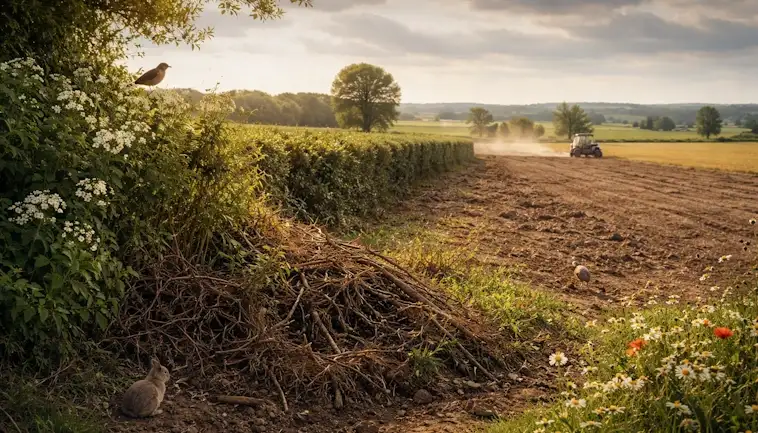
Hedgerow removal may sound like a small change on the surface. Yet it often triggers a chain reaction that reshapes entire landscapes. When these living boundaries disappear, the wildlife that depends on them begins to lose safe passage, shelter, and food. And because hedgerows support so many species at once, their loss is felt quickly and widely.
Hedgerows act as quiet connectors. They link woodlands, wetlands, and farmland. And they offer shade on hot days and cover during storms. They also help small creatures avoid predators as they move from one area to another. When these natural corridors vanish, animals are forced into the open. This increases stress and makes survival harder.
A Hidden Web of Life
When hedgerow removal happens, insects lose nesting sites, birds lose feeding grounds, and mammals lose hiding places. Over time, entire populations shrink. The landscape becomes less diverse. And once that balance starts to slip, it can be difficult to restore.
However, communities can take action. Restoring hedgerows, planting native species, and protecting remaining corridors all help rebuild these fragile ecosystems. Even small stretches of hedges can revive local biodiversity.
As you look across the countryside, it’s easy to see hedgerows as simple lines of shrubs. But they are so much more. They are lifelines. And preserving them is one of the simplest ways we can support wildlife and protect the natural rhythm of our landscapes.
Why Hedgerows Matter for Birds, Insects, and Mammals
Hedgerows may look simple at first glance, but they shape the rhythm of our countryside. They offer shelter, food, and safe routes for many animals. And when you step back, you can see just how many species rely on them every single day.
These living corridors support birds that nest deep in the branches. They help insects find nectar, shade, and safety. And they also give small mammals a place to hide from predators. When hedgerows stay healthy, the entire ecosystem feels more alive. And because they work as natural bridges between habitats, they also help wildlife move more freely across the landscape.
Over time, you start to notice a pattern. Wherever hedgerows thrive, biodiversity tends to rise. You hear more birds. See more pollinators. You catch glimpses of mammals that often stay out of sight. That mix of life makes the land more resilient. It also helps farms and gardens flourish.
As you think about the future, it becomes clear that preserving hedgerows is a simple but powerful step. Even small stretches can make a big difference. And when local communities restore them, the return of wildlife can be surprisingly fast.
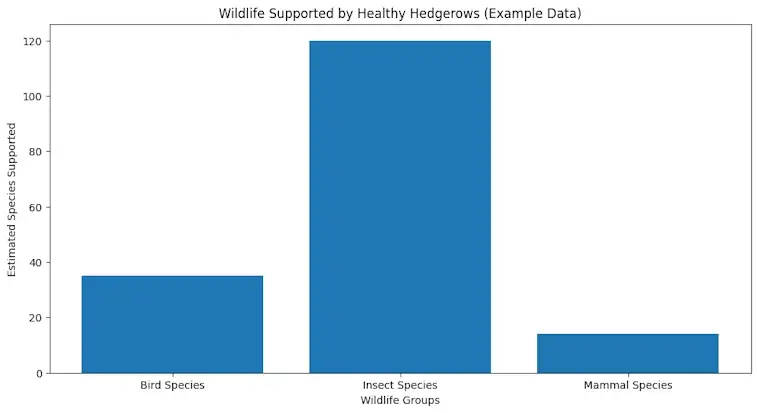
To help you visualize the impact, here is a quick look at how many species benefit from strong, thriving hedgerows.
The Hidden Costs of Hedgerow Removal on Biodiversity
When we talk about changes in our landscapes, hedgerow removal rarely gets the attention it deserves. Yet these quiet green borders play a huge role in the health of our environment. As more hedgerows disappear, we are starting to see the true impact on the wildlife that depends on them. And the costs are showing up in ways many of us never expected.
Hedgerows may seem simple. They are just lines of shrubs and small trees, after all. But they create shelter, food, and safe travel routes for countless species. When they vanish, those benefits vanish too. This loss affects birds, insects, mammals, and even the soil beneath our feet. It also affects us more than we realize, because healthy ecosystems support our farms, our air quality, and our wider climate.
As you look ahead, it becomes clear that keeping hedgerows intact is not only about preserving beauty. It is about protecting the systems that keep life in balance. When hedgerow removal becomes common practice, the ripple effects move quickly through the landscape.
Here are some of the hidden costs of hedgerow removal that often go unnoticed:
- Loss of habitat for nesting birds and small mammals
- Decline in pollinators that rely on hedgerow blossoms
- Soil erosion due to reduced windbreaks
- Reduced carbon storage in local ecosystems
- Fragmented wildlife corridors that limit safe animal movement
These changes add up. They weaken biodiversity at a time when nature is already under pressure. And once the damage is done, it can take decades to rebuild what was lost.
Still, there is hope. Communities and landowners are now rethinking the role of hedgerows. They see that restoration is possible. And they also see that small choices can protect a landscape for the long term. When we take time to care for these living boundaries, we strengthen the environment we all rely on.
By understanding the real costs of hedgerow removal, we can make more informed decisions. And with each decision, we have a chance to support a richer, more resilient natural world.
What Happens When Wildlife Corridors Disappear
When wildlife corridors vanish, the land feels different almost overnight. These natural pathways help animals move safely between habitats. They also keep ecosystems healthy and balanced. So when the links break, everything from migration patterns to food chains begins to shift. And the effects reach far beyond the animals themselves.
You may not notice these changes at first. They start quietly. Fewer birds. Less pollinator activity. Slower plant growth. Yet over time, the loss becomes clearer. Without connected routes, animals struggle to find mates, shelter, and seasonal food. This creates population drops that can be hard to reverse.
As we look ahead, it becomes even more important to understand how wildlife corridors support the bigger picture. They protect biodiversity. Help species adapt to climate change. And they keep landscapes resilient. When these corridors disappear, nature loses its safety net. And that means communities and farms feel the pressure too.
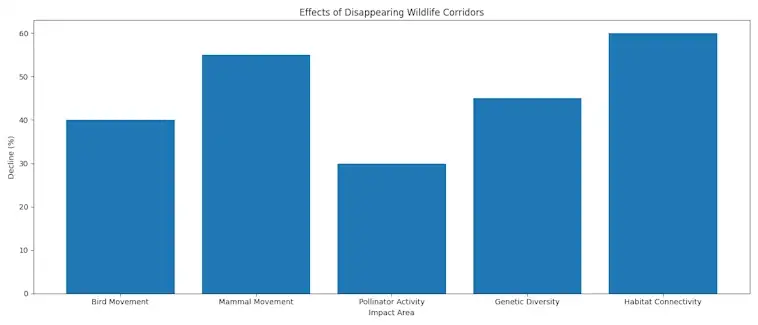
To help illustrate what happens, here is a chart that shows estimated declines across key ecological areas when corridors are lost.
Long-Term Impacts on Ecosystems and Rural Landscapes
When we talk about environmental change, we often focus on what we can see right now. Yet the real story unfolds over decades. Rural landscapes shift slowly, almost quietly, until one day the change is impossible to ignore. These long-term impacts shape how we grow food, support wildlife, and protect the natural systems we rely on every day.
Over time, even small disruptions add up. Soil becomes less fertile. Streams run lower in summer. Birds and insects lose the places they once nested and fed. And as these patterns continue, the character of entire regions begins to fade. Understanding these long-term shifts helps us see not only what is at risk, but what we can still restore.
How Hedgerow Removal Reshapes Local Habitats
Hedgerows once acted as living networks across the countryside. They sheltered wildlife, protected crops from wind, and held soil in place. When they are removed, the landscape loses more than a row of shrubs. It loses a natural defense system. Fields become more exposed. Biodiversity drops. Pollinators struggle to survive. And without those connected green corridors, species move less freely across the land.
These cascading changes do not happen overnight. They build year by year. And as they do, rural ecosystems become more fragile and less able to adapt to new pressures, including climate change.
That is why efforts to restore natural features—like hedgerows, wetlands, and native grasslands—matter so much. They offer long-term stability. Help farms thrive. And they bring back the richness that once defined rural life.
If you want to explore practical examples of how landscapes can recover, the RSPB offers clear guidance.
Conclusion: Why Hedgerow Removal Still Matters Today
As we look across our changing countryside, it becomes clear that hedgerow removal is more than a matter of land management. It shapes the future of local wildlife in deep and lasting ways. When these natural boundaries disappear, so do many of the safe spaces that birds, insects, and mammals depend on. Over time, the landscape grows quieter, less diverse, and far more vulnerable.
Yet there is good news. We can slow this decline. And we can even reverse it. By protecting existing hedgerows and planting new ones, communities create stronger habitats and healthier ecosystems. These choices help wildlife return, one season at a time.
So while hedgerow removal may challenge local species, our decisions going forward can support them. Small actions add up. And with steady care, the landscapes we love can thrive again.