

Are Boreal Forests Special Guardians in a Warming Planet?
Boreal Forests: Why These Vast Northern Forests Matter More Than Ever in a Warming World
Boreal forests often feel distant, yet their influence reaches into daily life in ways that many people never notice. These northern woodlands store vast amounts of carbon, shape weather patterns, and help keep the planet’s climate in balance. As temperatures rise, their role becomes even more important. The question now is how long these forests can continue to steady a world that is warming faster than expected.
As conditions shift, scientists are uncovering new links between northern ecosystems and global climate stability. The findings suggest that changes happening far from major cities may affect everything from seasonal rainfall to long-term carbon storage. Understanding these connections matters, because the choices made today about land use, conservation, and energy will influence how resilient these forests remain.
There is also a growing sense of urgency. Longer fire seasons, thawing permafrost, and sweeping insect outbreaks are already reshaping regions that once seemed untouched. Yet there is hope. With thoughtful stewardship and stronger climate action, these forests can continue to serve as natural buffers against extreme change.
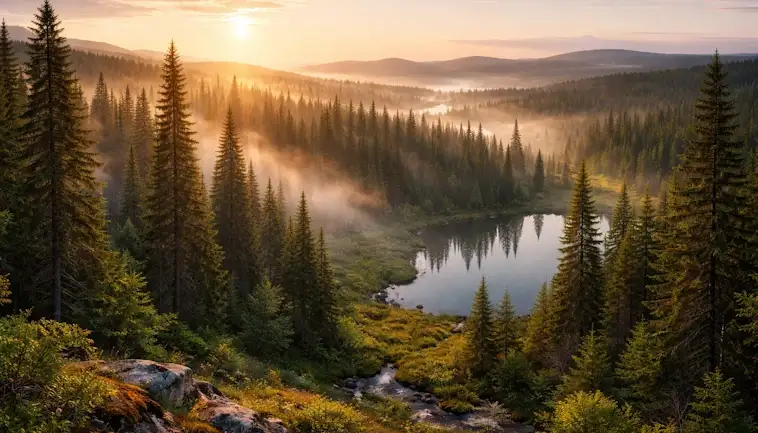
Why Boreal Forests Matter More Than Ever in a Changing Climate
Boreal forests are often overlooked. They sit quietly across the northern world, stretching through Canada, Alaska, Russia, and Scandinavia. Yet they play a massive role in stabilizing our climate. As temperatures rise and weather patterns shift, these forests now matter more than ever. And the more we learn about them, the clearer it becomes that they’re one of our strongest natural allies.
Boreal forests store huge amounts of carbon. They lock it away in their trees, soils, and even their wetlands. When the climate warms, this stored carbon becomes vulnerable. It can escape into the atmosphere through fires, pests, and thawing permafrost. That makes protecting these forests critical, not optional.
They also regulate global weather. Think of them as a giant air-conditioning system for the planet. Their dense tree cover cools the land, influences rainfall, and even shapes wind patterns. As the climate changes, this natural system becomes more valuable, not less.
Because they cover nearly one-fifth of Earth’s land surface, small changes in boreal forests ripple across the world. That’s why scientists keep such a close eye on them. When these forests thrive, the planet becomes more stable. And when they decline, everyone feels the effects.
A Hidden Network That Keeps the Planet Steady
Another reason boreal forests matter is their rich biodiversity. They shelter millions of migratory birds, large mammals like caribou, and countless plant species adapted to extreme cold. As climate pressures increase, many of these species depend on intact boreal habitat for survival. Losing this habitat means losing entire ecosystems we may never fully understand.
Looking ahead, the choices we make now will determine whether boreal forests continue to protect us—or become a source of rapid climate change. Supporting conservation efforts, reducing deforestation, and restoring damaged areas can help keep these critical landscapes resilient.
Boreal forests may feel far away, but their impact is close to home. They shape the air we breathe, the weather we experience, and the future we share. And as the climate shifts, these northern forests become even more essential to keeping our world in balance.
The Hidden Climate Systems That Keep Northern Forests Alive
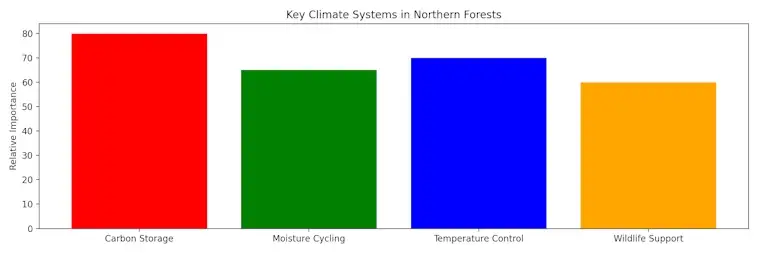
Northern forests may look still and quiet, but behind that calm surface, powerful climate systems are always at work. These systems keep the forests healthy. They also help stabilize the planet in ways many people never notice. When we talk about climate change, we often focus on ice sheets or oceans. Yet these northern forests influence the air, water, and weather we depend on every day.
These forests move moisture across continents. They release water vapor that helps form clouds and rainfall far beyond the treeline. And they also store carbon deep in their soils and in their slow-growing trees. As the climate warms, this storage becomes fragile. Small changes can release huge amounts of carbon back into the atmosphere.
They also help regulate temperature. Their dark canopy absorbs sunlight and releases heat slowly. This helps prevent extreme temperature swings. Northern forests also support wildlife networks that keep ecosystems balanced. When any part of these systems weakens, the impact spreads quickly.
As the climate shifts, understanding these hidden systems becomes more important. We need to know how they work so we can protect them. And we need to act now, because northern forests are changing faster than ever.
Here is a simple breakdown of the key climate systems that keep these forests functioning.
How Boreal Forests Shape Global Weather and Carbon Cycles
Boreal forests cover a huge band of land across the Northern Hemisphere, yet many of us barely think about them. Still, they quietly influence the air we breathe, the storms we see, and even the warming of our planet. When we talk about global climate systems, boreal forests deserve a front-row seat. They shape weather patterns, store carbon, and act as one of Earth’s most important buffers against climate change.
These forests are not just clusters of trees. They function like a giant natural machine that moves energy, moisture, and carbon around the planet. As the climate warms, their role becomes even more important. And, because these forests stretch across Canada, Russia, Alaska, and Scandinavia, what happens in one region can ripple across the globe.
Boreal forests influence weather and carbon cycles in several key ways:
- Lock away large amounts of carbon in their trees and soil.
- Shift heat and moisture in the atmosphere, shaping regional pressure systems.
- Cool the planet by reflecting sunlight off snow-covered trees and ground.
- Release water vapor that helps form clouds and precipitation.
These processes may sound small on their own. However, when combined across millions of square miles, they help stabilize global climate patterns. They even guide jet streams and affect storm tracks. In other words, boreal forests have a hand in the kind of weather you see outside your window, no matter where you live.
Looking ahead, scientists expect these forests to face more fires, insect outbreaks, and rapid thawing of frozen soils. Each of these shifts could release more carbon into the atmosphere and change long-held weather patterns. That’s why protecting boreal forests is not only about saving wildlife. It is also about safeguarding the climate systems that support modern life.
As you think about the future, it is worth watching how boreal forests respond to a warming world. Their choices—so to speak—will shape ours.
Wildfires, Warming, and the Future Risks Facing Northern Ecosystems
Northern ecosystems are changing fast, and it’s hard to ignore the signs. Temperatures are rising. Seasons are shifting. And wildfires are becoming more intense and more common. If you have ever wondered how these changes connect, you are not alone. Many people are beginning to see that the North is warming faster than the rest of the world, and this shift is creating a cascade of new risks.
As the land heats up, dry conditions settle in more often. Forests that once stayed cool and damp now face longer warm spells. That means fires can ignite more easily. They also burn hotter and spread farther. This trend is already happening, and it affects everything from wildlife to communities to the carbon stored deep in the ground.
What makes this even more worrying is how these fires interact with warming soils and melting permafrost. When the ground thaws, it releases carbon that has been locked away for thousands of years. Wildfires speed up this process. They burn off the insulating layer of vegetation, exposing the soil below. Then, with each summer season, the ground warms a little more.
Still, there is room for hope. By understanding the patterns now, we can prepare for what comes next. Many scientists and local communities are already working on smarter fire management and better land stewardship. These efforts can make a real difference as climate pressures grow.
To help you see the trend more clearly, here is a chart highlighting how wildfire activity has increased across northern ecosystems.
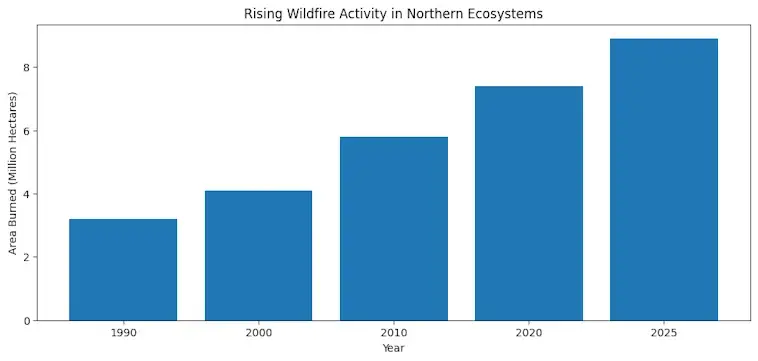
This simple visual shows how quickly the numbers are rising. And, as you look ahead, it is worth remembering that each year’s choices—local and global—shape the future of these fragile landscapes.
What Protecting These Forests Can Teach Us About Climate Resilience
When we talk about climate resilience, forests often come up as quiet heroes. They absorb carbon, regulate water, and support wildlife. Yet the real lessons they offer go deeper. As you look closer, you start to see how their natural systems show us what it takes to adapt, recover, and thrive in a changing world. And that is why protecting them is not just an environmental task. It is a blueprint for our own future.
Forests do not rush. They evolve, they find balance. And they work together. When we protect them, we are not only saving trees. We are learning how to build communities and systems that can handle shocks and bounce back stronger. That is a lesson we need now more than ever.
How Boreal Forests Show Us the Power of Patience
Take the Boreal Forests. They stretch across the northern hemisphere and face extreme conditions. Long winters. Short summers. Fast-changing temperatures. Yet they remain one of the most resilient ecosystems on Earth. They show us that resilience grows when systems can flex, adjust, and support the life around them.
These forests also remind us that resilience requires time. They regenerate slowly, and store massive amounts of carbon. And they depend on stability. When we disrupt them, we disrupt that patience-driven cycle. But when we protect them, they bounce back with surprising strength.
The more we learn from these forests, the clearer it becomes: resilience is not built by reacting at the last minute. It grows through steady care, long-term thinking, and respect for nature’s pace.
If you want to explore how forest ecosystems support climate resilience on a global scale, the International Union for Conservation of Nature offers a clear, approachable overview.
Conclusion: Why Boreal Forests Matter More Than Ever
As the planet warms, boreal forests stand out as quiet but powerful guardians. They store immense amounts of carbon. And they protect wildlife. They also regulate water and temperature in ways most people never see. Yet their real value becomes clear when we look ahead. These forests show us how resilience works in nature, and why long-term protection is essential.
When we care for boreal forests, we strengthen one of the world’s largest natural defenses against climate change. And while they may seem far away from daily life, their stability shapes weather, ecosystems, and even future climate risks across the globe. That is why acting now matters. Small choices—supporting conservation efforts, learning more, and advocating for sustainable policies—add up.
In the end, boreal forests are not just landscapes. They are living systems that teach us how to adapt and endure. Their future, and ours, are deeply connected.