

Why Fresh Air Is Becoming Rare and More Valuable Today
Fresh Air Is Becoming Rare: Why Clean Air Matters More Than Ever Today
Fresh air is starting to feel like a luxury, even though it should be the one thing we never have to fight for. As cities grow and weather patterns shift, the simple act of breathing clean, open air is becoming harder. Yet people are paying more attention to it than ever, partly because the change is happening right around us. You can sense it on the way to work, during an afternoon walk, or when you open a window and the air feels heavier than it used to.
More people are asking why outdoor spaces feel different today and what this means for their health and comfort. And as awareness rises, so does the value placed on cleaner, healthier environments. The trend is clear: what once felt endless is becoming scarce, and that scarcity is creating new pressure on how communities respond.
How Fresh Air Is Slipping Away in Everyday Life
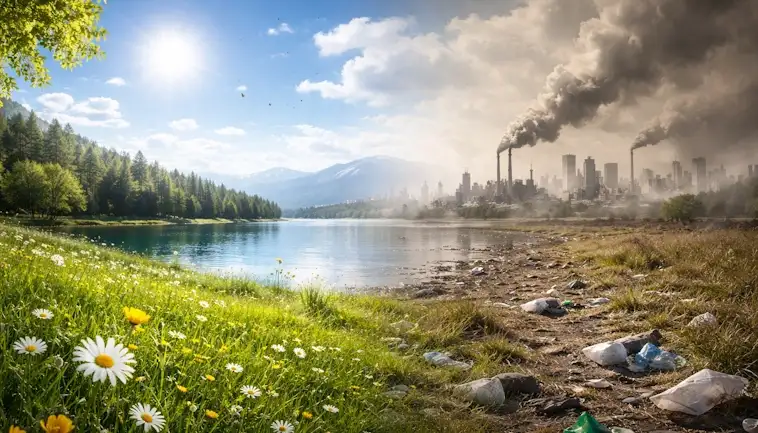
Fresh air should feel simple. Yet, for many of us, it is slowly becoming harder to find. We wake up, commute, work, and shop in places where clean, open air is no longer a given. And while this shift is often quiet, it affects how we feel every single day. That is why it is worth looking a little closer. Because once you notice the subtle ways fresh air is slipping away, you can start making choices that help protect it.
As our cities grow, so do the sources of everyday pollution. Traffic is heavier. Construction sites multiply. Even the indoor spaces we rely on can trap stale air. Each of these pressures chips away at the clean, breathable air we once took for granted. And although the change can seem invisible at first, the effects build over time. You may notice you feel tired more often or that stepping outside does not feel as refreshing as it used to.
Small Changes That Add Up
The good news is that awareness gives you power. When you understand what is happening, you can respond in practical ways. You might choose routes with more trees. Perhaps you’ll ventilate your home more often. Or you may support community efforts to improve green spaces. These small steps matter. They also remind us that protecting fresh air is not just about science or policy. It is about the quality of our daily lives.
As you move through your routine, try pausing for a moment when you step outside. Notice how the air feels, and how your body responds. Fresh air still exists around us, but it needs attention and care. When we treat it as something valuable, we help ensure it does not slip away for good.
Rising Pressures That Are Changing the Air We Breathe
The air around us is shifting, and not always in ways we can see. Yet we feel the effects more often than we realise. Maybe you notice a heavier commute. Or a sharp smell in the air during certain seasons. You may even notice that your home feels stuffier than it used to. These moments add up. And little by little, they change the quality of the air we depend on every day.
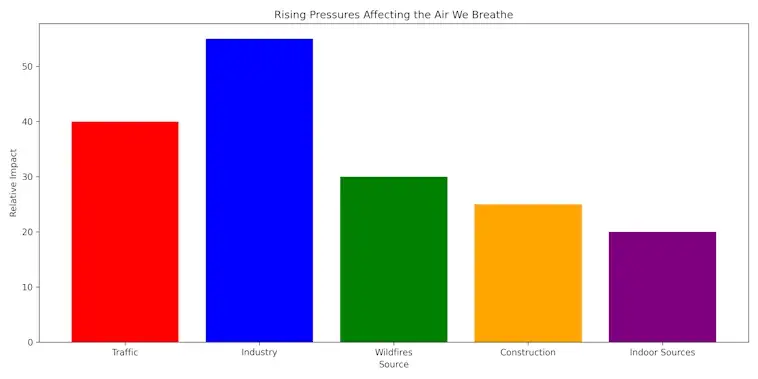
As our environments grow busier, new pressures emerge. Traffic increases. Industrial sites expand. Wildfire seasons last longer. And construction projects multiply across cities and suburbs. Each of these forces plays a part in shaping what we breathe. The change is gradual, but it is real. And it affects our energy, our comfort, and even our long-term health.
When we talk about air quality, it can sound big and distant. But it is actually personal. It influences us at home, at work, and in every space in between. That is why paying attention matters. Once you see the pressures clearly, you can respond in simple, everyday ways that help protect your wellbeing.
To help illustrate what is happening, here is a chart that shows some of the most common pressures affecting our air today.
Why Fresh Air Now Signals Health, Comfort, and Security
Fresh air used to be something we took for granted. We opened a window, stepped outside, and trusted the air around us. Today, things feel different. Our cities are growing, our homes are tighter. And our daily routines keep us indoors for longer stretches of time. As a result, fresh air has become more than a pleasant breeze. It is now a real marker of health, comfort, and even personal security.
We are learning that clean, breathable air shapes how safe and grounded we feel. It affects our energy, our sleep, and our ability to think clearly. And because many people spend most of their time inside, the quality of the air we breathe at home or work matters more than ever.
In fact, paying attention to fresh air is one of the simplest ways to protect your well-being. When the air around you is clean, your body works better. Your mind relaxes. And your space feels calmer and more under your control. That sense of control is becoming a priority for many people who want healthier, more resilient lifestyles.
Here are a few reasons fresh air now carries so much weight in our daily lives:
- Reduces the buildup of indoor pollutants.
- Supports better sleep and clearer thinking.
- Lowers stress by creating a more comfortable space.
- Helps you feel safer when outdoor conditions become unpredictable.
As we look ahead, the value of fresh air will only grow. Climate pressures, new building trends, and shifting habits will continue to change how we live. Yet one simple truth remains: when the air is fresh, everything feels easier. And that is a signal worth paying attention to.
The Hidden Costs of Polluted Environments
Polluted environments shape our lives in ways we often do not see right away. We notice the smog. And we notice the dust on our windowsills. Yet the deeper costs move quietly in the background. And they tend to catch up with us when we least expect it.
This topic matters because the air around us affects more than how our lungs feel. It touches our wallets, our productivity, and even the way our homes age over time. When you zoom out, you start to see a bigger picture. Polluted spaces drain energy. They increase stress. And they also force us to spend money on problems that clean air could have prevented.
As our world becomes more urban and more crowded, these hidden costs grow. That is why understanding them is the first step to protecting your health and your budget. When you know what polluted environments take from you, you have a better chance of pushing back.
Below is a chart that highlights some of the most common financial pressures linked to polluted air and polluted spaces.
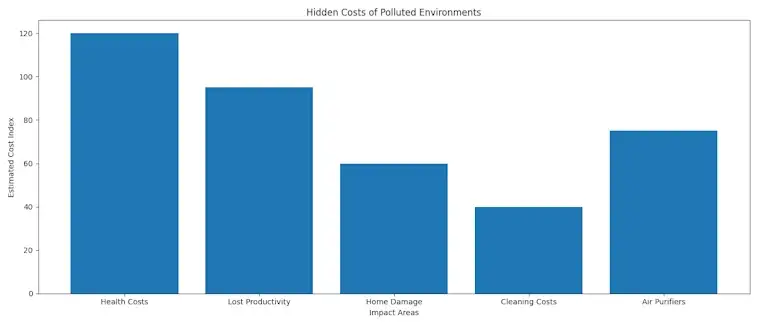
If you look closely at the chart, you will see how these issues stack up. Health costs rise first. Then productivity drops. Home repairs appear faster. And cleaning or filtration efforts become a regular expense.
When you add it all together, polluted environments leave a real mark. But the good news is that awareness helps you take action. And every small step toward cleaner air—inside or outside—pays you back in comfort, clarity, and peace of mind.
What Communities Can Do to Protect Cleaner Air for Tomorrow
Cleaner air is not a distant dream. It is something communities can build together, step by step. When people join forces, small actions can add up fast. And as concerns about air quality grow, many neighborhoods are already proving that change is possible. In fact, the choices we make today shape the air we breathe tomorrow. So it is worth taking a closer look at what works and how any community can get started.
Building Momentum for Fresh Air Initiatives
One of the most effective ways to improve local air quality is to focus on practical, community-powered solutions. These efforts do not need to be complicated. They only need to be consistent.
For example, more towns are planting street trees and restoring green spaces. These spaces help filter pollution and keep temperatures lower. They also give residents places to walk, sit, and connect.
Communities are also encouraging walking and cycling. When people have safe paths, they often drive less. That means fewer emissions and quieter streets. In many neighborhoods, even small shifts in traffic habits make the air noticeably cleaner.
Public awareness is another powerful tool. Workshops, school programs, and local events help people understand how air pollution works. When people know the sources, they make better choices at home and at work.
Some communities are going further by supporting local clean-energy projects. These include rooftop solar panels, shared battery storage, and updated building standards. Cleaner energy leads to cleaner air, and it brings long-term savings.
If you would like to explore global air-quality guidelines, this resource from WHO is helpful.
The path to cleaner air starts with awareness, grows with cooperation, and strengthens with long-term commitment. When people work together, tomorrow’s air can be clearer, safer, and far more breathable than today.
Conclusion: Protecting Fresh Air for the Future
Fresh air is becoming harder to find, yet it is more valuable than ever. As our world grows busier and pollution levels rise, the simple act of breathing clean air is no longer guaranteed. However, there is still time to turn things around. By paying attention to the signals around us and making thoughtful choices, we can start to reclaim what has been slipping away.
This moment calls for awareness, but it also calls for action. Small changes in how we move, build, and consume energy can lead to big improvements in the quality of the air we share. When people understand what is at stake, it becomes easier to support policies and community projects that protect health and strengthen resilience.
Looking ahead, the value of fresh air will only grow. That is why it helps to stay informed, stay engaged, and stay hopeful. Every step toward cleaner air brings us closer to a future where breathing deeply feels natural again. And that future, with enough commitment, is well within reach.