

Should Ethical Living Be Simple in a Busy World?
Ethical Living Made Practical: Small Choices That Shape a Better Daily Life
Ethical living often sounds straightforward, yet many people feel overwhelmed by the pace of daily life. It can be hard to make thoughtful choices when you’re rushing between responsibilities. Still, the idea of doing good without adding stress is appealing, and more achievable than it first seems.
As new routines and technologies reshape how we work, shop, and connect, the path toward a more conscious lifestyle is shifting too. People want clarity. They want simplicity. And they want guidance that feels practical, not perfectionist.
With a few small adjustments and a clearer sense of what truly matters, living by your values can feel far less complicated. It becomes something that supports you rather than something that weighs you down. The goal is not to overhaul your entire life, but to create space for choices that feel meaningful, doable, and sustainable—even on the busiest days.

Why Ethical Living Feels So Hard in a Fast-Moving World
Living with strong values sounds simple. Yet when the world moves at full speed, it often feels much harder than it should. Many people want to make better choices. They want to support fair labor, reduce waste, and live with more intention. However, once daily pressures kick in, those goals slip to the back of the line.
The truth is, ethical living asks us to slow down. It asks us to look closely at what we buy, how we travel, and even how we spend our time. That takes energy. And in a busy world, energy feels scarce.
Even so, more of us are trying. You might feel pulled in two directions: one part of you wants convenience, but another part wants to do the right thing. That tension is real. And you’re not alone in feeling it.
The Trouble With Too Many Choices
Modern life offers endless options. But more choice doesn’t always make things easier. It often leads to overwhelm. You want to pick the product that aligns with your values. But you also want something that fits your budget and your routine. When every decision becomes a mini research project, burnout happens fast.
Still, there’s hope. When you focus on progress, not perfection, ethical living becomes more realistic. Small shifts help you build momentum. They also help you trust that your choices matter, even if they’re not flawless.
As you move forward, remember this: the goal isn’t to live a perfectly ethical life. It’s to make thoughtful decisions more often. And with each step, no matter how small, you create change that lasts.
Small Daily Choices That Make a Big Ethical Impact
Sometimes the biggest changes start with the smallest steps. That’s why ethical living doesn’t have to feel overwhelming. In fact, it often begins with simple choices you make without much thought. Yet these choices can add up fast. And they can shape the world around you in ways that feel surprisingly powerful.
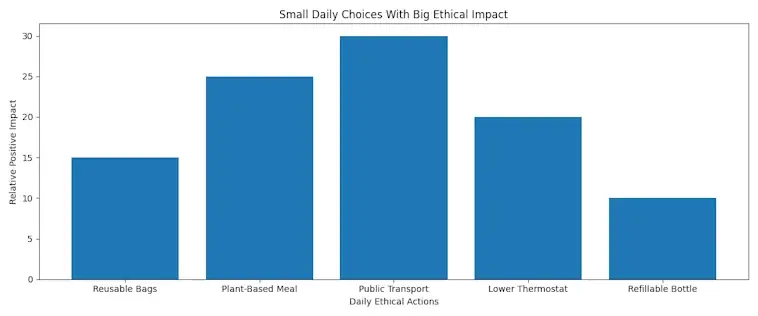
Everyday actions like choosing a refillable bottle or lowering your home thermostat may seem minor. But when you repeat them, day after day, they carry real weight. They also remind you that you don’t need perfection to make a difference. You just need consistency.
As you try to live more intentionally, it helps to focus on choices that blend easily into your routine. When a habit feels natural, you’re more likely to stick with it. And over time, those habits create momentum.
Before long, ethical living becomes less about effort and more about identity. It becomes something you do because it aligns with who you want to be.
To show how much these small actions matter, here’s a simple chart that highlights a few easy daily habits and their relative positive impact.
How Ethical Living Can Fit Into a Modern, Busy Lifestyle
Living more ethically can feel overwhelming, especially when life moves fast. But ethical living does not have to be an all-or-nothing commitment. In fact, it can slip naturally into your routine without slowing you down. When you take small steps, they build into something meaningful. And over time, those choices shape a lifestyle that feels both responsible and realistic.
The truth is, modern life rarely gives us extra hours. We are juggling work, family, errands, and everything in between. So the idea of adding “one more thing” can feel impossible. Yet, ethical living becomes far more manageable when you see it as a series of simple habits. These habits slot into your day with little effort, and soon they become second nature.
To get started, it helps to focus on what feels doable right now. You do not need a perfect plan. Just a few small actions that make sense for your schedule.
Here are some easy ways to weave ethical living into a busy week:
- Choose products that last longer rather than buying quick replacements.
- Support local shops when you can.
- Bring a reusable bottle or coffee cup on your commute.
- Reduce food waste by planning simple meals.
- Buy second-hand items when it works for you.
Each of these choices fits into a full schedule without adding stress. And as you adopt more of them, you start to see how ethical living isn’t about sacrifice. It is about aligning your lifestyle with your values, even when your days are packed.
When you embrace this flexible approach, you stay grounded in what matters. You also build habits that are good for your budget, your community, and the planet. Most importantly, you show that ethical living is not just possible in today’s world. It is practical, and it is personal. Simply growing with you, one small step at a time.
Simple Habits That Help You Live With More Intention
Living with intention does not require a major lifestyle overhaul. Instead, it grows from small habits that help you slow down, pay attention, and make choices that feel right for you. These habits fit naturally into busy days, and they create a sense of balance that many of us crave. When you begin with simple steps, you can ease into a more mindful way of living without feeling overwhelmed.
Most people imagine that intentional living demands long morning routines or hours of quiet reflection. But that is not true. You can build intention through short, everyday moments. And when these moments add up, they shape a calmer and more purposeful mindset. Think of it as a gentle shift rather than a strict plan.
To support this idea, the chart below highlights a few easy habits and their positive impact. It is a quick visual reminder that small actions can make a difference.
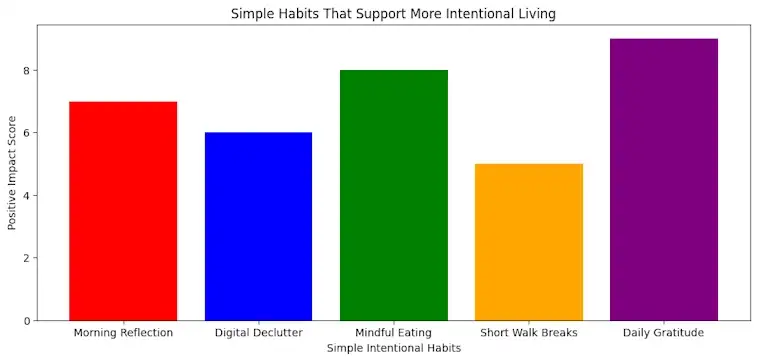
These habits are simple, approachable, and flexible enough for any lifestyle. When you practice them, even in small doses, you start to feel more present and grounded. And over time, intentional living becomes something you look forward to rather than something you try to fit in.
If you keep taking small steps, you will notice real changes. More clarity, more calm. And more control over how you spend your time and energy. That is the beauty of intentional living. It grows with you, and it begins right where you are.
Balancing Convenience and Conscience in Everyday Life
Every day, we make small choices that seem simple on the surface. Yet they shape the world we live in. We reach for fast shipping, quick meals, and single-use products because they save time. And honestly, who doesn’t want life to feel a little easier? Still, there’s a quiet tension underneath. We want convenience, but we also want to feel good about the impact we leave behind.
When we pause and look closer, we realize that balancing comfort with responsibility doesn’t have to feel heavy. It can be a series of small shifts. These shifts can add up in ways that feel empowering instead of overwhelming.
Why Ethical Living Feels More Important Than Ever
Ethical Living isn’t about perfection. It’s about awareness. As modern life speeds up, more people are starting to ask simple questions: Where did this come from? Do I really need it? Could I choose something that aligns with my values, even if it’s just a little better than before?
These questions open the door to a more thoughtful lifestyle. They invite us to look at how convenience can work with our conscience instead of against it. And often, the most sustainable steps are the ones you hardly notice at first.
You can start by choosing reusable items for your home, picking brands with transparent supply chains, or even learning how long everyday products take to break down. For example, the Earthday.org breakdown of waste and recycling offers clear insights into the environmental impact of common materials.
These insights help us rethink what convenience really means. Because when you know more, you choose better. And those choices can make daily life feel more aligned, more intentional, and even more satisfying.
In the end, it’s not about giving things up. It’s about gaining clarity. And from there, finding the balance becomes a lot easier.
Conclusion: Why Ethical Living Can Still Fit Into a Busy Life
Ethical living doesn’t have to be hard. In fact, it works best when it becomes part of your natural rhythm. Even small choices can shift how you move through the world. And when life feels packed and fast, those small choices matter even more.
As you look ahead, try focusing on what feels doable rather than what feels perfect. Replace one item. Change one habit. Ask one new question about where something comes from. These tiny steps stack up, and they give you a sense of control in a world that often feels rushed.
Ethical living is not about slowing your life down. It’s about bringing your values along with you. And when you do that, you start to build a lifestyle that feels lighter, more intentional, and far more sustainable.
In the end, simplicity isn’t the opposite of busy. It’s what helps you move through a busy world with confidence and purpose.