

Forest Clearing Fuels Unlimited Risk, Disastrous Harm
Forest Clearing Is Driving Hidden Risks and Long-Term Harm We Can’t Ignore
Forest clearing is reshaping landscapes faster than many communities can keep up with, and the consequences grow harder to ignore. As more trees fall, temperatures rise, wildlife scatters, and the ground itself becomes less stable. Each cleared acre increases the chance of flooding, crop failure, and wildfires. The risks stack up quickly, creating a cycle that threatens homes, health, and long-term economic security.
As forests shrink, the protective systems they provide shrink with them. Air quality worsens. Water sources become murkier. Local climates shift in ways that strain infrastructure and daily life. These changes unfold quietly at first, then accelerate, catching people off guard. Yet the harm is avoidable when communities understand what’s happening and why it matters.
Looking ahead, the decisions made today will shape how livable many regions remain. By supporting smarter land management and stronger protections, it becomes possible to slow the damage and build resilience. The stakes are high, but the path forward is clearer than it seems when the full picture comes into view.
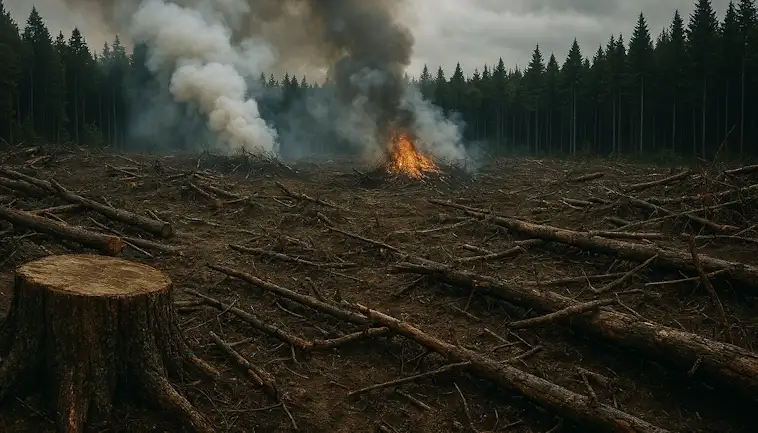
Why Forest Clearing Is Quietly Raising Global Risk Levels
Forest clearing is often talked about in numbers and headlines. Yet the real story is more personal and much closer to home. As trees disappear, the world around us becomes more fragile. And while the change feels slow, its impact is gaining speed. In fact, forest clearing is shaping everything from our weather to our food supply, even when we do not notice it happening.
When forests are cut, the land loses its natural shield. Trees trap carbon, cool the air, and hold soil in place. Without them, heat rises, storms intensify, and water becomes harder to manage. These shifts might seem abstract. However, they show up in higher grocery prices, unexpected floods, and air that feels heavier than it used to.
A Hidden Chain Reaction
Forest clearing also pushes wildlife into new areas. This increases the risk of disease spreading between animals and people. It also disrupts farming regions that depend on predictable seasons. These are small changes at first. But over time, they build into larger risks that cross borders and affect daily life everywhere.
The truth is simple. Forest clearing does not stay local. It sends ripples through global systems we all rely on. And while we cannot stop every threat, understanding how these quiet changes unfold helps us prepare. It also reminds us that protecting forests is not just an environmental issue. And it’s a way to protect our own future, one decision at a time.
How Vanishing Tree Cover Pushes Communities Toward Disaster
Tree cover is disappearing faster than many people realise. And when those trees vanish, communities are left more exposed to danger. This trend is happening in cities, towns, and rural areas across the world. It is slow and often invisible at first. Yet it steadily increases the risks we face every day.
As forests thin out, weather grows harsher. Heat settles in. Floods strike harder. And soils lose the strength to hold communities together. These changes might feel far away, but they shape the safety and stability of real neighbourhoods. They shape how we live, how we work, and even how we breathe.
But there is something important to understand: this is not only a story about loss. It is also a story about what we can still protect. When we look ahead, we can choose a different path. We can restore green spaces. Rebuild natural buffers. And we can prepare our communities for a more resilient future.
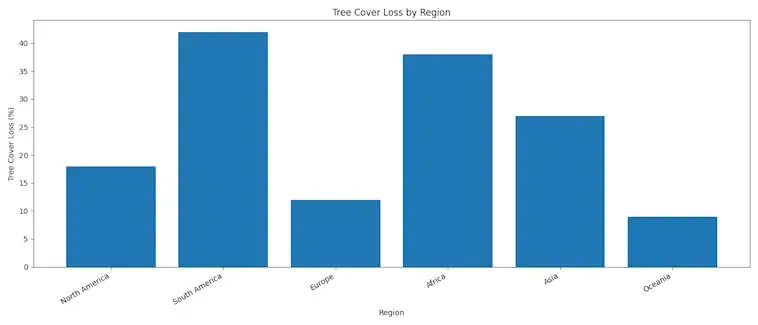
To make the issue clearer, the chart below shows tree-cover loss across major world regions. It helps show why this trend matters, and why action now can change what comes next.
The Hidden Ways Forest Clearing Drives Climate and Wildlife Crises
Forest clearing often happens out of sight. Yet its effects reach far beyond the land that is cut. When we lose forests, we lose some of the strongest natural systems holding our climate and wildlife together. This can feel distant, but it is closer to our daily lives than most of us realize. As we look ahead, it is clear that the choices we make now will shape the stability of our planet for decades.
Forests act like steady anchors. They store carbon, regulate water, and create homes for countless species. When they are removed, those anchors slip, and the impacts ripple outward fast. And because forest clearing is happening in many regions at once, the combined effect is far more powerful than it might seem.
You can see the change in global temperatures, shifting rainfall patterns, and the rise of species on the brink. These trends are not abstract. They influence our food prices, our weather, and even the air we breathe. That is why understanding the hidden pathways of harm is so important. It helps us see what is at stake and what can still be protected.
Here are some often overlooked consequences of forest clearing:
- Loss of carbon storage, which speeds up climate change
- Disrupted rainfall cycles that affect farming and water supplies
- Habitat breakdown that pushes wildlife into extinction
- Hotter local climates as natural shade disappears
Each of these pressures adds up. They combine to create crises that hit both nature and people. And while the damage is serious, it is not irreversible. When communities, governments, and businesses work together, forests can recover. Restoring even small areas helps rebuild ecosystems and cool the climate bit by bit.
As we move forward, it helps to remember this: forests are not just trees. They are living systems tied to our own well-being. Protecting them is not only a global responsibility. It is a chance to secure a more stable, livable future for everyone.
What Rapid Land Loss Means for Your Safety and the Planet’s Future
Rapid land loss is no longer something happening far away. It is unfolding now, and it is reshaping coastlines, swallowing communities, and putting millions at risk. When land disappears, it is not just a physical shift. It affects safety, food supplies, and the stability of entire regions. And as the pace quickens, the impacts become harder to ignore.
Today, coastlines are eroding faster than many cities can adapt. Rising seas and stronger storms are removing land in years instead of decades. At the same time, sinking ground and damaged wetlands mean there is even less natural protection between us and the next big flood.
This matters because every meter of land lost pushes homes, farms, and critical infrastructure closer to danger. It means more people living with flood anxiety. Also higher insurance costs. And it means governments rushing to build walls, raise roads, or relocate families who can no longer stay where they are.
Looking ahead, the risks grow. If current trends continue, some regions could lose more land in the next 20 years than they have in the last 50. That means we need faster action, stronger planning, and honest conversations about the tough choices ahead.
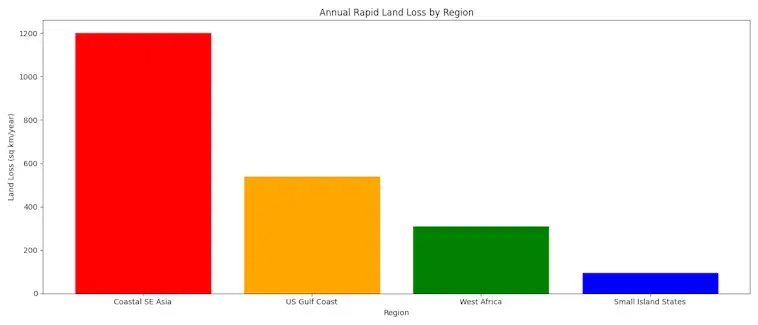
The chart below gives you a snapshot of how quickly different parts of the world are losing ground. It’s a reminder that while the numbers differ, the story is the same everywhere: land is vanishing, and the stakes are rising.
Simple Solutions That Can Slow Damage Before It Becomes Irreversible
When people talk about environmental crises, the conversation often jumps straight to global policies or breakthrough technologies. Those matter, of course, but small, early actions can slow forest damage long before it reaches a point we can’t undo. And that is encouraging. It means we still have room to act. But it also means everyday choices can help protect the places we love.
As forests continue to shrink, the effects start to show up close to home. Weather grows harsher. Wildlife thins out. Soil becomes weaker. Yet, when communities step in early, even modest measures can help forests recover. The key is doing something now rather than waiting for perfect solutions later.
How Forest Clearing Affects Local Life
Forest clearing isn’t always dramatic. Sometimes it starts with a few trees removed for farmland or roads. Over time, though, those small cuts add up. The land becomes drier. Streams slow. And the natural buffer that shields towns from heat and storms disappears. But when people learn what to watch for, they can act sooner. They can protect critical areas. Also they can support smarter land use. And they can push for better management before the damage becomes irreversible.
So, what helps? Planting native trees is a simple start. Supporting sustainable farming is another. Choosing products tied to certified responsible forestry sends a strong message. Even community-based monitoring programs make a difference. These steps might feel small, but they create momentum. And momentum is what keeps forests standing.
If you’d like a deeper look into how local actions influence global forest health, the World Resources Institute offers a helpful overview.
With steady, practical steps, we can slow the loss. And with early action, we can give forests the time they need to heal.
The Real Cost of Forest Clearing
As we look ahead, it becomes clear that forest clearing is not just an environmental issue. It is a growing risk that affects our safety, our climate, and our future wellbeing. When trees disappear, the protections they provide disappear too. Yet, there is also hope. Around the world, communities, scientists, and policymakers are beginning to rethink how we use land. Their efforts show that change is possible when we stay informed and engaged.
By understanding the full impact of forest clearing, we gain the power to push for smarter choices. Choices that protect ecosystems, support local economies, and reduce the chance of long-term harm. If we act now, we can slow the damage and create a healthier path forward. And while the challenges are real, so is our ability to respond. The next step is simply choosing to care—and choosing to act.