

Biodiversity Support Fuels Tremendous Hope in Nature
Biodiversity Support: The Essential Pathway to Healing Our Natural World
Biodiversity Support is becoming a powerful source of hope at a time when many people fear nature is slipping away. More communities, scientists, and everyday citizens are stepping up to protect the living systems that keep our world stable. As new projects take root, they show how fast landscapes can rebound when given the chance.
Progress may feel slow at times. Yet small actions create momentum. As habitats recover, species return, and once-fragile ecosystems start to regain their strength. These changes signal that nature is far more resilient than it often appears.
There is also a growing shift toward solutions that benefit both people and wildlife. From regenerative farming to river restoration, forward-thinking efforts are proving that healthier environments support healthier lives. With more breakthroughs on the horizon, the path ahead looks brighter than many expected.
Why Biodiversity Support Matters More Than Ever
Our world is changing fast, and so are the ecosystems we depend on every day. That is why biodiversity support is no longer a niche topic. It is a conversation we all need to join. When we talk about biodiversity, we are talking about the living networks that make clean air, fertile soil, safe water, and even stable weather possible. And as these networks come under pressure, our choices matter more than ever.
You might wonder why this is suddenly urgent. The truth is simple. Species are disappearing at a rate we have never seen before. Forests are shrinking. Oceans are warming. Pollinators are struggling. Yet, there is hope. Even small actions can slow these losses. They can even help nature rebound. And when nature rebounds, communities thrive.
A Small Change Can Spark a Bigger Shift
Think about the green spaces in your neighborhood. A small patch of wildflowers can support bees and butterflies. And a tree in the right place can support birds and cool your street. These tiny steps add up. They show how biodiversity support starts with simple choices that ripple outward.
As we look ahead, the stakes are rising. Climate change will keep testing our ecosystems. So will development and pollution. But we are not powerless. We can rethink how we use land, how we grow food, and how we design our cities, we can back global conservation efforts. And we can protect the species that quietly keep our world running.
When we take steps to support biodiversity, we also protect our own future. Healthy ecosystems make life safer, more resilient, and more secure. And that is why biodiversity support matters more than ever.
How Healthy Ecosystems Shape Our Future
When we talk about the future, we usually picture new technologies, bold ideas, and smarter cities. Yet the quiet engine behind all of it is something far more natural: healthy ecosystems. They keep us fed, hydrated, protected, and even inspired. And while this might sound obvious, it is easy to forget how much we rely on natural systems every single day.
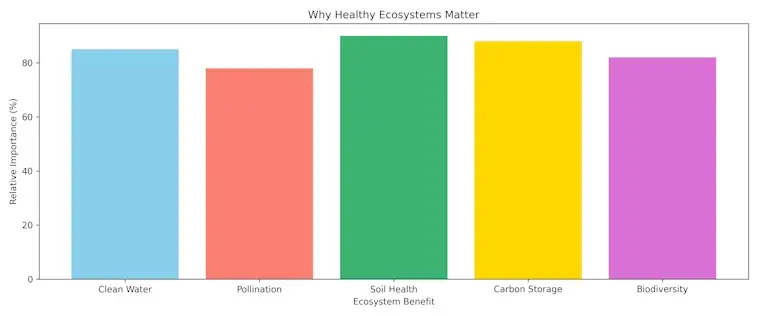
Healthy ecosystems act like a safety net. They filter the water we drink, they stabilize the soil that grows our food. And they store carbon and soften the blow of climate change. They even pollinate the crops that end up on our kitchen tables. And as our world keeps changing, these natural supports become even more important.
That is why protecting ecosystems is not only an environmental issue. It is a future-building strategy. When ecosystems thrive, communities tend to be healthier, economies grow stronger, and innovations find more room to flourish. This gives us a chance to build a future that works with nature instead of against it.
To help show why ecosystems matter so much, the chart below highlights some of the most essential benefits they provide. It is a quick reminder that when we restore nature, we restore possibility.
Biodiversity Support and the New Path to Renewal
Biodiversity support is becoming one of the strongest tools we have to rebuild our relationship with the natural world. And today, more people are ready to act. This shift is opening a new path to renewal for our cities, our ecosystems, and even our own well-being.
As you look around, you may notice signs of change. Community gardens are popping up. Native plants are returning to city parks. Even small backyards are turning into micro-habitats. These steps may seem simple, yet they add up fast. They also show how everyday choices can protect species that are struggling to survive.
When we talk about biodiversity support, we are not only talking about saving wildlife. We are also talking about creating healthier environments for people. Cleaner air, richer soil, and cooler neighborhoods all come from ecosystems that are thriving. This is why supporting biodiversity is not a side project. It is a core part of building resilient communities.
Below are practical ways individuals and communities can move forward with biodiversity support:
- Plant native species to create natural food sources for birds and pollinators.
- Reduce or eliminate pesticides that harm insects and disrupt food webs.
- Support local conservation groups that restore habitats and protect endangered species.
- Add small water sources, like shallow dishes or ponds, to help wildlife during dry months.
- Choose diverse plants to strengthen soil health and reduce climate stress on landscapes.
As more people take part, momentum grows. And when momentum grows, renewal becomes possible. Step by step, we can transform overlooked spaces into living landscapes that support both wildlife and people.
By embracing biodiversity support now, we set the stage for ecosystems that can thrive far into the future. This is not just a trend. It is a long-term investment in a healthier planet and a healthier life for all of us.
Simple Actions That Help Nature Bounce Back
Nature is far more resilient than we often think. When we give it even the smallest chance, it responds with surprising strength. That is why simple, everyday actions matter. They add up, and shift the story from decline to recovery. Helping to make us feel like we are part of the solution, not the problem.
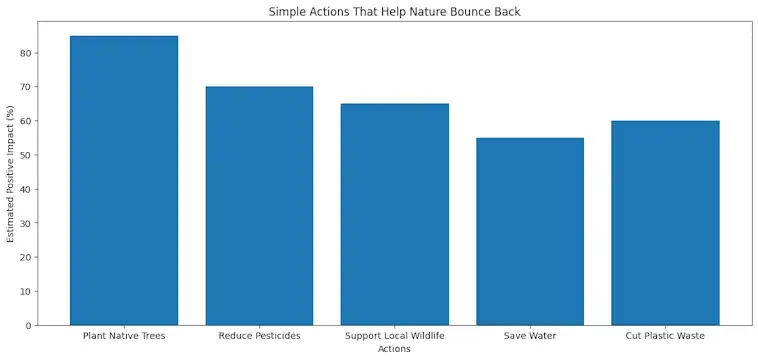
As we look ahead, it is clear our choices will shape the health of our landscapes, our wildlife, and even our own well-being. The good news is that many of the most effective steps are easy to take. They fit into normal routines, do not require big budgets. And they start right at home, in our gardens, parks, and local communities.
Below is a chart showing a few small actions and their estimated positive impact on the environment. It is a simple snapshot, but it helps show how personal choices can drive meaningful change.
A Look Ahead: The Growing Momentum for a Wilder Planet
The push for a wilder, more resilient planet is gaining real traction. You can see it in policy shifts, new restoration projects, and the way more people now value nature in their everyday decisions. This momentum matters because the next decade will shape how well our ecosystems can handle rising temperatures, extreme weather, and rapid urban growth. As we look forward, it becomes clear that small changes made today can set the stage for bigger breakthroughs tomorrow.
More communities are restoring wetlands while more cities are adding green corridors. And more businesses are starting to invest in nature-positive practices. These trends are creating a ripple effect. When a habitat is restored in one region, it often inspires similar action elsewhere. That is how large-scale change begins.
Why Biodiversity Support Matters for Tomorrow
Strong biodiversity support is at the core of this shift. Healthy ecosystems bounce back faster after storms, droughts, and heatwaves. They also provide everyday benefits, such as cleaner air, cooler neighborhoods, and richer soil. When people understand these direct benefits, nature stops feeling like an abstract idea and becomes part of daily life.
Still, momentum alone is not enough. We need long-term thinking, steady investment, and a commitment to protect what is left while rebuilding what we have lost. If you want a deeper view of how global conservation efforts are progressing, the World Wildlife Fund offers an accessible overview of current trends.
As the world moves toward greener solutions, there is real potential for a healthier, wilder future. And with each restoration project, each protected area, and each person who chooses to support nature, that future becomes more possible.
Why Biodiversity Support Gives Us Real Hope
As we look ahead, it is clear that biodiversity support is more than a feel-good idea. It is a practical path toward a healthier planet. When we protect habitats, restore damaged ecosystems, and champion species conservation, we create ripple effects that strengthen food security, clean our air and water, and stabilize our climate.
More importantly, every action—no matter how small—helps shift the balance. And that is where real hope comes from. Because when people, communities, and businesses all pull in the same direction, nature responds faster than most of us expect. We see forests return, wetlands revive, and wildlife rebound.
So as you step forward, consider how you can add your voice and energy to this movement. With steady commitment and broad participation, biodiversity support can fuel the kind of positive change that future generations will thank us for.