

Frozen Frontier Reveals the Hidden Risks Shaping Our Future
Frozen Frontier Data Reveals How Today’s Cold Zones Signal Tomorrow’s Crises
The frozen frontier is changing, and those changes are already sending signals that affect daily life. As temperatures rise and ancient ice weakens, new risks emerge—some obvious, others almost invisible. Yet each one shapes the choices communities, industries, and governments will soon have to make.
These changes matter because they offer a preview of what the rest of the world may face next. Cold regions often respond first to subtle climate pressures, revealing patterns long before they appear elsewhere. Understanding those patterns helps clarify where things are heading and why small shifts today can lead to larger consequences tomorrow.
There is also a growing sense of urgency. Scientists are spotting trends that point to faster warming, unstable weather, and long-term threats to food systems, coastlines, and infrastructure. At the same time, new technologies and better data offer a clearer picture than ever before. That combination opens the door to stronger decisions and practical steps that support a safer future for everyone.
Frozen Frontier Breakdown: What the Changing Ice Is Telling Us
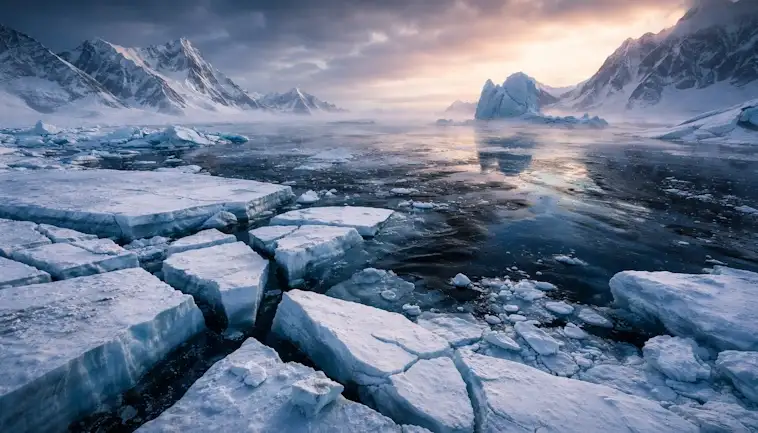
The frozen frontier is shifting fast, and it is telling us more than many people realize. Around the world, ice is thinning, cracking, and disappearing. These changes may feel far away, but they connect directly to rising seas, unstable weather, and the ecosystems we all depend on. This is a moment to pay attention. As we look ahead, the big question becomes: what exactly is the ice trying to say?
Ice has always been a quiet storyteller. It records centuries of temperature changes, storms, and even volcanic eruptions. Now those records are melting. As the frozen frontier retreats, it sends new signals about where the planet is heading next. These signals are clear, and they deserve our focus.
A Shift We Can See
You can see this shift from space. Glaciers are shrinking. Polar seas are opening earlier each summer. Permafrost is warming and releasing gases once locked away. These are not small adjustments. They are warnings that the natural systems we rely on are changing in real time.
At the same time, scientists are uncovering a hopeful message. Because the frozen frontier reacts quickly to temperature changes, it also responds quickly when warming slows. That means the choices we make today can still reshape tomorrow. There is room for progress if we act with intention.
As we move forward, it helps to stay informed. The ice is not just disappearing. It is speaking. And the more we learn to listen, the better prepared we will be for the future taking shape right now.
Why Hidden Climate Risks Are Rising Faster Than Expected
Climate change is no longer a distant headline. It is moving quietly into our daily lives. Yet some of the biggest threats are the ones we do not see right away. These hidden risks are growing faster than many experts predicted. And that should push all of us to pay closer attention.
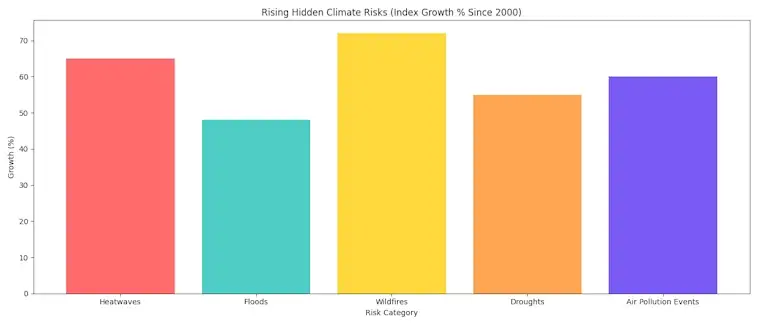
Today, extreme events are no longer rare. Heatwaves last longer. Floods arrive with little warning. Wildfires sweep across regions once thought safe. And air pollution spikes more often, even on clear days. These trends are not slowing down. In fact, they are accelerating.
So why does this matter? Because hidden climate risks build pressure over time. They affect our health, our homes, and our budgets. And they reshape cities and strain systems that were never built for this new reality. As these risks rise, they reveal gaps in our planning, our infrastructure, and our assumptions.
Looking ahead, the pace of change will matter as much as the change itself. The faster risks grow, the quicker we need to adapt. However, the good news is that awareness is rising too. And with better data and clearer insights, communities can act sooner and smarter.
The chart below shows how several major climate risks have surged since the early 2000s. It’s a simple way to see how quickly the landscape is shifting—and why now is the time to prepare for what comes next.
Frozen Frontier Signals: How Cold Regions Predict Global Shifts
When we look for clues about our planet’s future, we often look to places full of life and activity. Yet the real signals of change usually come from the quietest places on Earth. That frozen frontier at the top and bottom of the world works like an early-warning system. It tells us what is shifting long before we feel it in our daily lives.
These icy regions may seem far away, but their changes hit much closer to home than many people realise. And because the frozen frontier reacts faster than warmer parts of the planet, it gives us a head start. It shows which global trends are already underway and which may soon speed up.
As we explore what is happening in these cold zones, we start to see a clearer picture. We see patterns, and we see risks. But we also see opportunities to act before changes become too large to manage. This is why scientists watch these regions so closely, and why understanding them matters to all of us.
Here are some of the most important signals coming from the frozen frontier today:
- Ice sheets are melting at faster rates, revealing long-term warming trends.
- Thawing permafrost is releasing trapped gases, which can push global temperatures higher.
- Shifting sea ice is altering weather patterns far beyond the Arctic and Antarctic.
- Colder regions are experiencing more extreme temperature swings, which affect ecosystems.
- Rising polar temperatures hint at future sea-level increases around the world.
Together, these clues form a bigger story. The frozen frontier is not just a distant landscape of snow and ice. It is one of the most powerful indicators of where our planet is heading. And when we listen to what it tells us, we gain valuable time to prepare, adapt, and rethink how we live in a rapidly changing world.
The Everyday Consequences You May Already Be Feeling
When people hear about melting ice caps or thawing permafrost, it can sound distant. Yet the truth is much closer to home. As frozen frontiers melt, subtle shifts are already affecting daily life. You may notice them in the food you buy, the weather you feel, or even the roads you travel. And as these changes build, they start to shape routines in ways that are easy to miss at first.
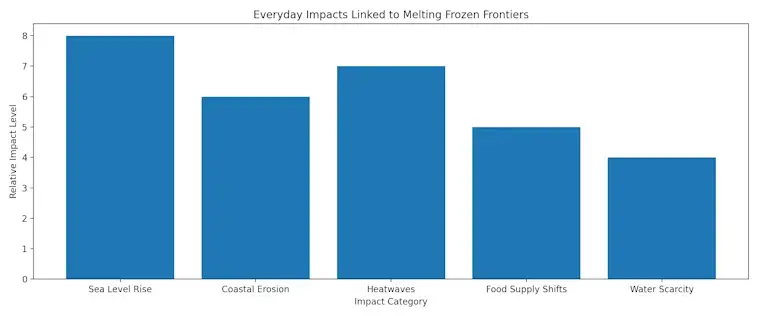
Melting ice is not only a symbol of environmental change. It is a trigger for real-world effects that move quickly from the poles to our neighborhoods. For example, rising seas can change insurance prices. Warmer air can influence how often you reach for the air conditioner. And shifting weather patterns can affect what ends up on your dinner plate.
These connections may feel surprising. However, they show how linked our world has become. As we look ahead, these trends are likely to continue. That means paying attention now is not just smart. It is practical. Understanding what is already happening helps us prepare for what comes next.
To help illustrate the ripple effects, here is a simple visual that highlights some everyday impacts tied to melting frozen regions.
What We Can Do Now to Shape a Safer Tomorrow
A safer future does not have to feel far away. In fact, many of the steps that make the biggest difference start at home. When we take small, steady actions today, we help build the kind of world we want to leave behind. And as the climate shifts and extreme weather becomes more common, making these choices early gives us more control over what comes next.
Let’s explore simple moves you can make right now. Each one strengthens your resilience and supports healthier communities. And together, they add up.
Preparing for the Frozen Frontier Ahead
Weather is becoming less predictable. Summers run hotter. Storms hit harder. And winters can swing between mild and dangerously cold. Because of this, becoming more prepared is one of the smartest things you can do.
Start with the basics. Improve your home’s insulation. Check your heating and cooling systems. Stock a small emergency kit with water, food, chargers, warm layers, and essentials. You do not need to do everything at once. Just begin. Each step boosts your security for whatever the season brings.
Next, think locally. Join community groups focused on climate readiness. Many towns share hazard maps, cooling-center guides, and tips for protecting your home. A great starting point is the U.S. government’s resilience hub. It offers practical advice that helps you plan for the unexpected.
Above all, stay informed. Weather apps, local alerts, and neighborhood networks give you fast updates. These alerts help you respond early, when you still have options.
When we act today, we build a future that feels safer, steadier, and more hopeful. And while it is true that none of us can control the climate alone, we can shape how ready we are for it. Starting now is not only wise—it is empowering.
Looking Ahead: Why the Frozen Frontier Matters More Than Ever
As we pull back from the icy edges of our planet, it becomes clear that the frozen frontier is not a distant world. It is a mirror reflecting the choices we make today. And its rapid changes warn us about rising risks, but they also point to opportunities for smarter, more resilient solutions.
When we pay attention to what is unfolding in these cold regions, we gain early insight into what the rest of the world may soon face. And that knowledge gives us power. It helps us prepare. And it helps us adapt. Most of all, it helps us protect the people and places we care about.
So, as the frozen frontier continues to shift, we cannot look away. Instead, we can use these signals to shape a safer, more sustainable future—one where we act early, stay informed, and choose progress over crisis.