

Overfishing Crisis: The Hidden Threat Devouring Our Oceans
Overfishing Crisis: How Our Demand for Seafood Is Destroying Marine Life
The overfishing crisis is accelerating faster than most people realize. Ocean life is being removed far quicker than it can recover, pushing entire species toward collapse. Yet the damage goes far beyond what happens beneath the surface. As fish populations shrink, coastal economies struggle, food security becomes fragile, and delicate ecosystems begin to unravel.
Seafood once considered plentiful is now scarce. Boats are traveling farther and staying out longer to catch less. Meanwhile, growing global demand keeps the pressure high. Over time, this imbalance could transform thriving oceans into empty waters.
There is still an opportunity to reverse course. Smarter policies, sustainable choices, and new technology are emerging. These changes give hope that future generations may inherit oceans teeming with life instead of stories of what was lost.
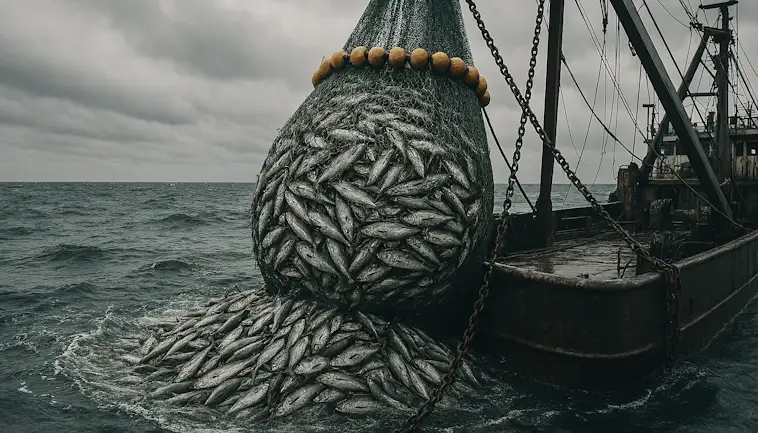
Overfishing Crisis: How Global Demand Is Outrunning Nature’s Limits
The overfishing crisis is no longer a distant threat. It’s happening right now, beneath the waves, where marine life is struggling to keep up with our growing appetite for seafood. As global populations rise, so does the demand for fish protein. Yet oceans don’t replenish at the speed we consume. That imbalance is pushing many species to the edge.
Today, massive trawlers sweep up entire ecosystems in a single outing. Small communities that once relied on their local waters now face empty nets and shrinking incomes. The issue isn’t just environmental—it’s social and economic, too. When fish stocks collapse, communities go with them.
The Hidden Ripple Effects
This overfishing crisis doesn’t stay in the ocean. It trickles into food prices, global trade, and even climate discussions. Fish play a role in regulating the ocean’s carbon cycle. When their populations fall, the natural balance shifts. That could mean bigger changes than we expect.
Still, there’s room for hope. Sustainable fishing practices are gaining momentum. Consumers are paying attention to where their seafood comes from. New technologies are helping track and protect species before they vanish.
Taking action now means future generations can enjoy healthy oceans, thriving fisheries, and seafood on their plates. The next step is simple: stay informed, choose responsibly sourced products, and support policies that protect the seas. The solution starts with awareness—and then with us.
The Vanishing Marine Species and What It Means for Food Security
Our oceans are changing faster than many people realise. Fish once thought to be plentiful are now harder to find. Coastal communities notice empty nets where there used to be overflowing catches. This isn’t just a matter of biodiversity. It’s about food security for millions of people.
Around the world, more than three billion people rely on seafood as their primary source of protein. When marine species decline, families feel it at the dinner table. And as prices rise, the most vulnerable households face the biggest struggle. The challenge grows as populations increase and diets shift toward more seafood.
Overfishing is a major cause. Climate change plays a growing part too. Warmer waters force species to move, making traditional fishing grounds less reliable. Invasive species and pollution add to the pressure. When we lose marine life, we also lose the balance that ecosystems depend on.
If these trends continue, tomorrow’s oceans could look very different. But there is hope. Policies that support sustainable fishing, ocean restoration, and waste reduction are already proving successful in some regions. When we protect ocean life, we protect our own future.
The chart below highlights estimated declines in several well-known species. It helps us understand the scale of change happening just beneath the surface.
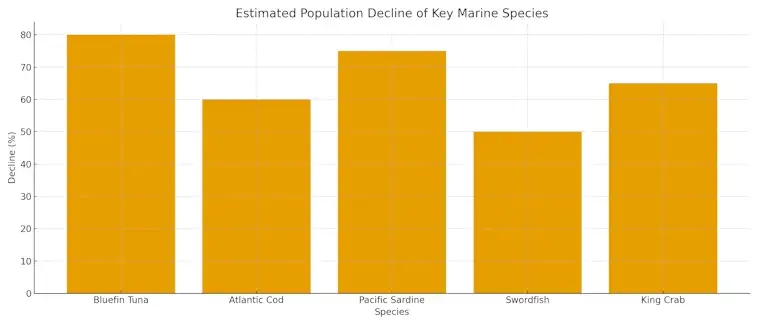
This visual reminder shows why it’s time to invest in healthier oceans. Protecting marine species isn’t just about saving wildlife. It’s about securing a stable food supply for generations to come.
Overfishing Crisis: The Economic and Ecological Cost We Can’t Ignore
The overfishing crisis is no longer a distant warning. It’s a problem unfolding right now in coastal communities, global markets, and the oceans that feed millions. Fish populations are declining faster than they can recover. As a result, both local economies and marine life are paying the price.
What makes this crisis so urgent is that it affects much more than biodiversity. It influences food security, jobs, and the health of ocean ecosystems. If we continue on this path, the damage may be irreversible. Yet, people are starting to ask the right questions. What would it mean to restore balance? How do we protect both fishermen and the fish populations they depend on?
The burden of the overfishing crisis shows up in two major areas—our economy and our environment.
- Loss of fisheries reduces income for millions of people.
- Ocean species struggle to survive as food chains collapse.
- Seafood prices rise, impacting households and restaurants.
- Coral reefs and marine habitats suffer long-term damage.
- Illegal fishing causes governments to lose millions in tax revenue.
The overfishing crisis matters because the ocean is one of our most valuable resources. It’s a source of food, jobs, oxygen, and natural beauty. Protecting it isn’t optional—it’s essential. With smarter policies, better technology, and sustainable fishing practices, recovery is possible.
Now is the moment to rethink our relationship with the sea. The choices we make today will determine whether future generations inherit thriving oceans or empty ones.
How Technology and Industrial Fishing Accelerate Ocean Depletion
Our oceans once felt endless. They were rich, balanced, and full of life. Yet today, they’re struggling to keep up with a rapidly changing world. One of the biggest drivers of ocean depletion is the rise of advanced technology in industrial fishing. While innovation has solved many problems on land, it has created new risks offshore.
Modern fishing fleets no longer depend on luck or basic tools. Instead, they use satellite tracking, high-precision GPS, sonar, and even artificial intelligence to locate fish with incredible accuracy. As a result, more fish are caught, and they’re caught faster than nature can replace them. Because these tools are efficient, entire populations of fish are targeted before scientists can truly understand the long-term impact.
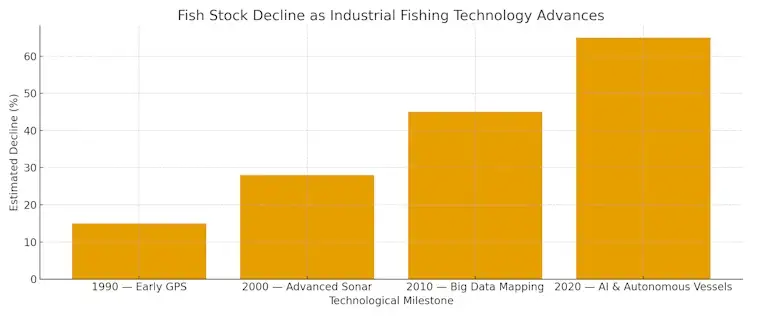
Moreover, industrial operations sweep up massive quantities in a single trip. This scale leaves little room for recovery. When factory-sized fishing meets advanced technology, the result is a rapid decline in global fish stocks. The data below shows how this decline has accelerated as new technology entered the industry.
A forward-thinking solution means embracing better technology, not abandoning it. We can rebuild ocean health through smarter regulation, innovation that protects ecosystems, and choices that encourage sustainable fishing. The future of seafood depends on balancing progress with responsibility — and that future begins now.
This chart visualizes estimated global fish stock decline as major technological milestones transformed industrial fishing.
Turning the Tide: Solutions That Could Restore Balance to Our Seas
Our oceans are reaching a breaking point. Yet there is still time to act. Around the world, new ideas and practical tools are helping restore marine life and rebuild ecosystems that once seemed lost. This shift is gaining momentum. And it offers hope for coastal communities, future generations, and the incredible species that call the sea home.
One promising path forward is community-led marine protection. When local fishers, scientists, and policymakers collaborate, decisions reflect both real-world needs and long-term ocean health. These protected zones give marine life the chance to recover. And when populations bounce back, everyone benefits. Fish stocks improve, biodiversity increases, and ecotourism grows.
Another solution involves redesigning what we use and how we dispose of it. From compostable packaging to large-scale recycling innovations, the pressure on our oceans can decrease dramatically. Many companies are rethinking the life cycle of their products. In turn, consumers are starting to choose options that create less waste and less harm.
Why the Overfishing Crisis Needs Bold Action
The race to catch more fish than the ocean can produce has real consequences. Fish populations struggle to replenish. Meanwhile, coastal economies that depend on fishing face uncertain futures. By embracing sustainable fishing limits, we could reverse this pattern. Countries using science-based quotas are already seeing progress.
Technology is also changing the way fishing fleets operate. Satellite tracking, smart nets, and real-time data give crews better information. That means fewer endangered species caught by mistake, and more accurate fishing records. As these tools become cheaper and easier to use, more regions can adopt them.
If you’d like to explore current global ocean conservation efforts, the UN Environment Programme offers accessible resources for individuals and communities looking to take action.
Turning the tide will take creativity, teamwork, and commitment. But the solutions already exist. With continued effort, we could restore balance to our seas and keep their wonders alive for generations to come.
Turning the Tide on the Overfishing Crisis
The overfishing crisis is no longer a distant threat. It’s unfolding now, reshaping ecosystems and cutting into the lifelines of coastal communities. Yet, this isn’t a story without hope. People, businesses, and governments already have the tools to reverse course. Sustainable fishing policies are proving effective. Consumers are paying more attention to where their seafood comes from. And new ocean-monitoring technology is raising transparency like never before.
Looking ahead, more innovation will arrive as urgency grows. With long-term thinking, global cooperation, and smarter seafood choices, we can give marine life the chance to recover. The next decade matters, and every informed choice counts. If we act together today, our oceans can remain abundant—not just for us, but for generations still to come.