

Industrial Haze: The Hidden Smog Threat Changing Our Skies
Industrial Haze: How Hidden Factory Pollution Affects Your Air and Health
Industrial haze is becoming a growing concern in cities and industrial zones around the world. This thick, grey blanket of polluted air now shapes how millions of people live, work, and breathe each day. While it may look distant or harmless from afar, its impact is close to home. From morning commutes to evening walks, industrial haze quietly changes the quality of our air and our health.
At the same time, awareness is rising. More people now want cleaner skies and safer streets. As a result, new technology and stricter rules are starting to shift how factories operate. However, the problem is far from solved. Climate change, rapid urban growth, and heavy industry all continue to add pressure to the air we share.
Looking ahead, there is still room for hope. Smarter planning, green energy, and better monitoring tools offer real solutions. By understanding industrial haze today, we can take stronger steps toward clearer air tomorrow. And that future is closer than it may seem.
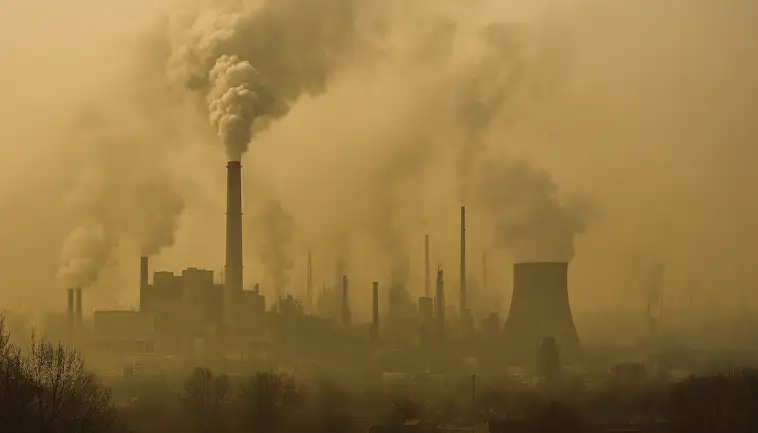
Industrial Haze and the Silent Shift in Our Urban Skies
You may not always notice it, but our cities are changing in ways that feel subtle at first. Yet, once you start paying attention, it becomes clear that the air above us isn’t as crisp as it once was. This slow transformation is driven by something many people overlook: industrial haze.
Today, more factories sit closer to where we live. As a result, the sky carries a thin film of pollution that dims sunlight and affects how the air feels on your skin. It doesn’t arrive with a dramatic warning. Instead, it creeps in quietly, week by week, until muted skies start to feel normal.
How the Haze Sneaks Into Daily Life
Industrial haze often blends into the background of busy city living. You might notice fewer bright blue days. Or maybe your morning runs feel a bit heavier. Sometimes the shift is so slow that it’s easy to shrug off. But over time, this haze affects everything from our mood to our health.
Since industries continue to expand, this shift will likely grow unless we take a closer look. And that’s why understanding what’s happening above us matters. When we know the source, we can shape better choices, support cleaner technologies, and push for transparent policies.
As cities evolve, so does the air we breathe. And while this silent shift may feel beyond our control, acknowledging it is the first step toward clearer skies ahead.
Why Smog Is No Longer Just a Big City Problem
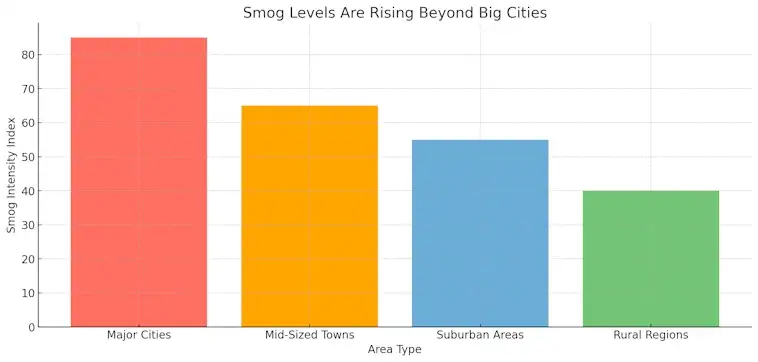
For years, smog felt like a big city issue. Think busy highways. Tall buildings. Heavy traffic. Yet that story is changing fast.
Today, smog is drifting into places that once felt safe and clear. Small towns now face hazy skies. Suburbs see more warning days. Even rural areas are not immune. This shift is linked to changing weather patterns, longer dry seasons, and pollution that travels farther than ever before.
Air does not respect borders. Pollution moves with the wind. So when nearby cities grow, the effects spread. Add more cars, more construction, and rising heat. Suddenly, clean air feels harder to find.
This matters for health. It affects breathing. It limits outdoor play. It even changes how safe the air feels on a normal walk. And looking ahead, experts expect this trend to continue. Unless action keeps pace.
The good news? Awareness is rising too. Communities are pushing for cleaner transport. Green tech is improving fast. People are paying attention. And that is where real change begins.
How Industrial Haze Is Reshaping Air Quality and Public Health
Industrial haze is no longer something that hangs only over distant factory towns. It’s creeping into our daily routines, shaping the air we breathe and the choices we make. You may not always see it, yet it can change how you feel, how much you go outside, and even how your community plans for the future.
Today, more people are asking what this haze means for their health—and for good reason. As industries expand and energy demands rise, the mix of tiny particles and gases released into the air is becoming harder to ignore. And while the problem can feel big, understanding it is the first step toward clearer skies.
Here’s what you need to know about industrial haze, and why it’s becoming such a defining issue:
- Increases the fine particles in the air that can travel deep into the lungs.
- Reduces visibility, which affects road safety and outdoor work.
- Raises the risk of breathing problems, especially for children and older adults.
- Worsens existing conditions like asthma and heart disease.
- Can linger longer in cities with heavy traffic and aging infrastructure.
- Affects local weather by trapping heat and changing air patterns.
As we look ahead, the conversation around industrial haze will only grow. New technologies are emerging. Cities are testing cleaner systems. Communities are pushing for more transparency. And each step brings us a little closer to healthier air.
If we begin to notice the haze—and talk about it—we can start shaping a future where clean air isn’t a luxury but a given.
The Hidden Sources Behind Today’s Thickening Grey Skies
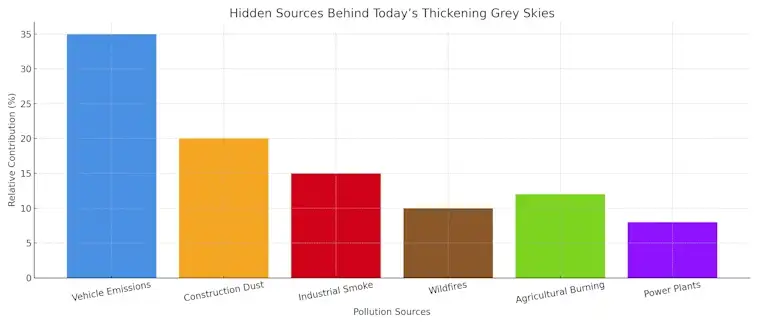
Take a moment to look up. That dull grey blanket in the sky did not appear by accident. It is built layer by layer, day after day, by sources many of us never notice.
Traffic is one of the biggest drivers. Cars, buses, and delivery trucks release fumes that mix with dust and moisture. As cities grow, so does the haze. Meanwhile, construction sites add fine particles that stay floating longer than you might think.
Then there is industrial smoke. Factories and plants still rely on heavy fuels in many regions. These emissions travel far. They do not stop at city borders. They drift and settle, changing the color of the air above us.
Wildfires also play a growing role. Hotter, drier seasons mean more fires and more smoke. This is no longer rare. It is becoming the new normal. At the same time, open burning in farming areas adds another steady stream of pollutants.
So what does this mean for the future? The good news is progress is happening. Electric vehicles are expanding. Cleaner building methods are on the rise. Smart city planning is gaining ground. Step by step, the grip of grey skies can loosen.
Awareness is the first step. Action comes next. And together, change is still possible.
What Cleaner Technology Could Mean for a Brighter Future
The world is changing fast. And so is the way we power our lives. Cleaner technology is no longer a distant idea. It is becoming part of everyday life. From electric vehicles to smart energy grids, new solutions are shaping a better tomorrow.
Right now, people want air that feels fresh. They want water that is safe. They also want energy that does not harm the planet. Because of this, cleaner technology is moving from trend to standard. It is simple. It works. And it offers hope.
Cleaner technology means less waste and fewer harmful emissions. It also means quieter streets and clearer skies. Over time, this shift can make cities healthier places to live. Even better, it can lower costs and create new jobs.
At the same time, innovation keeps pushing forward. Solar panels are becoming more efficient. Wind power is growing stronger. Batteries last longer than ever before. As a result, clean energy feels more reliable each year.
A Fresh Look at Industrial Haze and Healthier Cities
Industrial Haze has long been a sign of heavy pollution. Yet new technology is helping reduce it in smart ways. Advanced filters now trap harmful particles. Cleaner fuels cut down thick smoke. Better monitoring tracks air quality in real time.
So, what does this mean for the future? It means children can breathe easier. It means parks stay greener. And it means communities can thrive without fear of constant pollution.
Looking ahead, the promise is clear. Cleaner technology brings balance. It protects nature while supporting growth. With steady progress and shared effort, a brighter future feels closer than ever.
And yes, it starts today.
Looking Ahead: Clearing the Future from Industrial Haze
Industrial haze may seem distant. Yet it is shaping the air we breathe right now. It dims our skies. It strains our lungs. And it quietly rewrites the story of our cities.
Still, change is possible. In fact, it is already starting. Cleaner energy, smarter planning, and stricter rules are slowly pushing back against industrial haze. At the same time, new technology is making it easier to track pollution and act faster.
However, progress needs people. When communities speak up, leaders listen. When businesses shift to greener methods, the air improves. And when individuals make small choices, the impact adds up.
So, while industrial haze remains a hidden smog threat, it does not have to define our future. Instead, we can choose clearer days. Brighter skies. And healthier lives.
The path forward is not perfect. Yet it is hopeful. And together, step by step, we can make the air safer for generations to come.
Discover more about the health impacts of air pollution at WHO.