
Could Acid Seas Be the Ocean’s Silent Crisis Unfolding?
Rising CO₂, Dying Oceans: The Alarming Truth About Acid Seas
The growing concern over acid seas is more than just another environmental headline—it’s a warning sign from the deep. As carbon emissions rise, the ocean quietly absorbs much of that excess CO₂, changing its chemistry in ways we’re only beginning to understand. Beneath the surface, this shift is dissolving coral reefs, weakening marine ecosystems, and threatening the food sources that millions rely on.
Scientists call it ocean acidification, but its impact reaches far beyond science labs. It affects the fish on dinner plates, the livelihoods of coastal communities, and even the planet’s ability to regulate climate. The oceans have long been Earth’s buffer, absorbing heat and carbon, yet their resilience is showing cracks. The question now isn’t whether acid seas are real—it’s how quickly we can respond before they reshape life as we know it.
What’s Really Behind the Rise of Acid Seas?
The ocean has always been our planet’s silent protector. It absorbs huge amounts of carbon dioxide, helps regulate our climate, and supports millions of species. But lately, something’s changing — and it’s not good news. The rise of acid seas is one of the most worrying shifts happening beneath the surface.
So, what’s really driving it? The answer, like most modern environmental stories, starts with our dependence on fossil fuels. Every time we burn coal, oil, or gas, we release carbon dioxide (CO₂) into the air. Roughly a third of that CO₂ ends up in the ocean, where it reacts with seawater and forms carbonic acid. Over time, this process changes the ocean’s chemistry, lowering its pH and making it more acidic.
How Acid Seas Are Changing Marine Life
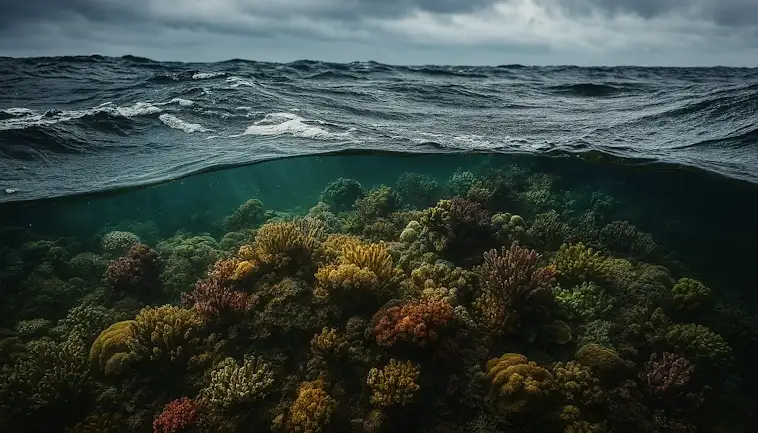
This chemical shift might sound small, but it’s powerful. Many marine creatures — from tiny plankton to coral reefs — depend on calcium carbonate to build their shells and skeletons. Acidic water dissolves that material more easily, making it harder for them to grow and survive. Coral reefs, which act as nurseries for a quarter of all marine species, are especially at risk.
And it doesn’t stop there. As food chains are disrupted, the effects ripple through the entire ocean ecosystem — and eventually reach us. Coastal communities that rely on fishing or tourism are already feeling the pressure.
Scientists are warning that unless we cut emissions quickly, the acid seas could reshape marine life as we know it. The good news? We still have time to act. Reducing carbon pollution and protecting marine habitats can help slow the damage and give the ocean a chance to recover.
If you’d like to dig deeper into how ocean acidification works, check out this resource from the National Oceanic and Atmospheric Administration (NOAA).
How Ocean Acidification Threatens Marine Life and Coral Reefs
Imagine walking into the ocean and finding the coral reefs dull and lifeless. Fish are fewer, shells thinner, and the once vibrant underwater world feels eerily quiet. This isn’t a scene from the future—it’s already happening. The culprit? Ocean acidification.
Every time carbon dioxide (CO₂) is released into the air, much of it ends up in our oceans. When CO₂ dissolves in seawater, it forms carbonic acid, lowering the ocean’s pH. That means the water becomes more acidic. Even small shifts in acidity can cause massive problems for marine life.
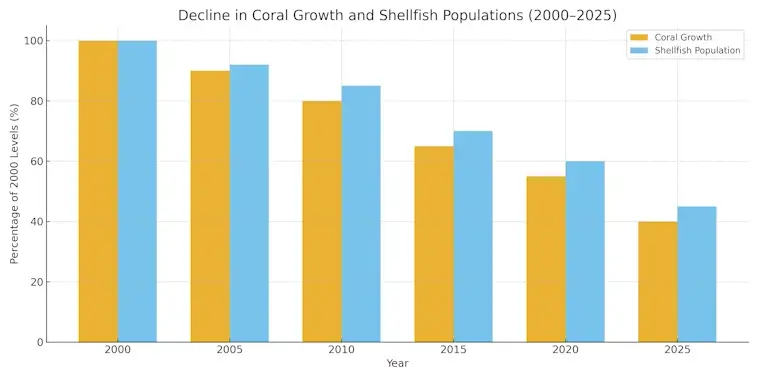
Coral reefs are especially vulnerable. Acidic water makes it harder for corals to produce calcium carbonate—the material that builds their skeletons. Without strong skeletons, reefs can’t grow or recover from damage. This threatens entire ecosystems since reefs are home to about a quarter of all marine species.
Shellfish like oysters, clams, and snails also struggle. Their shells weaken, making them easy prey and disrupting coastal food chains. Tiny plankton, which form the base of marine life, are also affected. When they suffer, everything else up the chain does too.
The good news? We can act. Cutting CO₂ emissions, protecting coastal habitats, and supporting sustainable fishing can slow acidification and give marine life a fighting chance. The ocean has always been resilient—but it needs our help now more than ever.
Why Acid Seas Could Reshape Coastal Economies Forever
The ocean is quietly changing, and not for the better. As carbon emissions rise, our seas are becoming more acidic — a process scientists call ocean acidification. It’s one of the most serious, yet least visible, threats to our coastal economies. The story of acid seas isn’t just about marine life. It’s about people, jobs, and entire ways of life that depend on healthy waters.
When seawater absorbs too much carbon dioxide, its chemistry shifts. Shellfish struggle to form shells. Coral reefs weaken. Fish populations move to cooler or less acidic areas. For communities that rely on fishing, tourism, and aquaculture, this means less income, fewer visitors, and growing uncertainty.
Here’s what’s at stake:
- Shellfish industries could collapse as oysters, clams, and crabs fail to survive in more acidic waters.
- Tourism may decline as coral reefs — the backbone of many tropical economies — lose their color and life.
- Fisheries might see declining catches as fish migrate to more stable habitats.
- Coastal jobs in food, hospitality, and transport could vanish, leaving communities struggling to adapt.
- Marine ecosystems could face permanent shifts, altering the balance of food webs and biodiversity.
These effects ripple far beyond the water’s edge. Coastal economies support millions of people globally. As acid seas spread, the financial and social costs could reshape entire regions.
So, what can we do? Reducing carbon emissions remains the best long-term solution. But local actions — like restoring seagrass meadows, protecting wetlands, and managing coastal pollution — can also make a difference.
If we act now, we can still turn the tide — and protect both our oceans and the livelihoods that depend on them.
The Hidden Link Between Carbon Emissions and Ocean Chemistry
Most people think of carbon emissions as a sky-high problem — something that affects our air and climate. But few realize how deeply they shape our oceans too. Every ton of CO₂ we release doesn’t just hang in the atmosphere. A large part of it is absorbed by the sea, silently changing its chemistry.
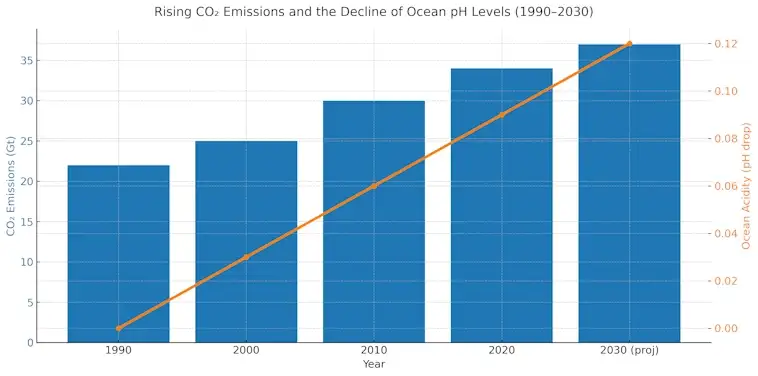
When carbon dioxide mixes with seawater, it forms carbonic acid. Over time, this process lowers the ocean’s pH, making it more acidic. That shift might sound small, but it has a massive impact on marine life — from coral reefs struggling to grow, to tiny shell-forming creatures that form the base of the food chain. As acidity rises, the ocean’s ability to support life begins to weaken.
What’s worrying is how quickly this is happening. Since 1990, carbon emissions have surged, and ocean acidity has followed closely behind. The connection is undeniable, and the trend shows no sign of slowing down unless emissions are drastically reduced.
It’s a reminder that the fight against climate change doesn’t stop at the atmosphere. It runs deep — all the way to the heart of our oceans.
Can Global Action Reverse the Damage Before It’s Too Late?
Every year, the planet sends us clearer warning signs — stronger storms, shrinking forests, and oceans struggling to breathe. It’s easy to feel like we’ve passed the point of no return. But here’s the thing: global action can still make a difference. The question is, will we move fast enough?
The world has already proven what’s possible when countries work together. The ozone layer, once in crisis, is slowly healing thanks to a global ban on harmful chemicals. That success story shows us that coordinated effort — not despair — can turn the tide. But tackling climate change is a far bigger challenge. It’s about changing how we power our lives, grow our food, and move around.
The Hidden Crisis: Acid Seas
Few realize how deeply our oceans are being affected. As carbon dioxide builds up in the air, much of it dissolves into seawater, making the oceans more acidic. These acid seas threaten coral reefs, shellfish, and the entire marine food web. When reefs die, coastal communities lose protection from storms and a vital source of income.
The good news? Scientists say we can still slow the process. Reducing emissions, protecting marine habitats, and restoring mangroves can help the ocean recover its natural balance. It’s not just about saving fish — it’s about safeguarding our future.
If you want to dive deeper into how global cooperation is shaping climate recovery, check out the United Nations Environment Programme. They track real progress on policies that could still pull us back from the brink.
The clock is ticking, but it hasn’t stopped yet. Every action — from government policies to personal choices — can push us closer to healing the planet. The real question is, will we choose to act in time?
Turning the Tide on Acid Seas
The growing threat of acid seas is more than an environmental warning—it’s a call for action. Our oceans are changing quietly but dramatically, and those changes ripple through marine life, food chains, and even global weather patterns. While it’s easy to overlook what’s happening beneath the surface, every choice we make—from reducing carbon emissions to supporting ocean-friendly policies—can help restore balance.
The crisis unfolding in our seas doesn’t have to be silent forever. By paying attention now, sharing awareness, and choosing sustainability, we can protect the blue heart of our planet for future generations. The time to act on acid seas is today—because a healthy ocean means a thriving Earth.