

Can Nature Resilience Shape a Safer Future?
The Power of Nature Resilience and What It Means for Our Future
Nature resilience is becoming a powerful guide as we rethink how to stay safe in a world facing more heat, storms, and stress. Many people sense that something is shifting, yet they also want clear, practical ideas that offer hope. That’s where the strength of natural systems steps in. They adapt, recover, and protect in ways that often outperform anything we can build alone.
As awareness grows, so does the understanding that healthier landscapes mean healthier communities. Forests cool neighborhoods. Wetlands slow floods. Green corridors give wildlife room to move and help keep ecosystems balanced. Step by step, these benefits shape a future that feels more secure and more stable.
Looking ahead, the smartest path may be one that blends science, local action, and long-term thinking. Nature already shows us how to adjust and rebound. When we support those patterns, safety becomes easier to maintain, and progress feels more within reach.
How Nature Resilience Helps Us Prepare for a Changing World
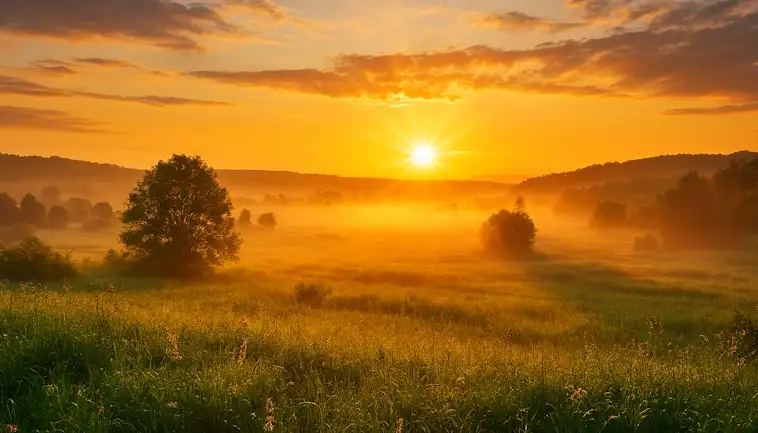
Nature has an incredible ability to bounce back. Think of forests regrowing after wildfires or coral reefs slowly rebuilding after storms. This ability — known as nature resilience — isn’t just fascinating. It’s a powerful reminder of how we can learn to adapt, too.
As our world faces bigger environmental challenges, nature resilience shows us that recovery is possible. It teaches us that with the right care, restoration, and patience, balance can return — even after disruption. This idea isn’t only about ecosystems. It’s about how we live, build communities, and protect our future.
What We Can Learn from Nature’s Comebacks
When we look closely, we see nature’s resilience everywhere. A single tree growing through cracked pavement. A wetland filtering pollution. A bee population recovering when pesticides are reduced. These examples remind us that small changes can lead to big recoveries.
For people and communities, this means investing in green infrastructure, restoring local habitats, and supporting conservation efforts. It’s not just about saving nature — it’s about working with it to create a safer, more stable world for everyone.
In the end, nature resilience gives us hope. It proves that even after the hardest storms — literal or metaphorical — renewal is always possible.
Why Restoring Ecosystems Builds Stronger Communities
When we talk about restoring nature, we often think of planting trees or cleaning rivers. But it’s much more than that. Restoring ecosystems is really about rebuilding the foundations of healthy, resilient communities. It’s about creating places where people and nature thrive together.
Healthy ecosystems provide clean air, fresh water, and fertile soil. They also reduce the risks of floods, wildfires, and droughts. When we bring back forests, wetlands, and grasslands, we’re investing in natural systems that protect us. In return, these natural defenses save lives and money.
Beyond the environment, restoration has powerful social benefits too. It creates jobs in conservation, supports local farmers, and brings neighbors together through shared purpose. Communities that work together on restoration projects often grow stronger bonds and a deeper sense of pride in their local area.
And here’s something important: these projects also build hope. In a time of climate anxiety, seeing a forest come back to life or a river run clear again reminds people that change is possible. It gives communities the courage to keep going and the confidence to take on bigger challenges.
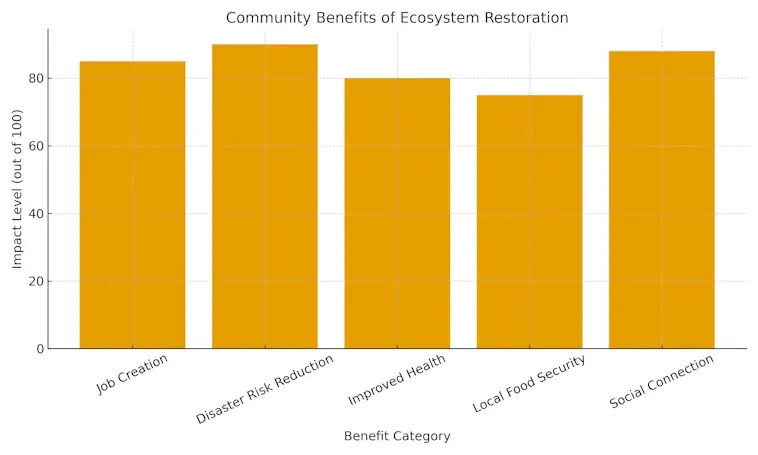
When we heal the land, we heal ourselves. Ecosystem restoration isn’t just about saving nature – it’s about strengthening the communities that depend on it.
Nature Resilience and the Path Toward Safer Cities
Cities are growing fast, but not always in harmony with nature. Floods, heatwaves, and air pollution are reminders that when we push nature aside, we end up putting ourselves at risk. That’s where nature resilience comes in — the idea that a city’s safety and sustainability depend on how well it works with nature, not against it.
Think of nature resilience as giving cities the ability to bounce back from shocks. It’s about protecting green spaces, restoring waterways, and building in ways that support both people and the planet. When we strengthen nature’s systems, we strengthen our own.
Here’s what cities can do to boost their nature resilience:
- Rewild urban spaces: Turn unused land into mini forests or pollinator gardens that cool the air and absorb carbon.
- Invest in green infrastructure: Use permeable pavements, rooftop gardens, and rain-absorbing parks to prevent flooding.
- Restore waterways: Clean rivers and wetlands can act as natural buffers against storms and rising seas.
- Support biodiversity: Encourage local plants and wildlife — they help maintain balance in fragile ecosystems.
- Plan for climate adaptation: Build smarter, not just bigger, by integrating nature into urban design.
When cities embrace nature resilience, they don’t just survive climate challenges — they thrive through them. Healthier air, cooler streets, and stronger communities are all part of the reward.
If you want to dive deeper into how cities can adapt to a changing climate, the World Resources Institute has a great overview of global projects making a difference.
Simple Ways We Can Support Natural Defenses Today
Nature already knows how to protect itself — and us. Forests filter our air, wetlands absorb floods, and soil stores carbon. But these systems are under pressure. The good news? We can help them recover with a few simple choices that add up fast.
Start with your own space. Plant native trees or even a few pollinator-friendly plants. These boost biodiversity and make your garden part of a larger, living network. Next, try cutting down on plastic. Every bottle or wrapper you skip means fewer microplastics entering rivers and oceans.
Supporting local farmers also strengthens natural defenses. Small farms often use sustainable practices that keep soil healthy and reduce pollution. Add in easy habits like conserving water, choosing renewable energy when possible, and protecting wetlands through community initiatives.
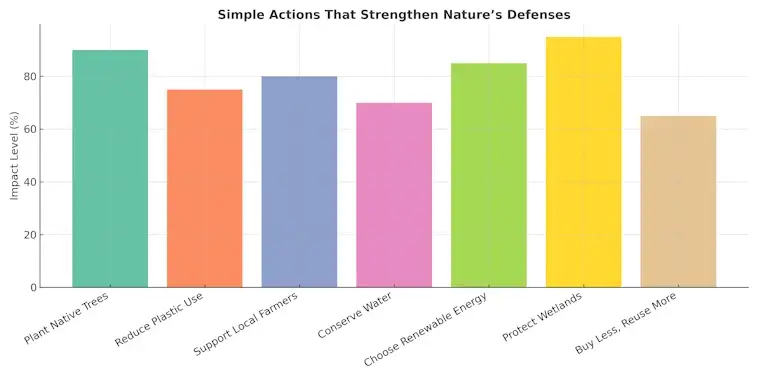
Even minimal changes make a difference when we all join in. It’s not about being perfect—it’s about doing what we can, today.
What the Future Could Look Like When We Work With Nature
Imagine a future where cities breathe again. Streets lined with trees, clean rivers winding through communities, and buildings designed to cool themselves naturally. It’s not a fantasy—it’s what happens when we start working with nature instead of against it.
Right now, we’re at a turning point. Climate change isn’t just a warning anymore; it’s a lived reality. But here’s the good news—nature already has the answers. By restoring wetlands, protecting forests, and investing in green infrastructure, we can rebuild balance. These natural systems cool our cities, clean our air, and protect us from floods.
Building True Nature Resilience in Our Cities
Nature resilience isn’t just about survival—it’s about renewal. When ecosystems are strong, communities are stronger too. Urban green roofs can reduce heat waves. Mangroves can shield coastlines. Even small actions, like planting native trees in neighborhoods, can make a powerful difference.
Working with nature also opens new opportunities. Jobs in renewable energy, sustainable agriculture, and ecosystem restoration are growing fast. It’s proof that protecting the planet can also fuel our economies.
To see how some communities are already leading this change, check out the inspiring examples at UN Environment Programme’s Nature-Based Solutions.
If we lean into this partnership—humans and nature, side by side—the future won’t just look greener. It will feel healthier, calmer, and more alive.
Building Tomorrow Through Nature’s Resilience
Nature resilience isn’t just a hopeful idea—it’s our blueprint for survival. From forests that recover after wildfires to coastlines that adapt to rising seas, nature shows us what endurance truly means. When we protect ecosystems and work with natural processes, we don’t just restore landscapes—we build safer, more stable communities.
The next step is simple but powerful: invest in nature. Support green spaces, protect biodiversity, and champion sustainable design in your city or neighborhood. The stronger nature becomes, the safer and more balanced our world will be. Because in the end, nature’s resilience is also our own.