

Climate Chaos: The Alarming Reality We Can’t Ignore
Climate Chaos: How a Warming World Is Rewriting Our Future
The signs of climate chaos are no longer distant warnings—they’re unfolding right now. From record-breaking heat waves to violent storms and shifting seasons, our planet is sounding the alarm louder than ever. The patterns we once relied on are breaking down, leaving communities worldwide struggling to adapt to a new and unpredictable normal.
Every year, the evidence grows harder to ignore. Oceans are warming, wildfires are intensifying, and air pollution is blurring the line between natural and human-made disasters. What’s happening isn’t just an environmental issue—it’s reshaping economies, health systems, and the way we live. Yet amid all this uncertainty, there’s also opportunity. With innovation, accountability, and bold action, it’s still possible to turn the tide and create a safer, more stable future for generations to come.
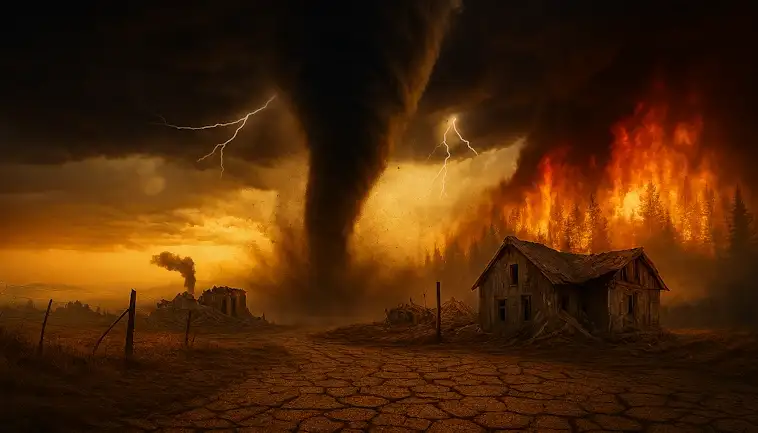
Climate Chaos Explained: What’s Really Driving the Extreme Weather Around Us
Everywhere you look, the weather seems to be breaking records. One week it’s scorching heat, the next it’s flash floods or freak snowstorms. It’s easy to feel like the planet’s gone off balance—and in many ways, it has. Scientists call it climate change, but lately, many are using a stronger term: climate chaos.
This phrase captures what we’re all noticing—unpredictable, extreme, and sometimes frightening shifts in weather patterns. But what’s really behind it all?
The Heat Engine That’s Spinning Out of Control
At the heart of climate chaos is a simple truth: the Earth is warming, and that extra heat is fueling instability. When the atmosphere holds more moisture, storms become heavier. When oceans absorb more heat, hurricanes gain strength. And when ice melts faster, weather systems that used to stay steady now swing wildly from one extreme to another.
Think of it like this: our climate system is a finely tuned engine, and we’ve turned up the throttle without adjusting anything else. The result? Chaos.
What’s particularly worrying is that these changes don’t stay in one place. A heatwave in Europe can disrupt crops in Africa. A wildfire in Canada can send smoke across continents. It’s a reminder that climate chaos isn’t just a local issue—it’s global, and deeply connected.
If you want to dig deeper into the science behind these changes, the Intergovernmental Panel on Climate Change (IPCC) offers reliable insights from thousands of climate experts around the world.
But here’s the hopeful part: understanding what drives climate chaos is the first step to managing it. With smarter energy choices, better planning, and stronger global cooperation, we can still slow the storm before it gets worse.
From Droughts to Floods: How the Planet’s Balance Is Breaking Down
One moment, the land cracks open under months of relentless sun. The next, torrential rains turn streets into rivers. Our planet’s natural rhythm—once steady and predictable—is now faltering. The shift from drought to flood is becoming faster, more intense, and more damaging. Scientists call this the “climate whiplash,” and it’s a growing threat that touches every corner of the world.
What we’re witnessing isn’t just bad luck. It’s the direct result of a changing climate. Rising global temperatures disrupt weather patterns that once kept things in balance. Warmer air holds more moisture, which means longer dry spells often end in sudden, heavy rainfall. The result? Droughts that devastate crops followed by floods that sweep away what’s left.
In the United States alone, weather-related disasters have tripled over the past four decades. The pattern is the same across continents: wildfires in Australia, floods in Pakistan, and record-breaking heat in Europe. These aren’t isolated events. They’re signals that our planet’s natural systems are under pressure—and struggling to adapt.
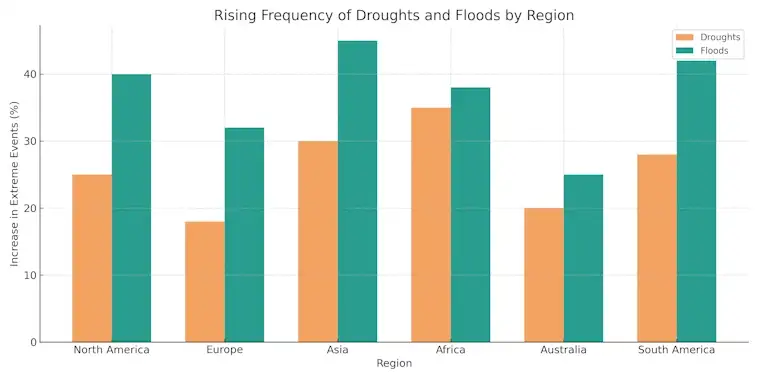
But there is hope. Communities around the world are finding ways to restore balance. Smarter water management, reforestation, and renewable energy are helping reduce risk and build resilience. Still, the time to act is now. The longer we wait, the more these extremes will define our future.
Climate Chaos and Human Survival: Why Action Can’t Wait Any Longer
Let’s be honest, climate chaos is no longer a distant worry. It’s here, reshaping our daily lives in ways that are hard to ignore. From record-breaking heatwaves to devastating floods, we’re living through a time when nature is sending urgent signals that our balance with the planet is broken.
But here’s the thing: while the situation sounds overwhelming, it’s not hopeless. Every major change in history started with ordinary people deciding that “enough is enough.” And right now, that’s exactly what the world needs—collective courage and action.
The reality is simple. We can’t afford to wait. The choices we make today will decide not only what kind of world we live in but whether future generations have a livable planet at all. So, where do we start?
Here are a few essential actions that can help turn the tide on climate chaos:
- Shift to renewable energy like solar and wind—it’s cleaner, cheaper, and ready to scale.
- Rethink how we travel by choosing electric vehicles, cycling, or using public transport.
- Support sustainable food systems that cut waste and protect biodiversity.
- Hold leaders and corporations accountable for the promises they make on climate action.
- Reimagine consumption—buy less, reuse more, and focus on quality over quantity.
Each small step adds up. The truth is, solving climate chaos isn’t about perfection—it’s about momentum. And that momentum starts with us, in our homes, communities, and workplaces.
If you want to dig deeper into how global temperatures are already shifting and what scientists predict for the next decade, take a look at the data from NASA’s Climate Change and Global Warming Resource.
The clock is ticking, but hope is still on our side—if we act now.
The Hidden Cost of Inaction: Who Pays the Price for a Warming World?
We often talk about climate change in the future tense — as if the real costs are still years away. But the truth is, the bill has already arrived, and it’s bigger than we think.
Across continents, communities are paying the price for inaction. From flooded neighborhoods to burned farmland, the damage shows up in our homes, our wallets, and our health. The latest data reveals billions in economic losses every year — and millions of lives disrupted by rising temperatures, extreme storms, and shifting seasons.
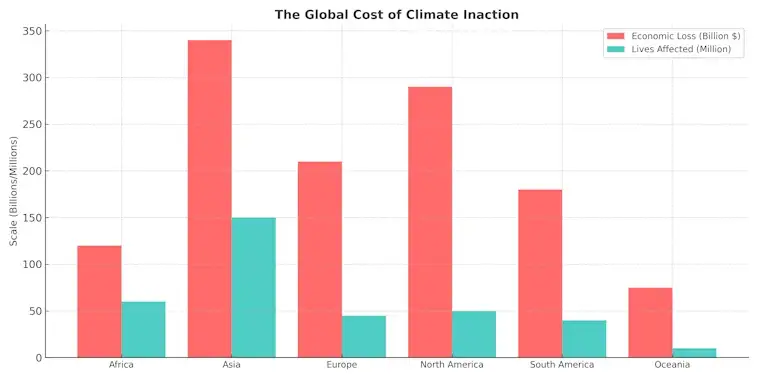
While Asia bears the heaviest toll, no region is truly spared. Every spike in cost reflects a story — of lost harvests, displaced families, and strained economies.
The question isn’t if we can afford to act. It’s whether we can afford not to.
If you’d like to dig deeper into who’s paying the highest price, the UN Environment Programme offers detailed reports and interactive data on global climate impacts.
A Path Forward: Real Solutions to Calm the Climate Storm
It’s easy to feel overwhelmed by the constant flood of climate headlines. Floods, fires, and heatwaves can make the future seem bleak. But here’s the thing — we still have time to turn things around. Across the world, people are already proving that practical, affordable solutions can make a real difference.
The path forward isn’t about waiting for miracle technology or global agreements. It’s about taking smart, steady action — right now. From how we power our homes to how we grow our food, every choice adds up. And when communities work together, those small steps become powerful waves of change.
Rethinking Our Response to Climate Chaos
To calm the storm, we first need to rethink how we respond to climate chaos. It starts with cleaner energy. Solar and wind power are now cheaper than fossil fuels in many places, making it easier than ever to switch. Cities are redesigning streets to favor bikes, buses, and pedestrians — helping cut emissions while improving daily life.
Farmers, too, are joining the movement. Regenerative agriculture restores soil, locks away carbon, and makes food systems more resilient. Even small local projects, like tree planting and wetland restoration, can help cool communities and protect wildlife.
Most importantly, these actions remind us that climate solutions aren’t distant ideas. They’re happening now, led by people who care about their neighborhoods, their health, and their future.
If you want to dive deeper into what’s working around the world, the United Nations Climate Action portal shares inspiring stories and practical guides to help individuals and communities take action.
Together, we can rewrite the ending to this storm — one grounded in hope, collaboration, and determination. The future isn’t written yet. Let’s make sure it’s a better one.
Turning Awareness Into Action: The Time to Act Is Now
As climate chaos unfolds before our eyes, it’s no longer a distant problem—it’s here, shaping the world we live in today. From record-breaking heatwaves to devastating floods, the evidence is impossible to ignore. But while the situation is urgent, it’s not hopeless. Every action we take—from choosing clean energy to supporting sustainable policies—pushes us closer to a livable, balanced future.
So, don’t let the momentum fade. Start by making one meaningful change today—reduce waste, speak up for climate solutions, or share this article to keep the conversation alive. Together, we can turn awareness into action and rewrite the story of our planet’s future. The question isn’t if we can make a difference—it’s how fast we choose to begin.