

Coal Power and the Cost We Can’t Afford to Pay
The Real Cost of Coal Power: What It Means for Our Planet and Economy
Coal power has long fueled economies, kept cities bright, and industries running. Yet behind that steady flow of energy lies a growing environmental debt that can no longer be ignored. From choking air pollution to rising carbon emissions, the true cost of coal power stretches far beyond utility bills and balance sheets.
As the planet warms and clean energy grows cheaper, questions about the future of this once-dominant fuel are getting louder. Every ton of coal burned adds to a legacy of damage — not just to the climate, but to communities living near power plants and mines. The health of our air, water, and soil now hangs in the balance.
The story of coal power isn’t only about energy; it’s about consequences. And understanding those consequences is key to shaping a cleaner, more sustainable future.
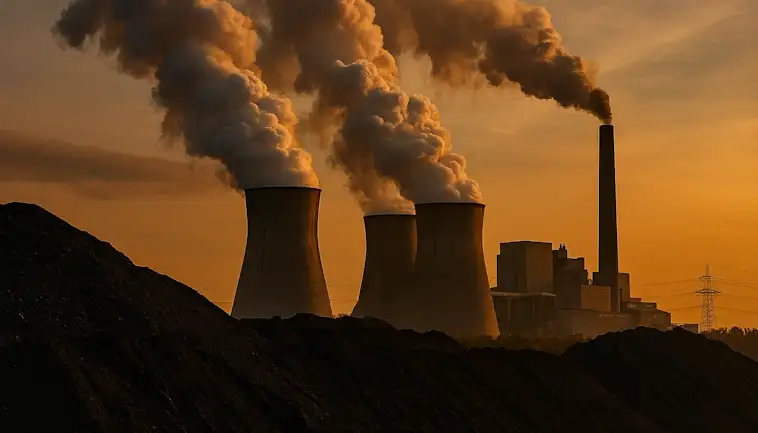
How Coal Power Still Shapes Our Energy Future
Coal might sound like a thing of the past — a relic from the industrial age — but it still quietly powers much of our world today. Even as renewable energy grows fast, coal continues to shape how electricity is made, traded, and priced across the globe. It’s not just about nostalgia or old habits; it’s about economics, infrastructure, and energy security.
Right now, coal still supplies around a third of global electricity. In developing countries, it’s even higher. That’s because coal plants are already built, reliable, and — in many cases — hard to replace overnight. Even as governments set net-zero targets, coal remains a backup that keeps the lights on when renewables can’t meet demand.
Why Coal Still Matters in a Renewable Age
Coal plays a key role in stabilizing energy grids. When solar and wind power fluctuate, coal plants can fill the gap. That reliability comes at a cost, though — emissions. Many nations are struggling with how to balance clean energy goals with the reality of existing coal infrastructure.
Meanwhile, investment trends are shifting. New projects are rare in wealthier nations, but coal use is rising in parts of Asia and Africa where energy demand is booming. These countries face tough choices: grow their economies quickly with affordable coal power, or risk slower development while waiting for renewable capacity to catch up.
The future isn’t all bleak, though. Carbon capture technology is evolving fast, and some plants are being retrofitted to emit less. The real challenge is how quickly these solutions can scale — and whether they’ll be affordable enough to make a real dent.
As we move toward a cleaner energy future, coal’s influence will fade, but not disappear overnight. Its legacy — the infrastructure, the jobs, the markets — will keep shaping global energy decisions for decades.
The Hidden Price of Keeping the Lights On
We rarely think about what it takes to power our homes, charge our phones, or light up our cities. But behind every flick of a switch lies a hidden cost—one that goes far beyond our utility bills.
Electricity prices may seem like just another monthly expense, yet they’re deeply tied to the health of our planet. In many countries, cheap electricity often comes from high-pollution sources like coal. On the other hand, cleaner energy—like solar or wind—can cost more upfront but saves money and emissions in the long run.
It’s a tricky balance. Countries like Germany pay more for electricity but emit less carbon per megawatt hour. Meanwhile, nations with cheaper rates often carry a heavier carbon footprint. This trade-off shows how our energy choices today shape tomorrow’s environment.
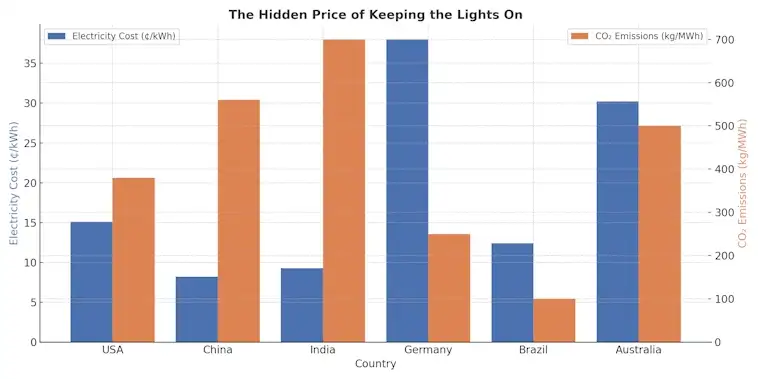
The real question isn’t just how much we pay—it’s what we’re paying for. Are we investing in cleaner, smarter energy systems, or are we borrowing from the planet’s future to power the present?
Why Coal Power Is Draining More Than Our Resources
Coal power has fueled our world for more than a century. It built cities, powered factories, and lit millions of homes. But as we look closer, the real cost of coal power is becoming impossible to ignore. It’s not just about the smoke in the sky — it’s about the long-term damage to our health, climate, and economy.
The truth is, coal power drains far more than fossil fuels. It quietly takes from our communities, our air, and our future. And while it might seem like an affordable source of energy, the hidden costs tell a different story.
Let’s break down what coal power is really costing us:
- Health impacts: Coal plants release fine particles and toxic gases that increase asthma, heart disease, and even premature deaths.
- Water waste: Enormous amounts of water are used to cool coal-fired plants, often in regions already facing drought.
- Environmental destruction: Coal mining scars landscapes, destroys wildlife habitats, and contaminates local water supplies.
- Economic strain: As renewable energy becomes cheaper, coal power plants are becoming outdated, leaving behind job losses and stranded assets.
- Climate cost: Coal remains the largest single source of carbon emissions, driving extreme weather and global warming.
When we talk about energy today, we can’t just think about the immediate price per kilowatt-hour. We have to consider the full picture — what it costs us in public health, lost ecosystems, and climate stability.
The world is already moving forward. Solar, wind, and battery storage are growing faster than ever, and they’re now cheaper in many places than running existing coal plants. The shift away from coal power isn’t just about saving the planet; it’s about choosing a future where energy doesn’t come at such a heavy cost.
It’s time to look beyond what coal power gives us — and start paying attention to what it takes away.
From Health Risks to Climate Damage: The Human Cost of Coal
When we think about coal, many picture black dust, power plants, or jobs in mining towns. But there’s another side to coal that often goes unseen — its deep toll on human health and our planet.
Every stage of coal’s life cycle leaves a mark. From mining to burning, it releases toxic air pollutants like mercury, sulfur dioxide, and fine particles that we breathe in every day. These invisible threats contribute to respiratory diseases, heart problems, and even premature births.
Beyond health, coal’s climate cost is staggering. Burning it is one of the largest sources of CO₂ emissions worldwide, fueling the global warming that drives extreme weather and rising sea levels. Methane, another powerful greenhouse gas, leaks during extraction, adding to the damage.
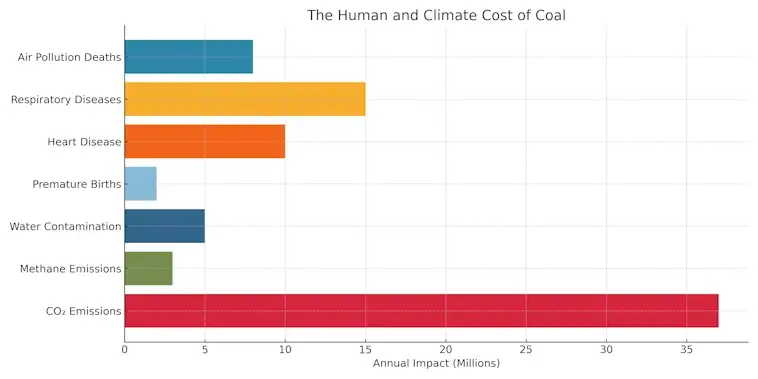
The numbers are sobering, but they also tell a story of change. As renewable energy grows cheaper and more reliable, shifting away from coal isn’t just good for the planet — it’s essential for human survival. Each step we take toward cleaner energy is a step toward healthier lives and a more stable climate.
What a Cleaner, Fairer Energy Transition Could Look Like
Imagine waking up in a city where the air feels lighter, the sky is clearer, and your electricity bill doesn’t come with a sense of guilt. That’s the promise of a cleaner, fairer energy transition — one that doesn’t just replace dirty fuels but reshapes how we think about energy altogether.
Today, we’re standing at a crossroads. The world is moving away from fossil fuels, but the path forward isn’t just about building wind farms or solar panels. It’s about fairness — making sure communities that powered our world in the past aren’t left behind in the process.
A truly fair transition starts with people. It’s about helping workers in old industries retrain for new green jobs. It’s about giving local communities control over their own power, from rooftop solar to small wind projects. And it’s about ensuring cleaner energy doesn’t become a luxury, but a right that everyone can afford.
Moving Beyond Coal Power
For over a century, coal power fueled our progress — it lit our homes, powered our factories, and drove economic growth. But it also came with a cost: polluted air, rising emissions, and fragile ecosystems pushed to the brink. The good news is, change is happening faster than many expected.
Across the globe, countries are phasing out coal plants and investing heavily in renewables. Cities are turning old coal sites into hubs for innovation. And new technology is making clean energy more reliable and cheaper than ever before.
Still, we can’t just shut the door on coal power without opening another one. The people and regions that depended on it deserve investment, jobs, and opportunities in the green economy. When we get this balance right, we don’t just reduce carbon — we build stronger, more resilient communities.
The future of energy isn’t just cleaner — it’s fairer. It’s one where every home can run on renewables, every worker can find purpose in a sustainable job, and every community can share in the benefits of progress.
Because when the energy transition works for everyone, the future starts to look a lot brighter.
The Real Price of Coal: Time to Choose a Cleaner Future
Coal once powered progress. But today, it’s clear that the true cost goes far beyond the price per ton. From polluted air and rising healthcare costs to the climate crisis accelerating around us, coal power continues to drain our planet and our wallets. The numbers don’t lie — what we save in cheap energy, we lose in health, stability, and a livable future.
The good news? We don’t have to keep paying this price. Clean energy is no longer a dream — it’s the smarter, more affordable path forward. Wind, solar, and battery technologies are growing fast, creating jobs and cutting emissions in ways coal never could. Every time we support renewable energy, we’re choosing healthier air, stronger communities, and a more sustainable economy.
It’s time to act. Demand clean energy investments from your local leaders. Support policies that move us away from coal. And most importantly, make your own choices count — from how you power your home to where you invest your voice. The cost of coal is too high, but together, we can build a future that’s worth every watt.