

Species Decline and the Urgent Call to Protect Nature
Species Decline and the Urgent Call to Protect Nature
Nature is sounding the alarm, and the signs are all around us. Species decline is no longer a distant concern—it’s happening right now, and at a pace that scientists say is unprecedented in human history. From shrinking pollinator populations to vanishing ocean life, the loss of biodiversity is reshaping the balance of our planet in ways we are only beginning to understand.
The urgency comes down to this: every species plays a role in maintaining healthy ecosystems, and when one disappears, the ripple effects can be profound. Food security, clean water, fertile soil, and even the air we breathe all depend on thriving natural systems. Protecting nature isn’t just about saving wildlife; it’s about safeguarding the foundations of human survival.
As pressures from climate change, pollution, and habitat destruction intensify, the need to act grows stronger by the day. The question is no longer whether species decline matters, but how quickly we can respond to turn the tide.
Understanding Species Decline: Why It’s Happening Faster Than Ever
Across the planet, wildlife is disappearing at a speed we’ve never seen before. You may have heard stories of vanishing bees, shrinking bird populations, or oceans with fewer fish. But the truth is bigger than that. Species decline is happening on almost every continent, in nearly every ecosystem. And it’s happening faster than at any other point in modern history.
Why? The reasons are layered, but they all connect back to human activity. Deforestation strips away habitats. Climate change disrupts migration patterns and food sources. Pollution poisons rivers and soils. Even everyday choices, like what we eat and buy, play a role in shaping the future of wildlife.
A Planet Under Pressure
One of the biggest drivers of decline is land use. As cities expand and farmland grows, animals lose the spaces they once depended on. For example, forests that once supported hundreds of species are now cleared for agriculture or development. Without shelter and food, survival becomes impossible.
Add to this the rising temperatures and unpredictable weather brought by climate change. Species that cannot adapt quickly enough—whether it’s coral reefs in warming seas or polar bears losing ice—face an uncertain future.
Yet, while the outlook can feel grim, awareness is a powerful first step. By understanding the causes, we open the door to change. Protecting ecosystems, supporting sustainable products, and rethinking our daily choices all create ripples of hope.
The Hidden Role of Human Activity in Nature’s Collapse
Nature is not collapsing on its own. It’s collapsing because of us. From the food we eat to the energy we use, human activity is reshaping the natural world at record speed. Forests are cleared to make way for farmland. Rivers are polluted by industry. Oceans are overfished until once-thriving species can no longer recover.
The truth is simple but uncomfortable: much of the decline we see in nature is directly linked to choices humans make every day. Deforestation, climate change, pollution, and overconsumption are not just environmental buzzwords. They are the forces driving species extinction, soil loss, and the breakdown of ecosystems we all depend on.
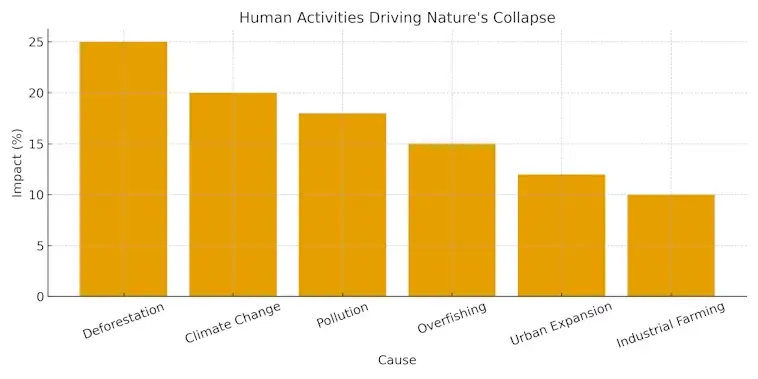
When we understand this hidden role, we can no longer ignore it. The collapse of nature is not just about animals or plants. It’s about clean air, safe water, and a stable climate for people too. That means protecting nature is not optional—it’s essential for our survival.
Species Decline and Its Impact on Ecosystems Worldwide
When you hear about animals disappearing, it might feel far away from your daily life. But the truth is, species decline isn’t just about losing beautiful creatures. It’s about losing balance in the natural world. Every species, big or small, plays a role in keeping ecosystems healthy. When too many vanish, the systems we all rely on begin to break down.
Scientists warn that the current rate of decline is faster than at any point in human history. This isn’t only about endangered animals like tigers or elephants. It also includes insects, plants, birds, and marine life. Together, they form the invisible network that supports food, clean water, and even the air we breathe.
Here’s what happens when species decline:
- Loss of pollinators leads to fewer crops and less food security.
- Disrupted food chains mean predators and prey become unbalanced.
- Soil degradation occurs when key species that enrich soil disappear.
- Water systems suffer because wetlands and rivers lose their natural cleaners.
- Climate resilience drops since forests and oceans can’t absorb carbon as effectively.
The ripple effect is real. Once one part of an ecosystem weakens, the rest struggles to adapt. That’s why protecting biodiversity isn’t just about saving wildlife. It’s about protecting the systems that make human life possible.
How Climate Change Accelerates the Loss of Biodiversity
Biodiversity is the living web that keeps our planet healthy. Every species, from the tiniest insect to the tallest tree, plays a part in keeping ecosystems balanced. Yet, climate change is speeding up the loss of this natural wealth.
Rising temperatures, shifting rainfall, and stronger storms are pushing many species beyond their limits. Habitats are shrinking, food sources are disappearing, and migration patterns are breaking down. What once took centuries to unfold is now happening within a few decades.
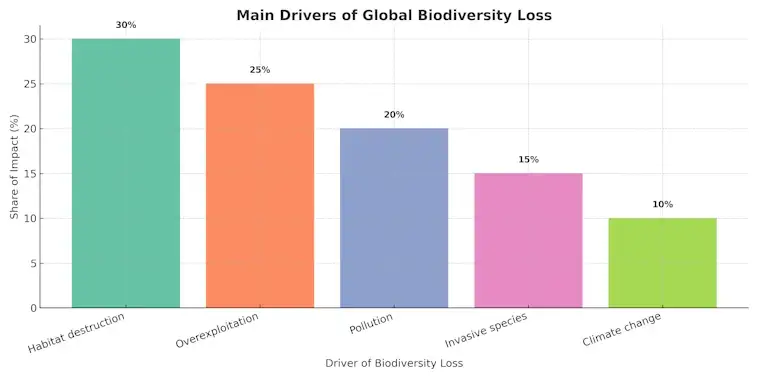
The danger isn’t only for wildlife. Human life depends on biodiversity too. Healthy forests clean our air, oceans regulate our climate, and pollinators help grow the food we eat. Losing biodiversity means losing these essential services.
Protecting Nature: Steps We Can Take to Reverse the Trend
Nature is under pressure like never before. Forests are shrinking, oceans are warming, and wildlife populations are dropping fast. It can feel overwhelming, but the truth is we’re not powerless. Small actions, when multiplied by millions of people, can make a big difference. Protecting nature isn’t just about saving distant rainforests—it’s about securing clean air, safe water, and a healthier planet for ourselves and future generations.
Understanding Species Decline and What It Means for Us
The rapid loss of species is a warning sign. When animals, birds, or insects disappear, the balance of entire ecosystems shifts. Bees, for example, help pollinate the food we eat. Birds control pests. Even the smallest creatures play a role in keeping nature running smoothly. When species decline, we lose these vital services, and that loss directly impacts our daily lives.
Practical Steps We Can Take
- Support local biodiversity: Plant native flowers, shrubs, and trees in your garden or community space. They provide food and shelter for pollinators and small animals.
- Cut back on plastic waste: Single-use plastics often end up in rivers and oceans. Choose reusable bottles, bags, and containers instead.
- Buy responsibly: Look for products with eco-friendly labels, such as certified sustainable seafood or fair-trade coffee. These choices support companies that protect nature.
- Reduce energy use: Switch to LED lights, unplug devices, and consider renewable energy if it’s available. Lower energy use reduces pressure on natural resources.
- Get involved locally: Join community clean-up projects, tree planting events, or conservation groups. Collective action creates visible change.
The most powerful step is simply starting. By making small shifts in our daily lives, we create a ripple effect that helps reverse the trend. Protecting nature isn’t about perfection—it’s about progress.
Protecting Nature Is Protecting Ourselves
The decline of species is not just a warning sign for wildlife—it’s a warning sign for us too. When ecosystems break down, our food, water, and health are all at risk. But the good news is that every action, no matter how small, can help turn the tide. From supporting conservation groups to making eco-conscious choices in our daily lives, we all have a role to play in protecting the natural world.
If we act now, we can safeguard biodiversity and ensure a healthier, more resilient planet for future generations. The question is not whether we can make a difference, but whether we choose to.