
Plankton Decline and the Future of Our Food Chain
Plankton Decline and the Future of Our Food Chain
Plankton Decline is emerging as one of the most pressing threats to ocean health, with consequences that ripple far beyond the water. These microscopic organisms may be tiny, but they form the foundation of the marine food chain. From fish to whales, and even to the seafood on human dinner tables, life depends on the survival of plankton. As their numbers fall due to rising temperatures, pollution, and acidifying oceans, the stability of entire ecosystems is at risk.
Scientists warn that this shift is not just an environmental issue but also a direct challenge to global food security. If plankton populations continue to drop, fisheries could collapse, marine biodiversity may shrink, and the world’s capacity to feed billions could be disrupted. Understanding what drives this decline, and what can be done to slow it, has never been more urgent.
Plankton Decline and the Future of Marine Ecosystems
When we think of the ocean, we often picture whales, dolphins, or colorful coral reefs. But the real foundation of marine life is much smaller. Plankton—tiny drifting organisms—are the unsung heroes of the sea. They produce much of the oxygen we breathe, feed countless species, and help regulate our climate. Yet, their numbers are falling.
Scientists are sounding the alarm. Rising ocean temperatures, pollution, and acidification are making life tough for plankton. As they struggle, the entire food chain feels the impact. Fish, seabirds, and even the largest marine mammals depend on plankton for survival. If plankton decline continues, the ripple effects could reshape the oceans as we know them.
Why This Matters for Everyone
This isn’t just a problem for marine life. Plankton play a big role in absorbing carbon dioxide from the atmosphere. Without them, climate change could speed up. And with fewer plankton, seafood supplies may shrink, pushing up prices and threatening coastal communities that rely on fishing.
The future of our oceans is closely tied to these tiny creatures. Protecting plankton means protecting life on Earth. It reminds us that even the smallest forms of life can have the biggest impact.
How Changing Oceans Are Disrupting the Food Chain
The ocean isn’t just a backdrop to our planet—it’s the heartbeat of life on Earth. But as our oceans change, the delicate balance of the food chain is shifting. Rising temperatures, acidifying waters, and even plastic waste are putting enormous pressure on marine life.
Fish that once thrived are struggling to survive. Coral reefs, which act as nurseries for countless species, are disappearing. And when the base of the food chain starts to crumble, everything above it is at risk—from tiny plankton to the fish we eat.

The truth is simple: what happens in the ocean doesn’t stay in the ocean. These disruptions ripple outward, impacting communities, economies, and even the global food supply.
Plankton Decline and Its Consequences for Global Fisheries
When we think about seafood, most of us picture fish like salmon, cod, or tuna. But what we often forget is that the entire ocean food chain begins with something tiny: plankton. These microscopic plants and animals float near the surface of the water, and without them, life in the ocean would collapse.
In recent years, scientists have raised alarms about plankton decline. Rising sea temperatures, ocean acidification, and pollution are reducing plankton populations. While these changes may feel invisible to us, they carry huge consequences for global fisheries and the billions of people who depend on seafood.
Here’s why plankton decline matters so much:
- Foundation of the food chain: Plankton feed small fish and other marine creatures. Without them, larger fish have less to eat.
- Impact on global fisheries: Fewer plankton mean fewer fish. This directly threatens commercial fishing industries worldwide.
- Food security risks: Millions of people, especially in coastal communities, rely on fish as their main source of protein.
- Economic strain: Fisheries support jobs, trade, and local economies. A decline could trigger financial losses across many industries.
- Climate feedback loop: Plankton absorb carbon dioxide. With fewer of them, more carbon stays in the atmosphere, making climate change worse.
The decline of plankton isn’t just a problem for scientists or fishermen—it affects all of us. Protecting plankton means protecting food supplies, jobs, and the health of our planet. The choices we make today, from cutting pollution to protecting oceans, will shape the future of global fisheries.
What the Loss of Plankton Means for Human Nutrition
When most of us think about plankton, we imagine tiny drifting organisms floating in the ocean. What’s easy to miss is that these microscopic life forms are the quiet powerhouses behind much of our food chain. Without plankton, many of the nutrients we depend on would become much harder to get.
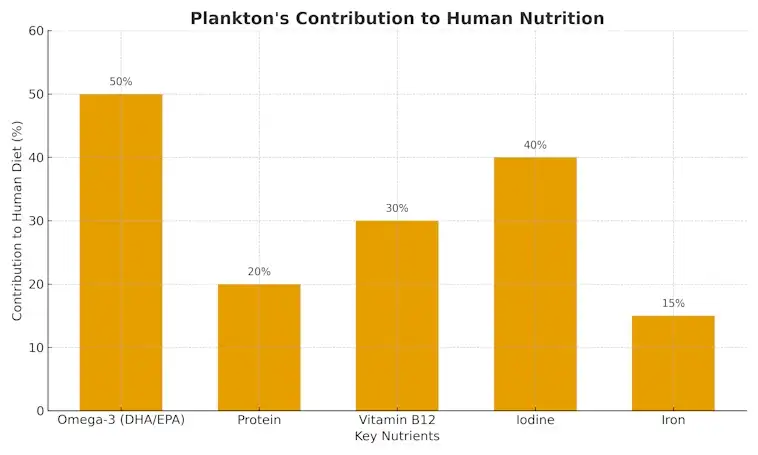
Plankton supply essential building blocks for human health, such as omega-3 fatty acids, vitamin B12, iodine, and even protein. Fish, which are a major source of these nutrients in our diets, get much of their nutrition from eating plankton. If plankton levels drop, fish populations weaken, and the nutrients we count on begin to disappear from our plates.
The result isn’t just about fewer fish on the dinner table. It’s about the ripple effect that touches global nutrition and food security. A decline in plankton could mean widespread deficiencies, especially in communities that rely heavily on seafood for daily nutrition.
In short, the loss of plankton would quietly but powerfully change the way we eat, the way we grow, and even the way we survive.
Protecting Our Oceans: Can We Prevent Further Decline?
Our oceans are changing faster than most of us realize. Rising temperatures, plastic waste, and overfishing are pushing marine life to the edge. Yet, these waters are more than just a beautiful backdrop for our vacations. They give us oxygen, regulate our climate, and feed billions of people. If we lose them, we lose a vital part of life on Earth.
The good news? We still have time to act. By protecting coastal habitats, cutting plastic use, and supporting sustainable seafood, we can slow down the damage. Simple daily choices, when multiplied by millions, can create real impact.
Plankton Decline and Why It Matters
Plankton may be tiny, but they’re powerful. They produce much of the oxygen we breathe and form the base of the food chain. When plankton decline, it sends shockwaves through the entire ocean ecosystem. Fish populations drop, marine mammals struggle, and even our climate stability takes a hit. Protecting plankton means protecting the future of our oceans.
Looking ahead, prevention is key. Governments, businesses, and individuals all have a role to play. Cleaner energy, stronger marine protections, and smarter fishing practices can help restore balance. It’s not too late to turn the tide. But the window for action is closing.
The Ripple Effect of Plankton Decline
The decline of plankton isn’t just a problem for the ocean—it’s a warning sign for all of us. These tiny organisms form the very foundation of the food chain, supporting fish, marine mammals, and even the oxygen we breathe. If plankton populations continue to shrink, the ripple effects will touch everything from global fisheries to the stability of our climate.
The good news is that awareness can drive change. By supporting sustainable fishing, reducing plastic waste, and pushing for stronger climate action, we can protect the oceans and the vital life they sustain.
The future of our food chain starts with the smallest creatures on Earth. Let’s not overlook them. Share this article, stay informed, and take steps today—because the choices we make now will shape the health of our oceans tomorrow.