

Fish Migration Mysteries That Will Surprise You
Fish Migration Mysteries That Will Surprise You
Fish migration is one of nature’s most remarkable events, yet much about it remains hidden from view. From salmon leaping upstream to eels crossing entire oceans, these journeys are filled with surprising twists that scientists are still working to understand. Each migration tells a story of survival, instinct, and resilience.
The mysteries surrounding these movements raise fascinating questions. How do fish navigate across thousands of miles with such accuracy? What signals push them to leave familiar waters at just the right time? Some answers lie in biology, others in changing ocean conditions, and many are still waiting to be uncovered.
As research advances, new discoveries reveal just how connected fish migration is to the health of ecosystems, the stability of food chains, and even the future of global fisheries. The more we learn, the clearer it becomes that these hidden journeys carry lessons far beyond the water’s edge.

Fish Migration Secrets Hidden Beneath the Waves
Have you ever wondered where fish really go when they vanish from one season to the next? Beneath the surface, entire migrations are happening out of sight. These journeys shape the health of oceans, rivers, and even our dinner plates. Yet most of us know very little about them.
Fish migration is one of nature’s greatest mysteries. Some species travel thousands of miles across oceans. Others move quietly between rivers and lakes. These patterns aren’t random—they follow rhythms tied to food, water temperature, and even the moon.
Why Timing Matters
For many fish, timing is everything. A single shift in water temperature can trigger migration. Salmon, for example, return upstream at just the right moment to lay eggs. If that timing is off, entire populations can struggle. It’s a delicate balance that shows just how connected marine life is to its environment.
What makes this so fascinating is that scientists are still uncovering new details. Modern tracking technology reveals hidden routes that were once impossible to follow. Each discovery gives us a clearer picture of how life beneath the waves adapts, survives, and thrives.
By understanding these migration secrets, we not only learn more about fish. We also discover how to better protect the waters they depend on—and that we depend on too.
Why Some Species Travel Thousands of Miles Each Year
Every year, millions of animals set out on epic journeys. From the smallest butterfly to giant whales, migration is one of nature’s most dramatic events. But why do they do it? The reasons are surprisingly practical—food, safety, and survival.
Take the Arctic Tern, for example. This small bird makes a round trip of about 44,000 miles between the Arctic and Antarctica. It’s chasing endless summer, feeding on fish-rich waters all year long. Monarch butterflies, on the other hand, move south to escape the cold. They travel up to 3,000 miles, guided by instincts scientists are still trying to fully understand.
Whales, wildebeests, turtles, and caribou also make incredible treks. Whether crossing oceans or running across grasslands, they’re searching for food, warmer weather, or safe places to raise their young. Migration is tough, but it keeps species alive.
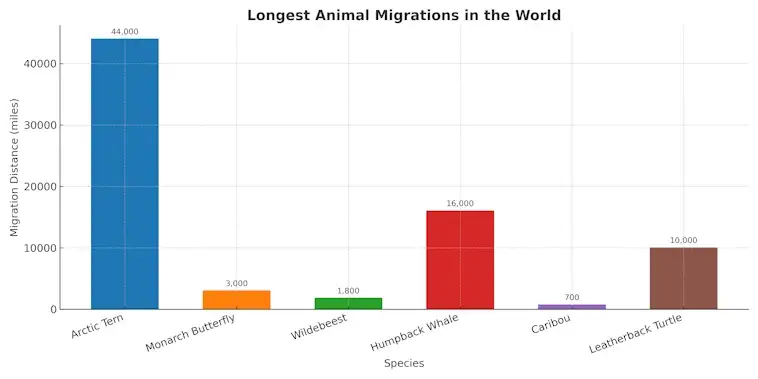
What’s amazing is that many of these journeys are repeated year after year, often along the exact same routes. Nature has built in an internal GPS, and these animals follow it without maps or compasses. Their travels are a reminder of just how connected our planet really is.
The Role of Fish Migration in Healthy Ecosystems
When you think of migration, birds often come to mind. But fish are on the move too, and their journeys are just as important. From tiny streams to vast oceans, fish migration plays a vital role in keeping ecosystems balanced and thriving.
Fish don’t just swim for survival. Their movements connect habitats, spread nutrients, and even support the food we eat. Without these natural migrations, entire ecosystems could lose their balance.
Here’s why fish migration matters more than we realize:
- Nutrient delivery: Migrating fish carry nutrients like nitrogen and phosphorus from oceans to rivers, enriching soils and waters along the way.
- Biodiversity boost: By moving across regions, fish support other species, from birds to mammals, that rely on them for food.
- Healthy rivers and lakes: Their movement helps control insect populations and strengthens the food chain.
- Fisheries and communities: Migratory species like salmon and eels are essential for local economies and cultural traditions.
- Ecosystem resilience: Migration ensures genetic diversity, making fish populations stronger against disease and climate stress.
Fish migration may seem invisible to us, but it’s a lifeline for countless ecosystems. Protecting these pathways means protecting clean water, abundant wildlife, and even the stability of our own food systems.
How Climate Change Is Shaping Ocean Journeys
The oceans have always been highways of trade, travel, and migration. But today, climate change is rewriting the rules of those journeys. Storms are becoming more intense, sea levels are creeping higher, and new routes are even opening through once-frozen waters. These changes aren’t just distant concerns—they’re already influencing global shipping, fishing communities, and coastal towns.
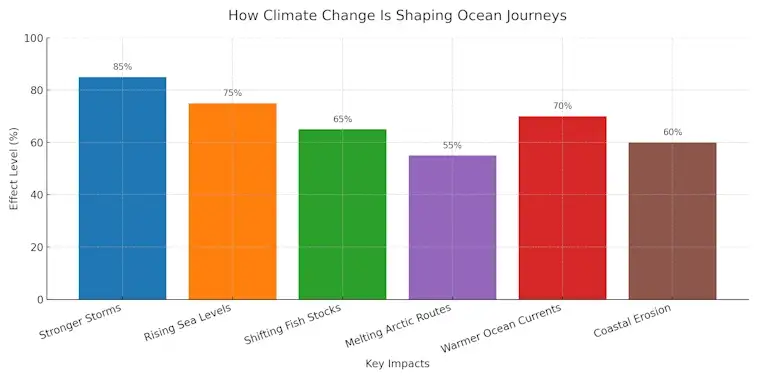
Warmer waters are pushing fish stocks into new regions. Rising seas threaten ports and coastal infrastructure. And melting ice in the Arctic is creating new shipping lanes while also raising fresh risks. Every journey across the water is being reshaped in ways we can’t ignore.
Surprising Navigation Skills Fish Use to Find Their Way
When we think of navigation, we often picture GPS systems or maps on our phones. But fish don’t have that luxury. Instead, they rely on some surprising and highly effective skills to find their way. These skills are so remarkable that scientists are still uncovering how they work.
Fish use the Earth’s magnetic field like a built-in compass. This helps them travel thousands of miles across oceans without getting lost. Some species also rely on the position of the sun, subtle changes in water temperature, and even their sense of smell. All of these signals guide them through complex journeys.
The Hidden Secrets of Fish Migration
Fish migration is one of nature’s greatest mysteries. Salmon, for example, return to the exact river where they were born, guided by memory and chemical cues in the water. Eels make epic journeys from rivers to the open sea, finding their way with an instinct that seems almost impossible to explain.
These migrations are not random. They are carefully timed with seasons, food supplies, and breeding needs. The accuracy with which fish navigate shows just how finely tuned their survival instincts really are.
What’s fascinating is how these skills continue to adapt as oceans change. Rising temperatures, shifting currents, and human-made obstacles challenge fish more than ever. Yet many species still manage to complete their journeys, a sign of their resilience and remarkable ability to adapt.
Unlocking the Secrets of Fish Migration
Fish migration is one of nature’s greatest mysteries. From salmon battling upstream to eels crossing oceans, these journeys show us just how connected our waters truly are. The more we learn, the more we see that protecting rivers, lakes, and oceans is not just about preserving fish—it’s about preserving the balance of life on our planet.
If you found these fish migration mysteries as fascinating as we did, why not dive deeper? Explore more of our articles, share this post with fellow nature lovers, or even support local conservation efforts. Every small action helps keep these incredible migrations alive for future generations.