
How Forest Renewal Sparks Hope for a Greener World
How Forest Renewal Sparks Hope for a Greener World
Forests have always been the planet’s greatest guardians, yet decades of deforestation have left deep scars on our environment. Now, a powerful shift is underway. Forest renewal is breathing life back into damaged landscapes, creating new habitats, and giving people reasons to believe in a greener future. From stabilizing the climate to protecting clean water and boosting biodiversity, these revitalized ecosystems are proving that recovery is possible. As trees return, so does hope—for healthier communities, stronger economies, and a more balanced world.
Forest Renewal: A Natural Solution to Climate Challenges
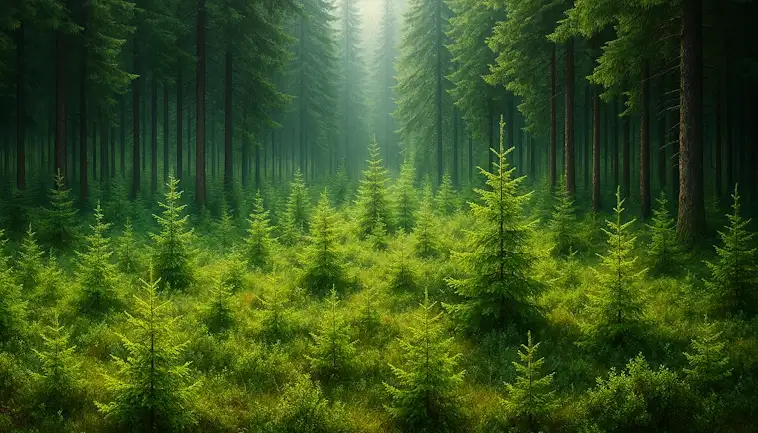
When we talk about climate change, the focus is often on technology, renewable energy, or policy. But nature itself has one of the most powerful tools we could ask for—forests. These living ecosystems quietly work around the clock, capturing carbon, cooling the air, and providing a safe home for wildlife. And the best part? Forest renewal offers hope not just for the planet, but for our everyday lives too.
Planting new trees and protecting existing forests may sound simple, yet the impact is massive. Trees act like natural air filters, pulling harmful carbon dioxide from the atmosphere and replacing it with fresh oxygen. In cities, they provide shade, lower temperatures, and make neighborhoods more livable. On a global scale, forests help stabilize weather patterns and even protect against flooding.
Why Local Action Matters
It’s easy to think that the problem is too big to solve, but renewal starts at a local level. Community planting projects, forest restoration programs, and even small backyard efforts add up. Every new tree is a step toward cleaner air and a healthier climate. Imagine if millions of people took that step—our world could look very different.
Forest renewal is not just about planting trees. It’s about rethinking how we live alongside nature. Supporting policies that protect green spaces, buying from sustainable sources, and joining local conservation efforts all make a difference.
If we embrace forest renewal today, we’re not just fighting climate change. We’re building a greener, more resilient future for the generations to come.
Why Restoring Trees Matters for Communities and Wildlife
When we think about restoring trees, it’s easy to picture forests far away. But the truth is, trees touch our daily lives in powerful ways. They clean the air we breathe, help cool our neighborhoods, and even protect us from flooding. For wildlife, restored tree cover creates safe spaces to live, feed, and thrive.
Bringing trees back is not just an environmental issue—it’s a community one too. Healthy green spaces improve mental wellbeing, encourage outdoor activity, and make neighborhoods more resilient to climate change. At the same time, forests provide critical habitats that keep ecosystems in balance.
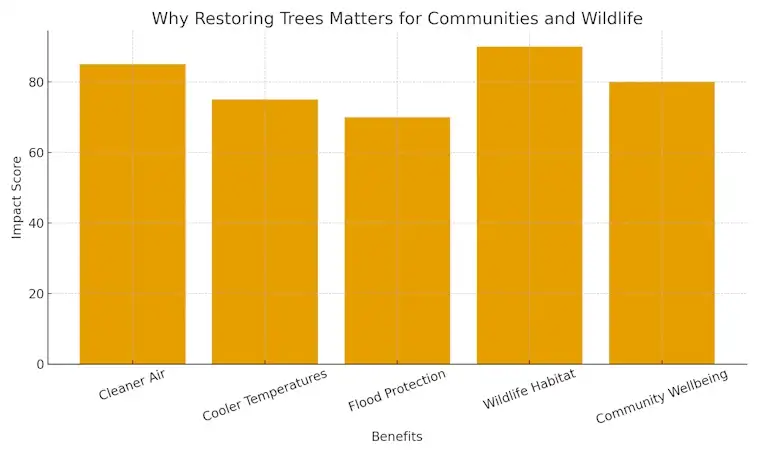
Simply put, planting and restoring trees creates healthier places for both people and wildlife. And the more we invest in this work now, the stronger and more vibrant our future will be.
Forest Renewal and the Path to Cleaner Air and Water
When we talk about the future of our planet, forests often come first to mind. They are more than green landscapes. They are living systems that clean our air, filter our water, and shape healthier communities. Forest renewal—the process of restoring and protecting forests—is one of the most powerful tools we have for a cleaner world.
Think about it this way: every tree planted is like an investment in your health and your children’s future. Forests quietly pull harmful carbon from the air, hold soil in place, and even reduce the risk of floods. And when they are renewed, they bounce back stronger, offering benefits that reach far beyond their borders.
Here’s what forest renewal means in practice:
- Cleaner air: Trees absorb carbon dioxide and release oxygen, giving us fresher air to breathe.
- Protected water sources: Healthy forests act like natural filters, keeping rivers, lakes, and groundwater clean.
- Stronger soil: Tree roots prevent erosion and keep the ground fertile for farming and wildlife.
- Resilient communities: Forest renewal lowers the risk of floods and supports local economies with sustainable resources.
- Wildlife habitats: Renewal projects give animals safe places to live and restore balance to fragile ecosystems.
The path to cleaner air and water runs straight through our forests. By supporting renewal projects—whether local tree planting or large-scale reforestation—we help secure a safer climate, healthier bodies, and brighter futures.
How Regrowing Forests Builds Stronger Local Economies
When people think about forests, they often picture clean air, shade, and wildlife. But forests do far more than that. When we restore them, they can actually boost local economies in ways many of us don’t expect.
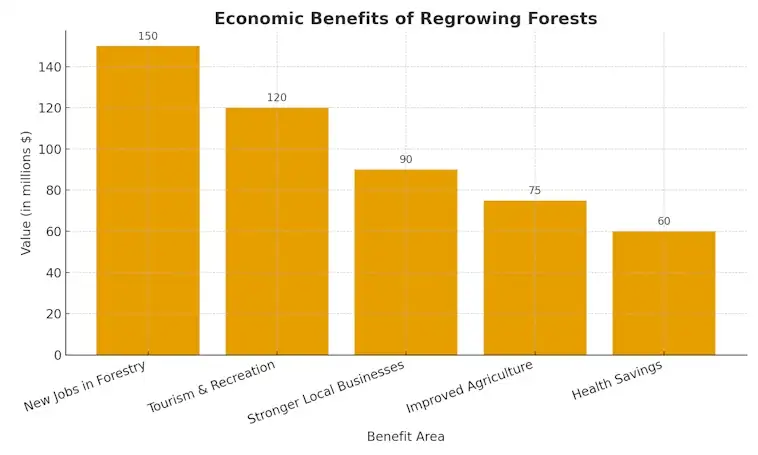
Think about it this way: new jobs are created, small businesses thrive, and communities save money on healthcare and farming. Forests don’t just grow trees—they grow opportunity. That’s why regrowing forests is not just about the environment. It’s also about creating a stronger, more resilient local economy.
The Future of Reforestation: Turning Small Steps Into Big Change
When people talk about saving the planet, it can feel overwhelming. The truth is, reforestation doesn’t have to be about massive projects or billion-dollar budgets. It often begins with small, simple steps that anyone can take. Over time, those steps add up and create lasting impact.
Planting a single tree may not seem like much, but imagine millions of individuals doing the same. Add community groups, schools, and local organizations, and suddenly you have forests being rebuilt from the ground up. This is the future of reforestation—where everyday actions combine to make a global difference.
Why Forest Renewal Matters More Than Ever
Forests are more than just clusters of trees. They clean the air, cool the climate, protect wildlife, and even support our food systems. Yet, every year, we lose millions of acres to logging, farming, and urban growth. That’s why forest renewal is no longer optional. It’s essential.
The good news? Momentum is building. Advances in technology are helping track growth and health of new forests. Drones can plant seeds in hard-to-reach places. Apps can connect volunteers with local tree-planting projects. And governments and businesses are slowly waking up to the value of restoring green spaces.
The future of reforestation will be shaped by these tools, but even more by people like you. Choosing to plant, protect, or simply support local projects is how small actions grow into big change.
Growing Together Toward a Greener Future
Forests are more than just trees — they are living systems that give us clean air, fresh water, and a stable climate. Their renewal is a reminder that nature has the power to heal, but it needs our help. By supporting reforestation efforts, choosing sustainable products, and spreading awareness, we can all play a part in creating a healthier planet.
The story of forest renewal isn’t just about hope. It’s about action. Every step we take today helps build a greener, safer world for tomorrow.
Start by learning more, sharing this post, and joining a local or global tree-planting initiative. Together, we can turn renewal into a lasting legacy.