

When Preserving Biodiversity Inspires a Healthier Future
When Preserving Biodiversity Inspires a Healthier Future
Preserving biodiversity is more than protecting plants and animals—it’s about safeguarding the very systems that keep us alive. From the air we breathe to the food we eat, healthy ecosystems shape a healthier future for everyone. When species thrive together, they create natural balances that strengthen human health, reduce disease risks, and build resilience against climate change. As scientists and communities highlight the links between nature and well-being, one truth becomes clear: preserving biodiversity is not a luxury, it’s a necessity for a sustainable tomorrow.
Why Preserving Biodiversity Matters for Human Health
When we talk about biodiversity, most people think of saving animals or protecting forests. But there’s another side to the story that often gets overlooked—our own health. The truth is, biodiversity and human well-being are closely connected. When ecosystems thrive, people thrive too.
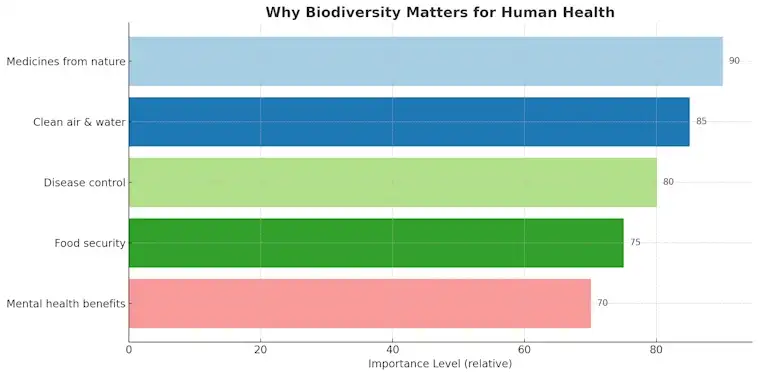
Think about it this way: the plants, animals, and microorganisms around us provide more than beauty. They give us clean air, safe drinking water, and healthy food. Many of today’s medicines, including life-saving antibiotics, come from natural sources found in biodiverse environments. If we lose species, we also lose potential cures and treatments we don’t even know exist yet.
Nature’s Hidden Protection
Biodiversity also acts as a shield against disease. In a balanced ecosystem, different species keep one another in check. This reduces the chances of harmful pathogens spreading to humans. When habitats are destroyed, animals are forced closer to people. That makes it easier for new diseases to jump from wildlife to humans—something the world has already experienced in recent years.
Preserving biodiversity is also about mental health. Time in green, natural spaces lowers stress, improves mood, and even helps us focus better. When we protect ecosystems, we’re not just saving wildlife—we’re investing in healthier, happier lives for ourselves and future generations.
So, protecting biodiversity isn’t just about the planet. It’s about people, too. And the choices we make today will decide the health of tomorrow.
Preserving Biodiversity and the Fight Against Climate Change
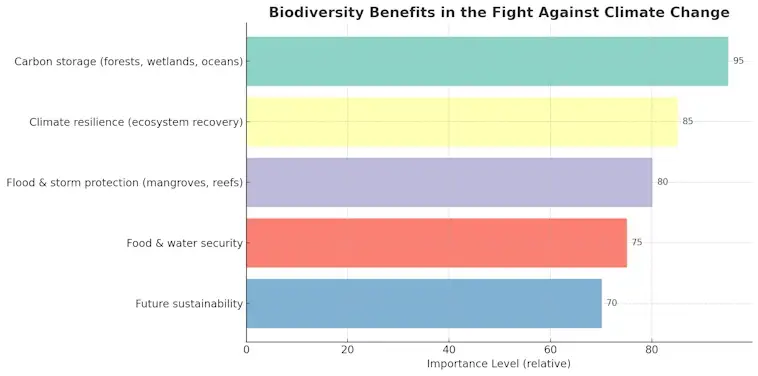
Biodiversity and climate change are more connected than most people realize. Healthy ecosystems help absorb carbon, regulate weather patterns, and protect communities from extreme events. When we lose biodiversity, we weaken nature’s ability to defend us.
Forests, wetlands, and oceans act like giant carbon sinks. They capture and store greenhouse gases that would otherwise heat the planet. At the same time, diverse ecosystems are more resilient. That means they can bounce back faster from storms, droughts, or wildfires.
Forests: The Planet’s Natural Allies
Take forests, for example. When they are filled with a wide variety of species, they grow stronger and store more carbon. But when they are cut down or turned into single-crop plantations, their ability to fight climate change drops dramatically. Protecting biodiversity inside these ecosystems ensures they keep working for us—and not against us.
Preserving biodiversity also supports people directly. Mangroves, coral reefs, and grasslands reduce flooding and storm damage, protecting millions of lives. By investing in biodiversity, we’re not only tackling climate change but also safeguarding food, water, and shelter for future generations.
The bottom line is simple: biodiversity is one of our best tools in the climate fight. By protecting it now, we give ourselves a better chance of building a safer, more stable future.
How Communities Benefit from Preserving Biodiversity
When we talk about biodiversity, it’s easy to imagine faraway rainforests or coral reefs. But the truth is, preserving biodiversity helps local communities everywhere. From healthier food to stronger economies, the benefits are closer to home than many people think.
Biodiversity supports agriculture by keeping soils rich and pollinators active. Bees, butterflies, and birds play a huge role in growing the crops we rely on every day. Without them, food security would be at risk. Healthy ecosystems also provide clean water by filtering pollutants and regulating natural water cycles.
Stronger Local Economies
Communities also benefit through jobs and income. Ecotourism, sustainable farming, and fishing all depend on thriving ecosystems. When biodiversity is protected, these industries can grow in ways that support both people and the planet.
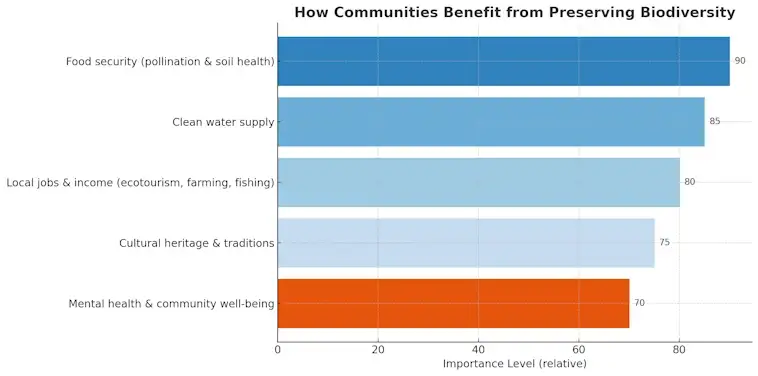
There’s also a cultural side. Many traditions, foods, and even medicines come from local plants and animals. Protecting biodiversity means protecting heritage, identity, and knowledge that has been passed down for generations.
The benefits don’t stop there. Green spaces and natural areas improve mental health, reduce stress, and encourage community gatherings. When people have access to nature, they often feel more connected—not just to the environment, but to each other.
In short, preserving biodiversity is about more than saving species. It’s about building stronger, healthier, and more resilient communities for today and tomorrow.
Preserving Biodiversity Through Everyday Choices
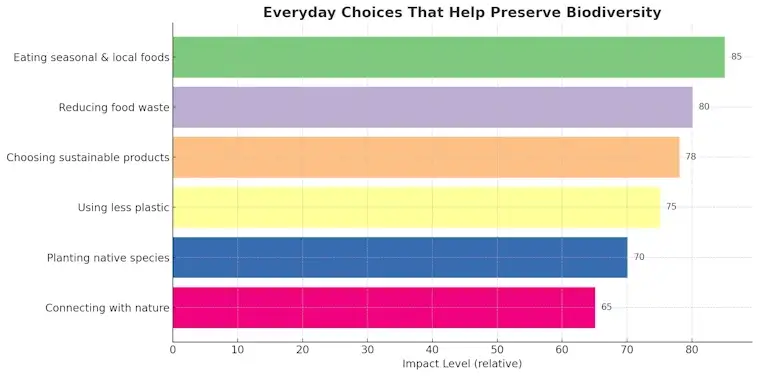
Protecting biodiversity might sound like a huge global task. But the truth is, everyday choices add up. What we eat, buy, and support can make a real difference. Small actions, when multiplied across millions of people, create powerful change.
Choosing seasonal and locally grown foods reduces pressure on global supply chains. It also supports farmers who protect soil health and pollinators. Even cutting back on food waste helps, since less land and fewer resources are used for production.
The Power of Consumer Choices
What we buy also matters. Products made from sustainable sources—like certified wood, fair-trade coffee, or responsibly caught seafood—help protect ecosystems. Every purchase is a vote for the kind of world we want to live in.
Supporting biodiversity can also mean using less plastic, planting native species in your garden, or simply spending more time in nature. When we connect with the natural world, we’re more likely to protect it.
Change doesn’t have to be overwhelming. Start with one small step—like choosing a reusable bag or skipping single-use plastics. Then build from there. Each choice moves us closer to a healthier planet and a future where biodiversity thrives.
A Healthier Future Starts with Protecting Nature’s Balance
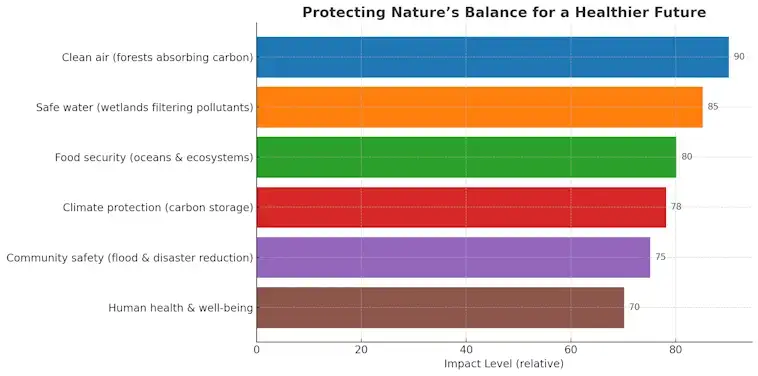
The balance of nature is more than just an idea—it’s the foundation of life. When ecosystems stay in balance, people benefit with cleaner air, safer water, and healthier food. Protecting this balance isn’t only about saving wildlife. It’s about building a healthier, more secure future for everyone.
Nature already does so much for us. Forests absorb carbon and cool the air. Wetlands filter water and reduce flooding. Oceans provide food for billions of people. But when these systems are disrupted, the effects ripple quickly into our daily lives.
Small Steps, Big Impact
The good news is that protecting nature doesn’t have to feel impossible. Every action, big or small, helps restore balance. Supporting reforestation projects, cutting back on single-use plastics, or even planting a few native plants at home can make a difference. When many people take these steps together, the impact grows.
A healthier future is within reach. By protecting nature’s balance today, we secure clean air, fresh water, and thriving ecosystems for generations to come. It’s not just an environmental choice—it’s a choice for human health, safety, and well-being.
Protecting Biodiversity Protects Us All
Preserving biodiversity isn’t just about saving animals or forests—it’s about protecting the systems that keep us alive. From clean air and safe water to food security and climate stability, our health and future depend on a thriving natural world.
The good news is that every action matters. Supporting sustainable choices, protecting ecosystems, and making small changes in daily life all add up. When communities and individuals work together, we create a ripple effect that benefits people and the planet alike.
Biodiversity is our safety net. By preserving it today, we ensure a healthier, more resilient, and more hopeful tomorrow.