

Poor Air Quality: Simple Steps for a Healthier Tomorrow
Poor Air Quality: Simple Steps for a Healthier Tomorrow
Poor air quality affects more than just the air we breathe. It influences energy levels, sleep, and even long-term health. The good news is that positive change is possible, and it often starts with simple choices made each day. From improving indoor spaces to supporting cleaner communities, small actions add up quickly. With a clearer understanding of what impacts the air around us, it becomes easier to take meaningful steps toward a healthier tomorrow.

Why Air Quality Matters for Your Health Every Day
When most people think about air quality, they picture smoggy cities or wildfires. But the truth is, the air you breathe every day—even inside your own home—plays a huge role in your health. Clean air fuels your body, while polluted air can slowly wear you down.
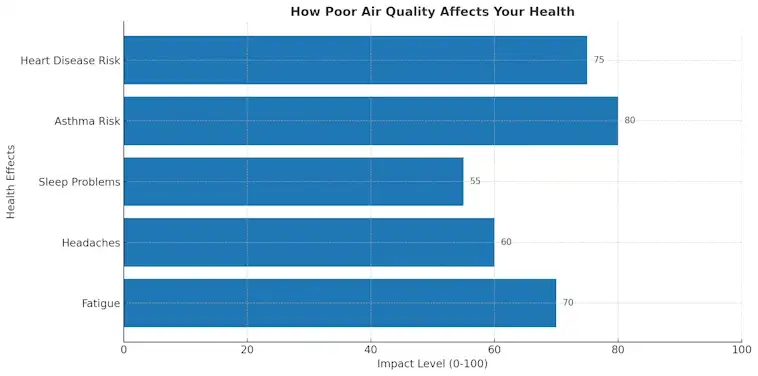
Poor air quality is linked to problems like fatigue, headaches, and even trouble sleeping. Over time, it can also increase your risk of heart disease, asthma, and other respiratory issues. The scary part? You might not even notice how much it’s affecting you until symptoms build up.
Breathing Better Starts at Home
Air quality isn’t only about what’s happening outside. Dust, pet dander, mold, and chemicals from cleaning products can linger in your home. These invisible particles can make allergies worse and lower your energy. Simple changes like opening a window, using an air purifier, or adding indoor plants can help you breathe easier.
Paying attention to the air around you isn’t just for people with health conditions. It’s for everyone. Each breath you take is either giving your body strength or slowly draining it. By caring about air quality daily, you’re giving yourself a better chance at staying healthy and energized.
Easy Ways to Improve Air Quality at Home
The air in your home shapes how you feel every single day. When it’s clean, you breathe easier, sleep better, and feel more energized. The good news? Improving air quality doesn’t have to be complicated or expensive. Small, simple steps can make a big difference.
Open the Windows, Let the Fresh In
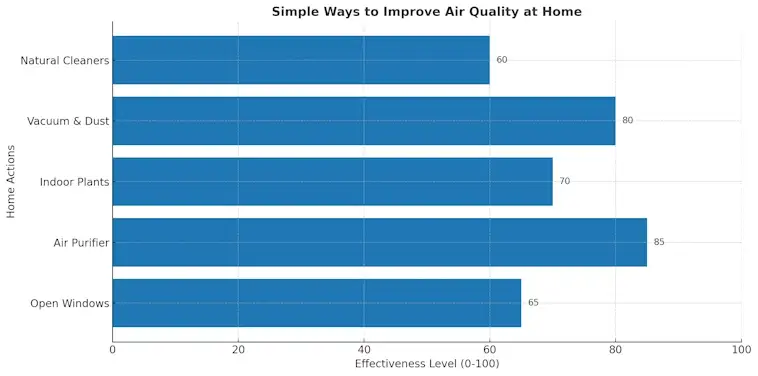
One of the easiest ways to refresh your air is by opening the windows. Even a few minutes of airflow can help reduce indoor pollutants and get rid of stuffy air. If you live in a high-pollution area, try doing this early in the morning or later in the evening when outdoor air tends to be cleaner.
Other quick wins include:
- Use an air purifier. These can trap dust, pollen, and even pet dander.
- Add a few indoor plants. Many houseplants naturally filter toxins from the air.
- Vacuum and dust often. Regular cleaning helps reduce allergens that build up.
- Choose natural cleaners. Harsh chemicals can leave fumes that linger in the air.
Taking small steps today can protect your health for years to come. Cleaner air means better focus, more energy, and fewer sick days. Your lungs will thank you.
Air Quality and Climate: How They Connect
Air quality and climate might seem like separate issues, but they’re actually deeply linked. The same pollutants that harm your lungs can also warm the planet. Every breath you take is tied to the bigger picture of our environment.
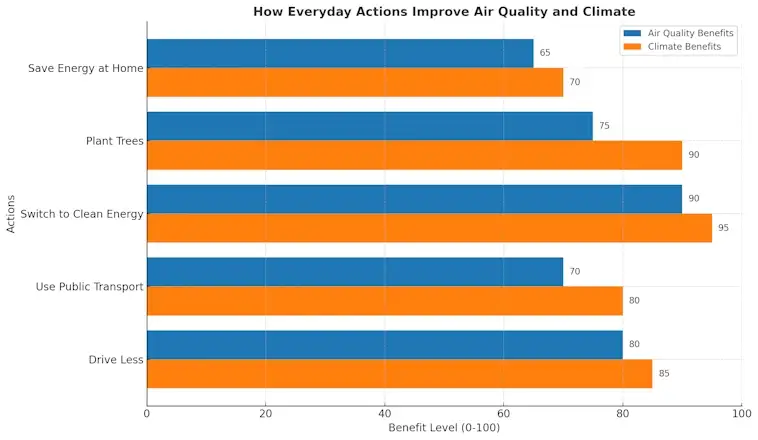
When fossil fuels are burned, they release greenhouse gases along with tiny particles that we breathe in. These particles can trigger asthma and heart problems, while the gases trap heat in the atmosphere. In other words, the choices we make about energy and transportation affect both our health and the climate.
Small Choices, Big Impact
Think about it this way: when you walk, bike, or take public transport instead of driving, you’re not just reducing carbon emissions. You’re also cutting down on local air pollution. Cleaner air means fewer hospital visits and a cooler planet. The same goes for using clean energy sources at home. Solar panels and wind power don’t just fight climate change, they also keep the air healthier for everyone.
The connection between air quality and climate is a reminder that small steps add up. Every effort to reduce pollution supports both personal health and the health of the planet. It’s a win-win worth paying attention to.
Community Actions That Boost Local Air Quality
Improving air quality isn’t just about what happens inside your home. The actions we take together as communities can make an even bigger difference. Cleaner streets, greener spaces, and smarter choices all add up to fresher air for everyone.
When neighborhoods work together, the impact is powerful. Local projects can reduce pollution at the source, cut down traffic, and create healthier environments where people want to live.
Greener Streets, Healthier Lives
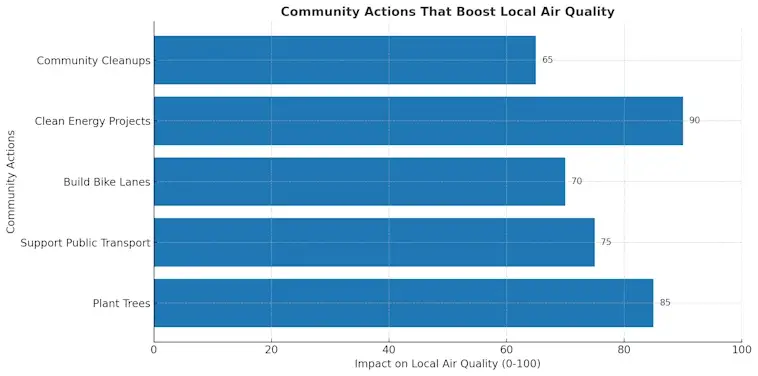
Planting trees along streets or in public parks is one of the simplest ways to improve air. Trees naturally filter out pollutants, cool down hot neighborhoods, and even reduce noise. Plus, they make outdoor spaces more inviting for walking and biking.
Other community actions that boost air quality include:
- Supporting public transport. Reliable buses and trains reduce the number of cars on the road.
- Bike-friendly planning. Safe bike lanes encourage people to choose pedal power over gas.
- Clean energy projects. Solar panels on schools or community centers cut emissions while saving money.
- Community cleanups. Less litter and dust means less pollution in the air.
When people come together, small actions grow into big change. Cleaner air isn’t just about health—it’s also about pride in the places we share.
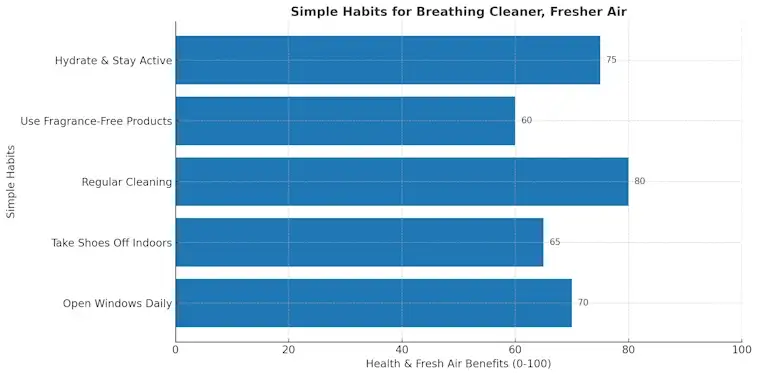
Simple Habits for Breathing Cleaner, Fresher Air
Breathing clean air doesn’t have to be complicated. Small daily habits can add up to big improvements in how you feel. The best part? Most of these changes are easy to start right away.
Little Changes, Big Difference
A few minutes of fresh air in the morning can set the tone for your day. Open a window, step outside, and give your lungs a boost. Even this small act helps flush out indoor pollutants.
Here are a few other simple habits worth trying:
- Take off your shoes indoors. This keeps dirt, pollen, and chemicals from spreading inside.
- Stay on top of cleaning. Regular vacuuming and dusting keeps allergens under control.
- Switch to fragrance-free products. Many sprays and candles release chemicals that affect air quality.
- Hydrate and stay active. Exercise and drinking water help your lungs work more efficiently.
Clean air is not just about avoiding illness. It’s also about having more energy, better focus, and a stronger immune system. By weaving these habits into your routine, you can breathe easier every single day.
Why Clean Air Should Be a Daily Priority
Poor air quality isn’t something to ignore. It affects your energy, your sleep, and even your long-term health. The good news is that every small step—whether it’s opening a window, choosing public transport, or supporting community clean energy—helps create a healthier environment for you and those around you.
Clean air is more than just comfort. It’s the foundation of good health and a better quality of life. By paying attention to the air you breathe each day, you’re protecting your body, your family, and your future.
Making air quality a daily priority isn’t just smart—it’s essential. The changes start small, but the impact can last a lifetime.