

How Extreme Weather Shapes Our Future and Daily Lives
How Extreme Weather Shapes Our Future and Daily Lives
How extreme weather affects our world is no longer a distant concern. From record-breaking heatwaves to sudden floods, these events are reshaping the way we live, work, and plan for tomorrow. Scientists point to a clear trend—storms are growing stronger, droughts are lasting longer, and the risks are touching every corner of daily life. Yet within these challenges lies a chance to adapt, innovate, and build a safer future. Understanding how extreme weather shapes both our present and what comes next is key to making choices that protect our communities and strengthen resilience.
Why Extreme Weather Events Are Becoming More Frequent
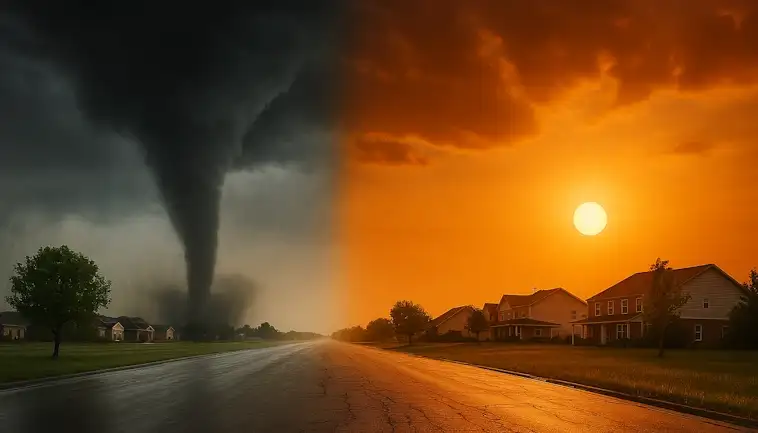
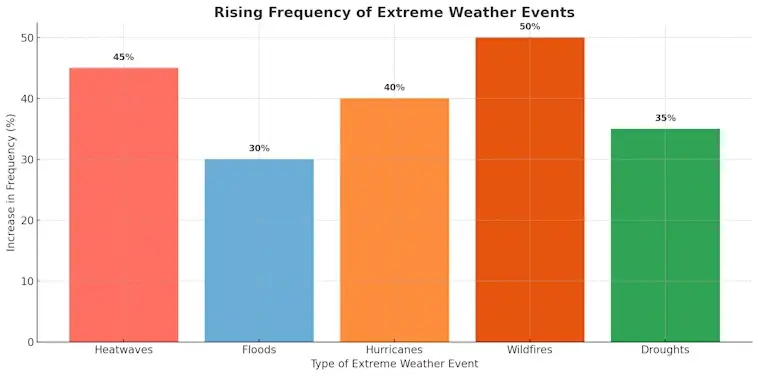
In recent years, you may have noticed more headlines about record-breaking heatwaves, flash floods, and powerful storms. It’s not your imagination. Extreme weather events are becoming more frequent, and the reasons behind it are closely tied to our changing climate.
The science is clear. As the planet warms, even by a small amount, it disrupts natural weather patterns. Warmer air holds more moisture, which leads to heavier rainfall and more intense flooding. At the same time, rising temperatures increase the risk of droughts and wildfires in many regions.
Heat Is Fuel for Storms
Think of heat as fuel. The hotter the oceans and the atmosphere become, the more energy storms have to build strength. That’s why hurricanes and cyclones today can grow faster and hit harder than they did in the past.
There’s also another factor—our cities and infrastructure aren’t always designed to handle these shifts. Concrete surfaces trap heat, while old drainage systems can’t cope with sudden downpours. That makes the impact of extreme weather even worse for people living in vulnerable areas.
Looking ahead, the trend is likely to continue unless global greenhouse gas emissions are reduced. The good news is that scientists and communities are working on solutions, from cleaner energy to smarter urban planning. By acting now, we can slow down the pace of change and make our societies more resilient.
The Daily Impact of Extreme Weather on Communities
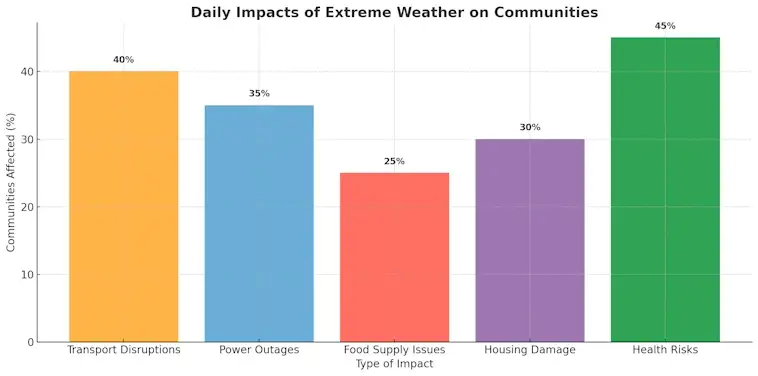
Extreme weather isn’t just about dramatic news headlines. It affects daily life in ways that are often overlooked. For many people, the impact starts right outside their front door.
Floods can cut off roads, leaving families unable to get to work or school. Heatwaves can strain power grids, making air conditioning less reliable just when it’s needed most. Even short storms can damage crops, disrupt food supply, and push up grocery prices.
Everyday Life Gets Harder
Imagine waiting for a bus that never comes because heavy rain flooded the route. Or opening your phone to see that your flight has been canceled due to dangerous winds. These small disruptions add up, creating stress and financial strain for entire communities.
For those already vulnerable—like the elderly, children, or low-income families—the effects are even more serious. A single power outage during extreme heat can put lives at risk. And when homes are damaged by floods or fires, recovery can take months or even years.
The daily impact of extreme weather is a reminder that this isn’t just a future problem. It’s happening now, in neighborhoods around the world. But with stronger infrastructure, smarter planning, and more investment in clean energy, communities can adapt and become more resilient.
How Extreme Weather Drives Innovation and Adaptation
When extreme weather strikes, it often leaves behind damage and disruption. But it also sparks innovation. Communities and businesses are finding new ways to adapt, protect people, and reduce future risks.
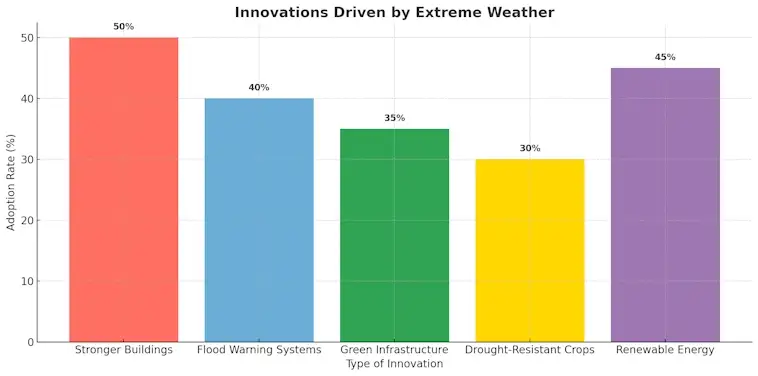
One clear example is in architecture. Homes and buildings are now being designed with stronger materials, raised foundations, and smarter layouts to handle floods, storms, and heatwaves. Technology also plays a big role. From flood-warning apps to advanced weather forecasts, digital tools help people prepare for what’s coming.
Turning Challenges Into Solutions
Farmers, for instance, are experimenting with drought-resistant crops and better irrigation systems to cope with unpredictable rainfall. Cities are investing in green infrastructure, like parks and rooftop gardens, which absorb heat and manage excess rain. Even energy systems are evolving, with solar and wind power helping communities stay resilient when traditional power grids fail.
The big picture is clear: extreme weather challenges us, but it also pushes us forward. By adapting quickly and embracing new ideas, we can build a safer and more sustainable future. Innovation doesn’t just protect us today—it creates opportunities for tomorrow.
Protecting Health and Safety During Extreme Weather
When extreme weather hits, staying safe becomes the top priority. Heatwaves, floods, storms, and wildfires can all create serious health risks if people aren’t prepared. Knowing what to do before, during, and after an event can make a big difference.
Small Steps Save Lives
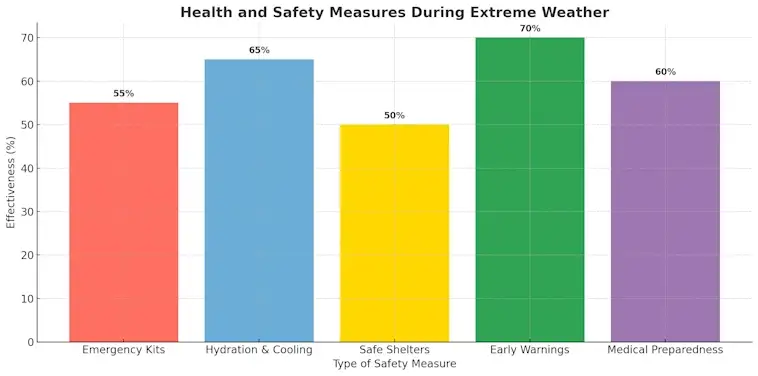
Simple actions can help protect health. During a heatwave, staying hydrated and avoiding outdoor activities at the hottest times of day can reduce the risk of heatstroke. In storms or floods, having an emergency kit with clean water, food, and medicine ensures families are ready if power or roads are cut off.
Extreme weather also puts extra pressure on hospitals and emergency services. That’s why communities are focusing on early warnings, safe shelters, and public education. These steps help people respond quickly and reduce injuries.
Protecting health and safety during extreme weather isn’t just about reacting in the moment. It’s about building habits and systems that keep people safe long-term. With planning and awareness, communities can face these challenges with more confidence and resilience.
Building a Future That Can Withstand Changing Conditions
As extreme weather becomes more common, it’s clear we need to think ahead. The choices we make today will shape how well communities can handle tomorrow’s challenges. From stronger buildings to cleaner energy, every step matters.
Resilience Starts at Home
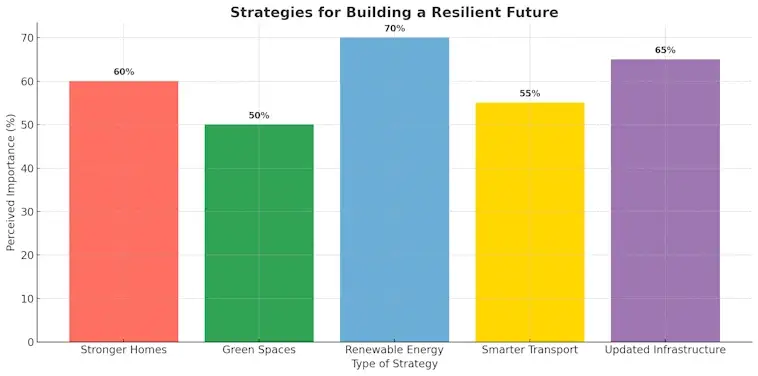
Resilience isn’t just about big projects. It starts with small, everyday decisions. Homes can be made safer with better insulation, backup power, and flood-resistant designs. Neighborhoods benefit from green spaces that reduce heat and absorb rain. These changes may seem simple, but together they build stronger foundations for the future.
On a larger scale, governments and businesses are investing in renewable energy, smarter transport systems, and updated infrastructure. These efforts not only protect against extreme weather but also cut down on emissions that fuel climate change in the first place.
The path forward is about balance—protecting people today while creating opportunities for the next generation. By planning ahead and embracing innovation, we can build a future that withstands changing conditions and keeps communities safe.
Facing Extreme Weather With Resilience
Extreme weather is no longer a distant threat—it’s a reality shaping our daily lives. From stronger storms to record heatwaves, communities everywhere are feeling the impact. But while the challenges are serious, the future is not without hope.
By investing in clean energy, building smarter infrastructure, and preparing households with simple safety measures, we can reduce risks and protect lives. Every action, no matter how small, contributes to a more resilient world.
The path forward requires awareness, innovation, and cooperation. If we adapt together and make climate-smart choices, we can build stronger communities that not only withstand extreme weather but thrive despite it.