
The Arctic Ecosystem: A Race to Protect Life and Hope
The Arctic Ecosystem: A Race to Protect Life and Hope
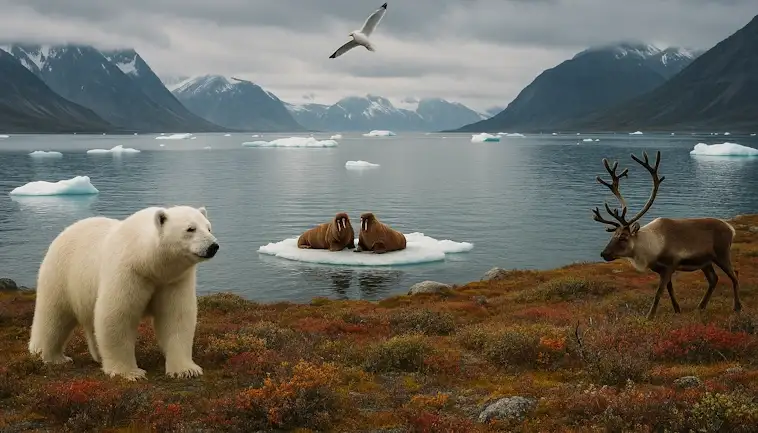
The Arctic ecosystem is one of the most fragile and awe-inspiring places on Earth. It supports a web of life that ranges from microscopic plankton beneath the ice to mighty polar bears roaming the tundra. Yet, this balance is under threat. Rising global temperatures are melting sea ice at alarming rates, disrupting migration patterns, and pushing species toward extinction.
What happens in the Arctic doesn’t stay there. The loss of ice affects ocean currents, weather systems, and even food security across the globe. Scientists warn that the changes unfolding in the far north are signals of wider planetary risks—but also reminders of what can still be saved.
Protecting the Arctic ecosystem is not only about preserving wildlife; it’s about safeguarding a future where people and nature thrive together. The choices made today could determine whether this icy wilderness continues to be a place of life and resilience, or a symbol of irreversible loss.
Why the Arctic Ecosystem Matters More Than Ever
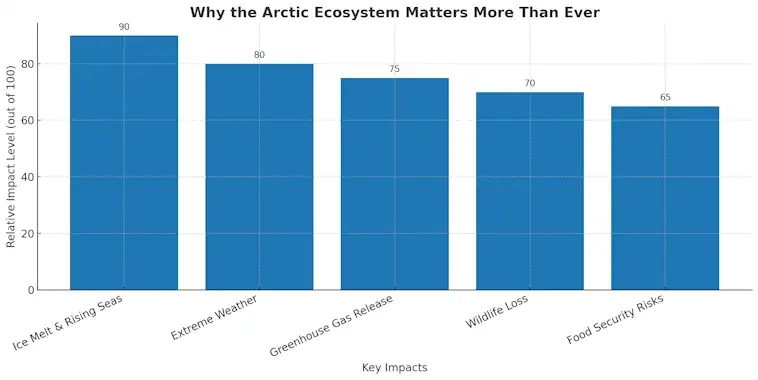
The Arctic might feel far away, but what happens there affects all of us. This icy region acts like the planet’s cooling system, reflecting sunlight and regulating global temperatures. When the Arctic warms, ice melts faster, oceans rise, and weather patterns shift. That means stronger storms, hotter summers, and unpredictable winters around the world.
A Chain Reaction We Can’t Ignore
The Arctic is home to incredible wildlife—polar bears, walruses, and migrating birds. But it’s also a key player in global food security. Melting permafrost releases greenhouse gases that fuel climate change even more. At the same time, disappearing ice threatens fisheries and disrupts marine life. It’s a chain reaction that doesn’t stay in the Arctic.
This ecosystem matters because it connects directly to our daily lives, from the price of food to the stability of coastal cities. Protecting it isn’t just about saving polar bears—it’s about safeguarding our own future. The choices we make today about energy, conservation, and climate policy ripple all the way to the top of the world.
Climate Change and Its Impact on the Arctic Ecosystem
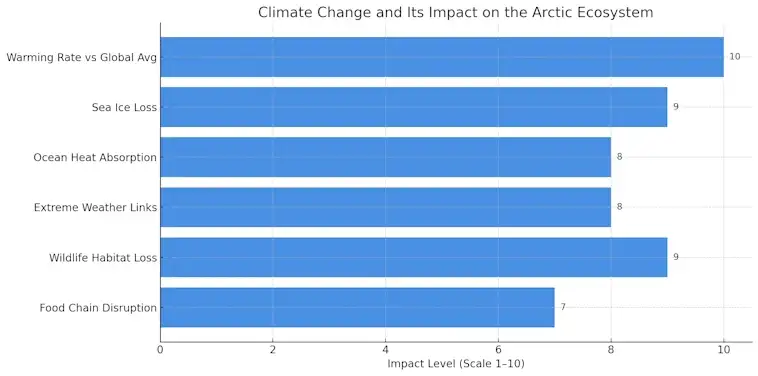
The Arctic is warming nearly four times faster than the rest of the planet. That rapid change is reshaping the landscape, melting glaciers, and breaking apart sea ice that has stood for thousands of years. What seems like a distant shift is actually a warning signal for all of us.
Melting Ice, Rising Consequences
When sea ice disappears, the Earth loses one of its most powerful reflectors of sunlight. Instead of bouncing heat back into space, the darker ocean absorbs it, speeding up global warming. This shift fuels extreme weather, disrupts ocean currents, and puts coastal communities everywhere at risk.
Wildlife is also feeling the pressure. Polar bears lose hunting grounds. Walruses are forced to crowd onto shrinking beaches. Even tiny plankton, the foundation of the Arctic food chain, struggle as ocean temperatures rise. These changes ripple through the entire ecosystem, creating instability from the top predators down to the smallest species.
The Arctic is often called the “canary in the coal mine” of climate change. What happens there is a preview of what’s coming for the rest of the world. Protecting this fragile ecosystem isn’t just about saving a faraway landscape—it’s about safeguarding our future.
Wildlife at Risk: The Hidden Struggles in the Arctic Ecosystem
The Arctic is one of the most fragile places on Earth, and its wildlife is facing challenges we can’t ignore. As sea ice melts and temperatures rise, animals are being pushed to adapt faster than ever. For many, survival is becoming a daily struggle.
From Polar Bears to Plankton
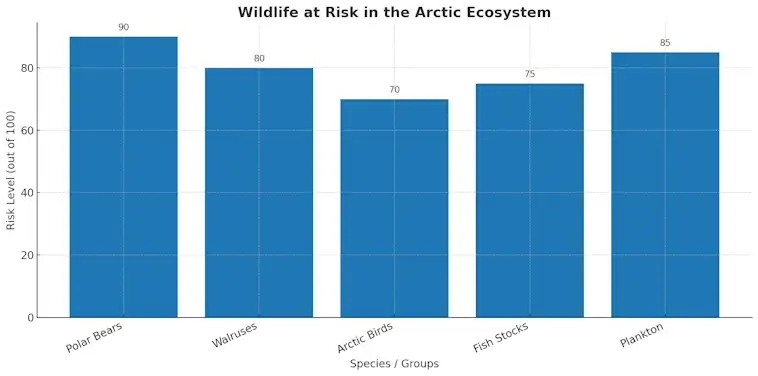
Polar bears rely on sea ice to hunt for seals. With ice disappearing, they are forced to swim longer distances and go hungry more often. Walruses crowd onto shrinking shorelines, where food is harder to reach. Even tiny plankton—the base of the Arctic food chain—are changing as warmer waters spread north. And when the smallest creatures are at risk, the entire food web feels the impact.
This loss of balance doesn’t stay in the Arctic. Birds that migrate across continents depend on the region for feeding and nesting. Fish stocks that support global seafood markets are shifting. When wildlife suffers in the Arctic, the ripple effects travel far beyond the frozen north.
Protecting these species is about more than saving iconic animals. It’s about keeping ecosystems healthy and ensuring the stability of resources we all depend on. The Arctic’s wildlife story is tied closely to our own future.
How Communities Are Protecting the Arctic Ecosystem
The Arctic may feel like a distant world, but local communities are taking bold steps to protect it. Indigenous peoples, scientists, and conservation groups are working together to slow the damage and create solutions that matter for everyone.
Local Voices, Global Impact
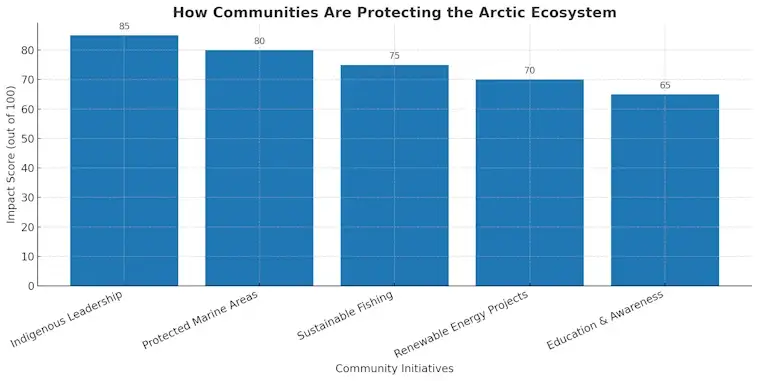
Indigenous communities have lived in the Arctic for thousands of years. Their knowledge of the land and wildlife is guiding smarter decisions about conservation. From setting up protected marine areas to monitoring ice conditions, their leadership is shaping how the Arctic is managed today.
At the same time, global organizations are supporting renewable energy projects and sustainable fishing practices. These efforts not only protect fragile ecosystems but also provide new opportunities for local economies. Schools, youth groups, and grassroots campaigns are spreading awareness and inspiring action far beyond the Arctic Circle.
What’s clear is that protecting the Arctic isn’t just about science or policy. It’s about people coming together—sharing wisdom, innovation, and determination. These communities remind us that small actions can create powerful change, and their work shows us a hopeful path forward.
A Future of Hope: Global Action to Save the Arctic
Even with all the challenges, the Arctic’s story is not only about loss. It’s also about hope. Around the world, people are realizing that saving the Arctic means protecting our shared future. This awareness is sparking action on a global scale.
Innovation Meets Collaboration
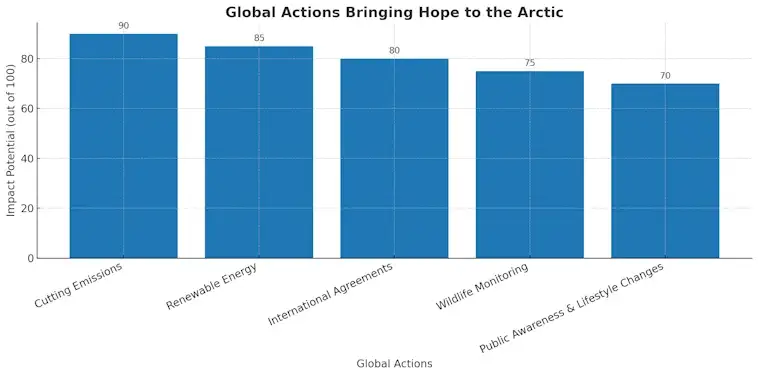
Nations are joining forces through international agreements to cut greenhouse gas emissions. Renewable energy is replacing fossil fuels in many regions, reducing the pressure on fragile ecosystems. At the same time, new technologies are helping scientists track ice melt, monitor wildlife, and predict extreme weather with greater accuracy.
But the most inspiring part is the collaboration between governments, businesses, and everyday people. From sustainable fashion choices to supporting green energy, individuals are playing a role too. Every action, no matter how small, adds momentum to a bigger movement.
The Arctic may be changing quickly, but so is our response. With determination and global cooperation, the future of the Arctic can still be one of resilience. Hope lies not just in what we protect, but in how we work together to protect it.
The Race to Save the Arctic Ecosystem Is Our Shared Mission
The Arctic is more than ice and snow—it’s a heartbeat of our planet. Its health shapes our weather, our oceans, and even the food on our tables. Right now, it stands at a crossroads. The choices we make today will decide whether this fragile ecosystem can survive and thrive.
The race to save the Arctic ecosystem isn’t just for scientists or world leaders. It’s for all of us. From supporting renewable energy to reducing our own carbon footprint, every action adds weight to the side of hope. Communities in the Arctic are already leading the way, and global collaboration is showing what’s possible when people unite.
Protecting the Arctic is protecting ourselves. If we act together with urgency and determination, the future doesn’t have to be one of loss. Instead, it can be a story of resilience, recovery, and renewal—one where the Arctic remains a symbol of the Earth’s strength, not its vulnerability.