
Will Renewable Energy Change Daily Life for the Better?
Will Renewable Energy Change Daily Life for the Better?
Renewable energy is no longer just a future goal—it’s becoming part of everyday life. From the way we power our homes to how businesses run their operations, clean energy sources like solar, wind, and hydropower are steadily replacing traditional fuels. This shift is not only about cutting carbon emissions; it’s about reshaping how people live, work, and even travel.
As technology improves and costs continue to fall, renewable energy is opening doors to new opportunities for households and communities. It promises cleaner air, more affordable electricity, and greater energy independence. The big question is how much these changes will influence daily routines and whether the benefits will truly outweigh the challenges.
How Renewable Energy Is Already Shaping Everyday Life
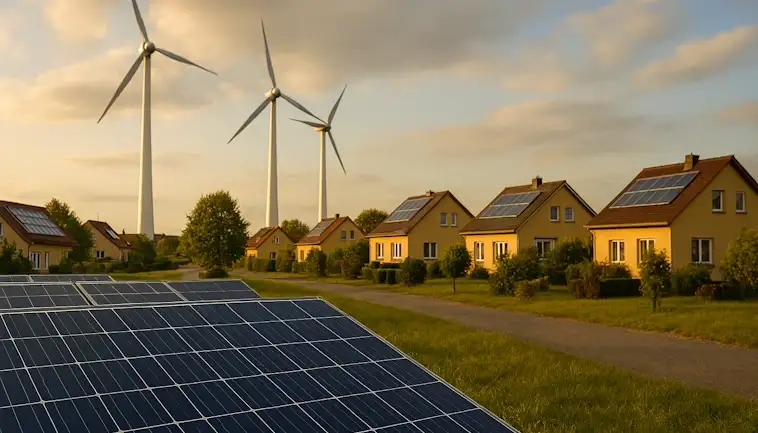
Renewable energy isn’t just about solar farms in deserts or giant offshore wind turbines. It’s already part of our everyday routines, often in ways we don’t even notice. The shift to cleaner power is changing how we live, work, and even how we travel.
Powering More Than Just Homes
Today, renewable energy is quietly running much of our daily world. Many homes now use rooftop solar panels, cutting down electricity bills and keeping lights on during power cuts. At the same time, community wind projects supply clean energy to neighborhoods, making towns less dependent on fossil fuels.
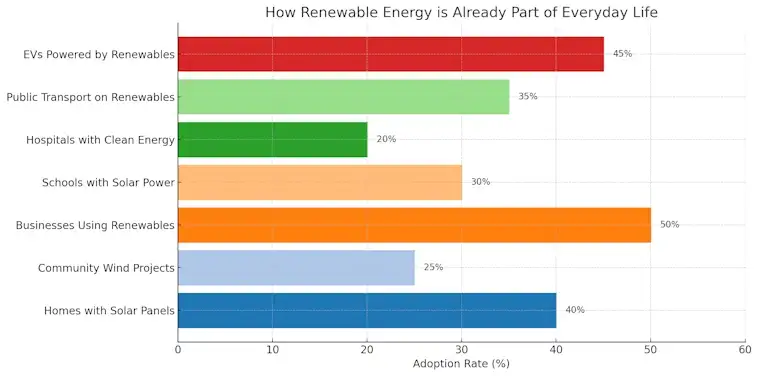
But it doesn’t stop at our front doors. Businesses are installing solar panels on warehouses, schools are teaching kids under solar-powered lights, and hospitals are reducing costs by relying on clean, steady energy. All of this means fewer emissions and more reliable power sources in the long run.
Public transport is also being transformed. Electric buses and trains powered by renewables are becoming more common. That means cleaner air in our cities and quieter streets. Even the car you charge at home may already be running on a mix of wind and solar energy, depending on your local grid.
The best part? These changes are only the beginning. As renewable energy grows, everyday life will become even more connected to clean power. From cooking dinner to streaming your favorite show, more of our modern comforts will be backed by renewable sources.
The Benefits of Renewable Energy for Homes and Communities
Switching to renewable energy isn’t just about saving the planet. It’s about making everyday life better for families and communities. From lower bills to healthier air, clean power is already improving how we live.
Lower Bills, Brighter Futures
One of the biggest benefits of renewable energy is cost savings. Solar panels on rooftops let homeowners generate their own electricity, which means smaller monthly bills and protection against rising energy prices. Communities that invest in shared solar or wind projects also save money, especially in rural areas where energy costs can be high.
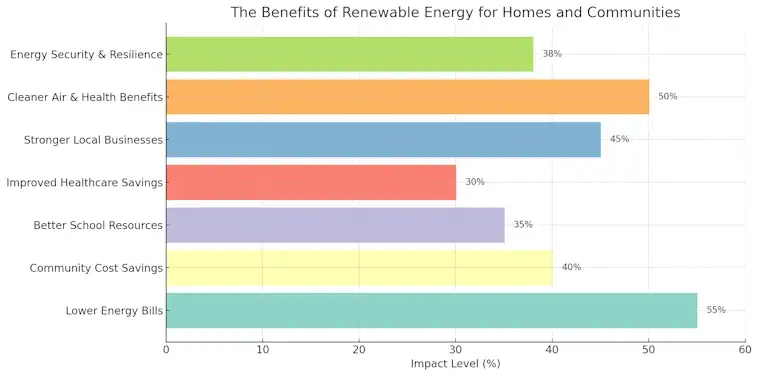
The financial impact goes beyond homes. Schools that rely on solar power often reinvest the money they save into better classrooms and resources for students. Hospitals can use savings from renewable energy to improve patient care. Even small businesses benefit when operating costs go down, making local economies stronger.
But the gains aren’t only about money. Cleaner energy leads to cleaner air, which lowers health risks like asthma and heart disease. Communities with renewable energy also see less pollution and noise, creating safer and more enjoyable spaces to live in.
As more people make the switch, neighborhoods become more resilient. With local power sources like solar and wind, communities can keep the lights on during outages and reduce dependence on outside energy. That means more stability and security for everyone.
Can Renewable Energy Make Daily Living More Affordable?
For many people, the cost of energy is a constant worry. Bills rise, budgets get tighter, and it feels like there’s no end in sight. But renewable energy is starting to change that story. It’s not just about being eco-friendly. It’s also about saving money in real, everyday ways.
Cutting Costs Where It Counts
One of the biggest advantages of renewables is lower energy bills. When a home has solar panels, it generates its own electricity. That means less reliance on the grid and more control over monthly costs. Over time, the savings can add up to thousands of dollars.
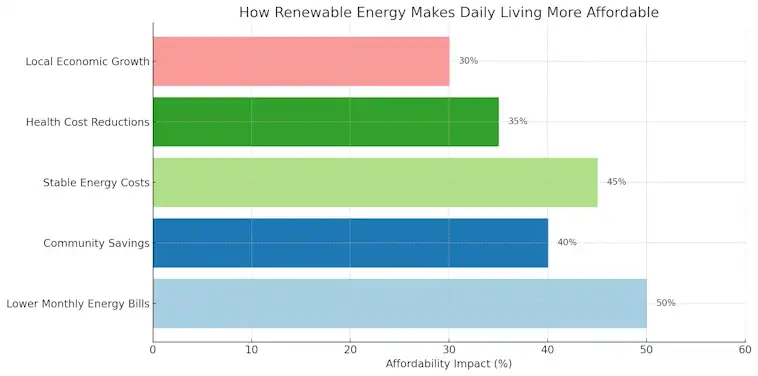
Communities are seeing benefits too. Shared solar projects and local wind farms give entire neighborhoods access to cheaper, cleaner power. That makes a difference for families, schools, and small businesses. Instead of money flowing out to big utilities, savings stay local and help the community grow stronger.
Renewable energy also protects households from rising fossil fuel prices. While gas and oil fluctuate, the sun and wind don’t send surprise bills. That stability means more predictable energy costs, which is a huge relief for families planning their budgets.
In the long run, cleaner power can even lower health costs. With fewer emissions, communities breathe cleaner air, which leads to fewer medical issues related to pollution. That’s money saved on doctor visits, medications, and lost workdays.
So yes—renewable energy can absolutely make daily living more affordable. The more it grows, the more families and communities will feel the financial relief.
What Renewable Energy Means for the Future of Work and Travel
Renewable energy isn’t only changing how we power our homes. It’s also reshaping the future of work and the way we move around. From cleaner offices to smarter transport, the shift to renewables is creating new opportunities and transforming daily life.
Jobs of Tomorrow
As more businesses turn to clean power, new industries are growing fast. Solar panel installation, wind turbine maintenance, and energy storage jobs are now some of the fastest-growing careers worldwide. That means more opportunities for skilled workers and more stable jobs for local communities.
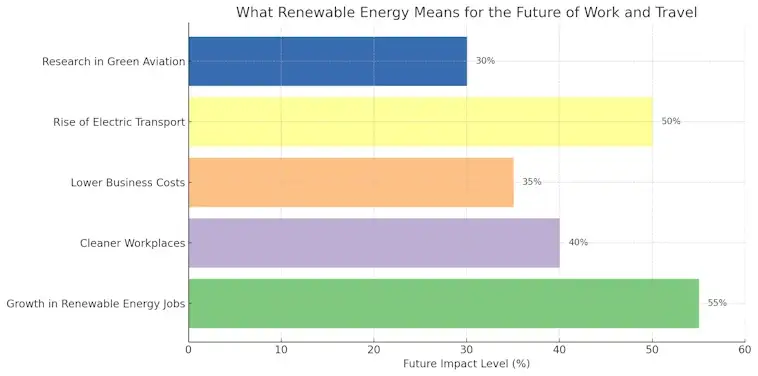
Offices and factories are also becoming greener. Many companies are investing in renewable energy to cut costs and meet climate goals. Employees benefit too, working in spaces powered by cleaner air and lower emissions. For younger generations entering the workforce, this shift aligns with values of sustainability and responsibility.
Travel is also being redefined. Electric buses, trains, and cars powered by renewables are becoming mainstream. That not only reduces pollution but also makes commutes quieter and healthier. Even aviation is starting to change, with research into planes powered by hydrogen or sustainable fuels.
The future of work and travel will be more connected to clean energy than ever before. By investing in renewables today, we’re building industries that provide better jobs, safer cities, and smarter ways to move around tomorrow.
Challenges Ahead: What Could Slow Down the Transition?
The move to renewable energy is exciting, but it isn’t without roadblocks. While progress is happening quickly, a few challenges could slow the transition if they aren’t addressed.
Balancing Growth with Infrastructure
One of the biggest issues is infrastructure. Solar panels and wind turbines are producing more energy than ever, but power grids in many places aren’t built to handle the new load. Upgrading these systems takes time and money, and without it, clean energy can’t reach everyone who needs it.
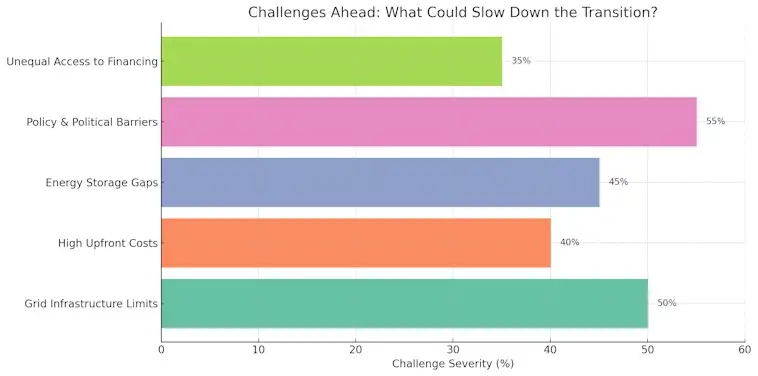
Another challenge is cost. While prices for solar and wind have dropped, the upfront investment can still be high for families and small businesses. Governments and communities are working on better financing options, but access isn’t equal everywhere.
There’s also the question of storage. The sun doesn’t shine at night, and the wind doesn’t always blow. Without enough large-scale batteries, some regions still have to rely on fossil fuels when renewables can’t keep up.
Finally, politics and policy play a big role. Support for renewable energy can vary from one region to another. Delays in policy decisions or lack of incentives can slow down adoption and discourage investment.
Even with these challenges, the momentum behind clean energy is strong. The key will be solving these problems early so the transition stays on track.
A Cleaner Future Starts Today
Renewable energy is no longer just a vision for tomorrow—it’s already shaping how we live today. From powering homes and schools to changing how we work and travel, clean energy is creating real benefits for everyday life. It helps lower bills, builds stronger communities, and protects our health while reducing our impact on the planet.
Yes, there are challenges ahead, but the momentum is undeniable. With smarter policies, better technology, and growing public support, the shift to renewable energy will only speed up.
For families, businesses, and communities, this means a future where energy is not just cleaner, but also more affordable and reliable. The choices we make now will decide how quickly we get there. One thing is clear—the more we invest in renewable energy today, the brighter and more sustainable our daily lives will be tomorrow.