
Does a Temperature Rise Shape Tomorrow’s Choices?
Does a Temperature Rise Shape Tomorrow’s Choices?
A Temperature rise is no longer a distant prediction—it is a present reality shaping how societies, economies, and ecosystems adapt. Each fraction of a degree has consequences, from shifting weather patterns to changes in how communities grow food and secure water. Scientists warn that even small increases can accelerate challenges already being felt worldwide.
At the same time, this global shift is prompting fresh innovation and reshaping priorities. Cities are rethinking infrastructure, businesses are redesigning supply chains, and individuals are reconsidering lifestyle choices. The way the world responds to a temperature rise today will determine the resilience and opportunities of tomorrow.
Understanding a Temperature Rise: What the Data Tells Us
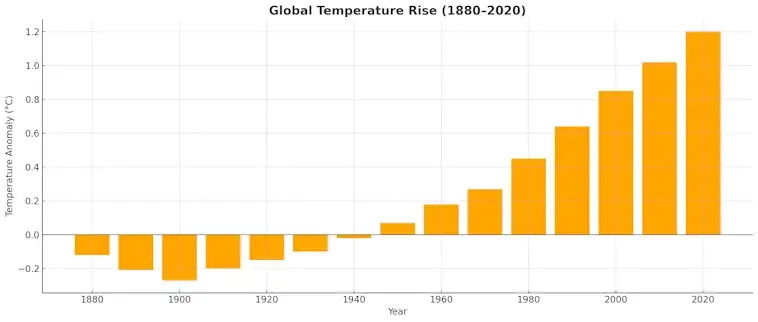
When we talk about rising temperatures, it can sound a bit abstract. But the data makes it real. Over the past century, the global average temperature has steadily climbed. Scientists measure this through long-term records taken from weather stations, satellites, and even ice cores. The message is clear: the planet is warming, and it’s happening faster than in the past.
Why a Few Degrees Matter
It might not sound like much when you hear the Earth has warmed by 1.2°C since the late 1800s. After all, daily weather changes far more than that. But global averages tell a bigger story. Just a small rise in temperature can mean stronger heatwaves, shifting rainfall patterns, and melting glaciers. Think of it like a fever in the human body—just a small increase signals that something is wrong.
Another important point is how the warming is uneven. Some regions heat up faster than others. For example, the Arctic is warming nearly four times quicker than the global average. This creates ripple effects across the climate system, influencing everything from ocean currents to storm intensity.
The data doesn’t just tell us what has happened. It also shows us what may lie ahead. Climate models use this historical information to predict future scenarios. If emissions continue unchecked, temperatures could rise much higher, leading to more frequent and severe climate events. On the other hand, cutting greenhouse gases now could slow the rate of change.
In simple terms, the data is like a roadmap. It doesn’t dictate where we must go, but it shows the possible routes—and some are much riskier than others.
How a Temperature Rise Impacts Daily Life and Global Systems
When we hear about climate change, it’s easy to picture melting ice caps or distant disasters. But rising temperatures touch our everyday lives in surprising ways. A warmer world affects what we eat, how we work, and even the air we breathe.
From the Kitchen to the Coastline
Food is one of the first places we feel the change. Hotter summers stress crops like wheat and corn, making harvests less reliable. At the same time, warmer oceans put pressure on fisheries, threatening the seafood that millions of people rely on. Prices at the grocery store can spike when these systems struggle, and families everywhere feel the difference.
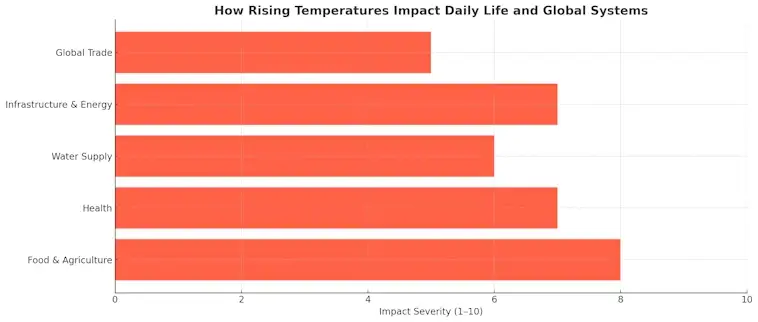
Health is another concern. Heatwaves are becoming longer and more intense. They raise the risk of dehydration, heat stroke, and other illnesses. Vulnerable groups, such as children and older adults, are most at risk. Doctors are already seeing more cases linked directly to higher temperatures.
Global systems feel the strain too. Rising heat disrupts water supplies by speeding up evaporation and changing rainfall patterns. This can lead to longer droughts in some areas and heavy flooding in others. Transportation networks, energy grids, and even international trade can be thrown off balance by these shifts.
What’s striking is how connected everything is. A temperature rise doesn’t just warm the air—it sets off a chain reaction. From our kitchens to coastlines, from city streets to global markets, the effects are already in motion. And the choices we make today will shape how much these impacts grow tomorrow.
A Temperature Rise and the Future of Food, Water, and Energy
The future of food, water, and energy is closely tied to rising global temperatures. As the climate shifts, the systems we depend on every day are under pressure. This isn’t just a problem for faraway places—it’s something that affects all of us.
Feeding the Future
Crops like wheat, rice, and corn are sensitive to heat. When temperatures rise, yields can drop, and pests thrive. Farmers may face more unpredictable harvests, which could lead to higher prices at the store. On the flip side, new technologies and climate-smart farming methods offer hope. By adapting how we grow and distribute food, we can reduce the risks and keep people fed.
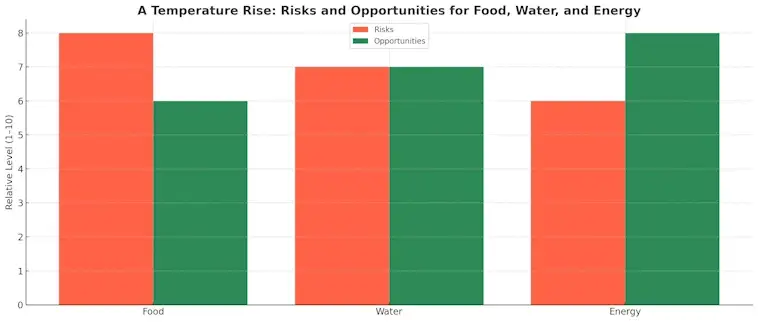
Water is another key challenge. Hotter conditions speed up evaporation, draining rivers and reservoirs faster than before. At the same time, intense storms can cause flooding, overwhelming water systems. Some regions may struggle with scarcity while others face too much, too quickly. Managing water wisely will be one of the most important tasks of the future.
Energy systems are also feeling the strain. Rising demand for cooling during hotter summers puts stress on power grids. Hydropower, which depends on steady water flows, may become less reliable. But clean energy solutions like solar and wind are gaining ground. They not only cut emissions but also help build resilience against climate shocks.
The big picture is clear: the way we produce, share, and use food, water, and energy must evolve. Rising temperatures pose challenges, but they also open the door to innovation. With smarter choices today, we can create a future that is more secure, more sustainable, and better prepared for what’s ahead.
Innovations and Solutions to Slow Down a Temperature Rise
While the challenges of climate change are serious, the good news is that solutions are already in motion. Around the world, people are developing new ideas and technologies to slow down rising temperatures. These innovations give us a sense of hope—and a path forward.
Clean Energy on the Rise
One of the biggest breakthroughs is in renewable energy. Solar and wind power are now cheaper and more accessible than ever. They replace fossil fuels, cut emissions, and reduce the pressure on our climate. Advances in battery storage also mean we can keep the lights on even when the sun isn’t shining or the wind isn’t blowing.
Agriculture is another area of innovation. Farmers are experimenting with climate-smart practices like precision irrigation, drought-resistant crops, and vertical farming. These methods help secure food supplies while reducing water use and emissions.
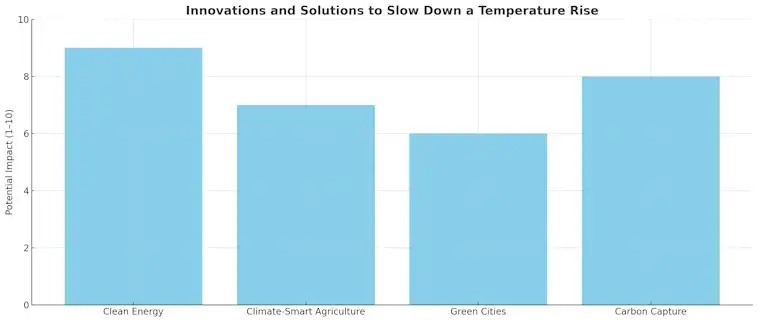
Cities are stepping up too. Green building designs, smart transportation systems, and urban forests all play a role in reducing heat and pollution. These solutions not only help the planet but also make daily life healthier and more comfortable.
And then there’s technology at the cutting edge—like carbon capture. This approach aims to remove CO₂ directly from the air and store it safely underground. While still developing, it could become a key tool in balancing our climate system.
The bigger picture is clear: slowing down a temperature rise isn’t about one single solution. It’s about combining many efforts, from local projects to global policies. The more we innovate and invest today, the better chance we have of creating a stable and sustainable future.
Preparing for Tomorrow: Choices That Shape a Warming World
The future isn’t set in stone. The choices we make today will shape the kind of world we leave behind. Rising temperatures are already changing our daily lives, but we still have time to influence what comes next.
Small Steps, Big Impact
Change doesn’t always start with massive projects. It can begin with simple decisions in our homes, workplaces, and communities. Choosing renewable energy, cutting back on waste, or supporting local food systems all add up. When millions of people take small steps, the combined effect is powerful.
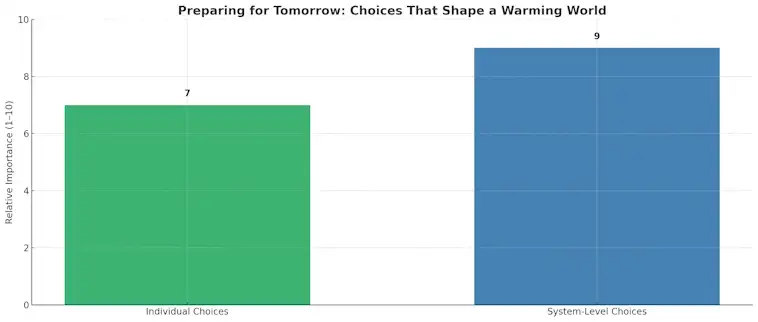
Governments and businesses also play a huge role. Policies that invest in clean energy, protect natural ecosystems, and encourage innovation can shift entire industries. These decisions ripple outward, creating healthier cities, stronger economies, and more resilient communities.
Education is another part of preparing for tomorrow. By raising awareness and sharing knowledge, we empower people to act. Young people, in particular, are already leading the way in demanding bold climate action. Their voices remind us that the future is not only about survival—it’s about building a better world.
The reality is simple: we can’t stop every impact of rising temperatures. But we can choose how much worse it gets and how well we adapt. By acting now, we not only protect ourselves but also open the door to a more hopeful tomorrow.
A Temperature Rise and Tomorrow’s Choices
The evidence is clear—a rising temperature is more than just a number on a chart. It influences how we grow food, manage water, power our homes, and even how we plan for the future. Each degree of warming carries consequences, but it also sparks innovation and drives new solutions.
The real question isn’t whether rising temperatures shape tomorrow’s choices. They already do. The question is how we respond. We can choose inaction and face greater risks, or we can act boldly and build a more secure, sustainable world.
Every step matters—whether it’s an individual decision to reduce waste or a global policy to cut emissions. Together, these choices set the course for tomorrow. A warming world challenges us, but it also gives us the chance to shape a better future.