

Drought Conditions Signal a Crisis We Can’t Ignore
Drought Conditions Signal a Crisis We Can’t Ignore
Dry riverbeds, shrinking reservoirs, and parched farmland are no longer distant headlines—they are becoming daily realities across the globe. Drought conditions are intensifying, and the ripple effects touch nearly every part of life. Crops wither in the fields, food prices climb, and entire communities struggle to secure safe drinking water. Scientists warn that as the climate warms, droughts will arrive more often, last longer, and hit harder.
Yet this crisis is not only about water scarcity. It is about the fragile systems we depend on—our food supply, our economies, and our health. The choices made now will determine whether these challenges spiral into long-term disaster or spark meaningful change.
The Alarming Rise of Global Drought Conditions
Droughts are no longer rare events. They are becoming more frequent, more severe, and more widespread. Across the globe, communities are watching rivers dry up, crops fail, and water reserves shrink at record speed. What was once seen as a challenge for a few regions is now a global crisis.
Why Water Scarcity Hits Harder Now
The impact of drought today is far greater than it was decades ago. Populations are larger, agriculture is more intensive, and demand for fresh water is rising faster than nature can keep up. This means even a short drought can disrupt food supplies, raise prices, and threaten entire ecosystems.
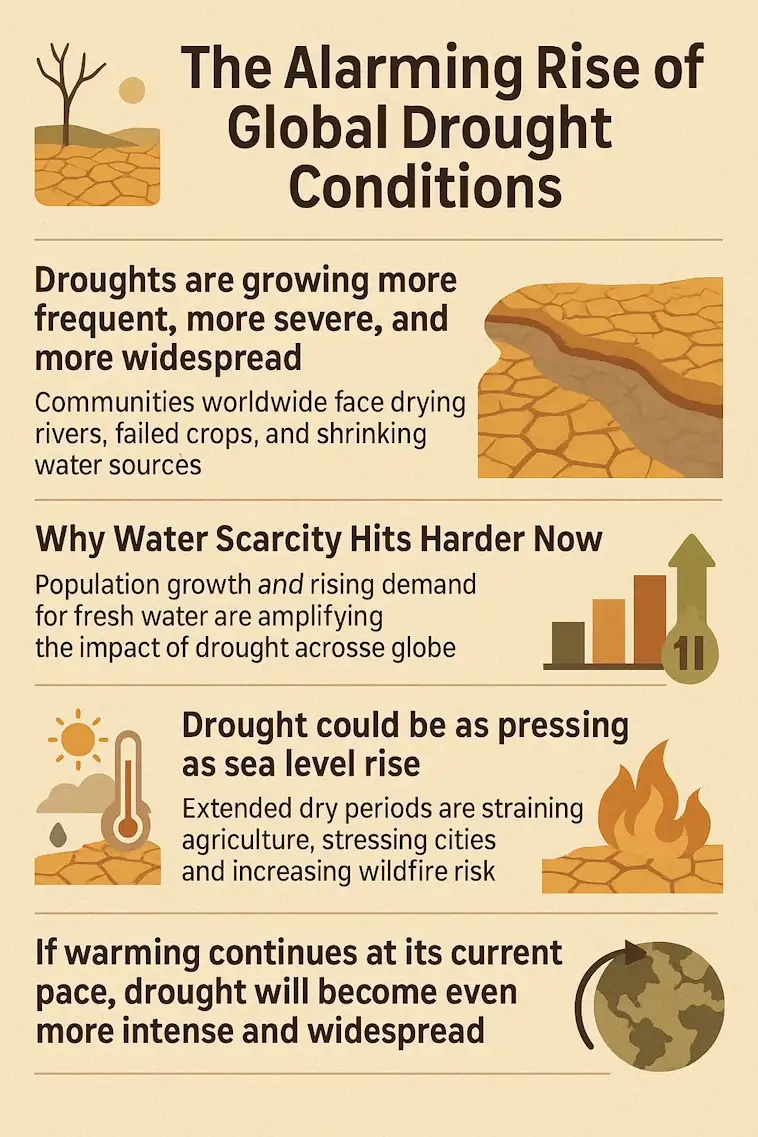
In fact, many experts warn that drought could soon rival sea level rise as one of the most urgent effects of climate change. Longer dry spells are placing stress on farmland from California to sub-Saharan Africa, while cities are facing restrictions and rationing that once seemed unimaginable.
At the same time, drought isn’t only about water. It also means higher wildfire risks, weakened economies, and health concerns tied to heat waves and poor air quality. Each drought season leaves communities more vulnerable to the next.
Looking ahead, the big question is how prepared we are. While new technologies and smarter water management offer hope, the truth is clear: if global warming continues unchecked, drought conditions will intensify and spread even further.
How Droughts Threaten Our Food and Water Supply
When rain doesn’t fall for weeks or even months, the first thing we notice is dry soil. But behind the scenes, droughts are doing much more damage. They disrupt the delicate balance that keeps our food and water supply stable.
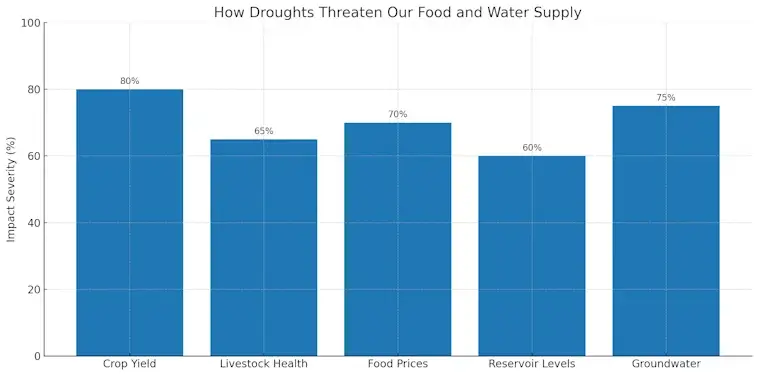
Farmers depend on steady rainfall to grow crops. Without it, plants struggle to survive, harvests shrink, and food prices rise. Less water also means livestock have less to drink and less grass to graze on. This chain reaction makes the food we rely on every day more expensive and harder to find.
A Hidden Impact: Groundwater Running Dry
Another problem is underground. To cope with drought, communities often pump more water from aquifers. These underground reserves take decades—or even centuries—to refill. Once they’re depleted, it’s not easy to bring them back. This overuse puts future water security at risk, especially in farming regions that depend heavily on wells.
At the same time, droughts also weaken local water systems. Rivers, lakes, and reservoirs drop to dangerously low levels, threatening drinking water supplies. For many towns, that means tighter restrictions, and in severe cases, taps running dry.
Droughts are not just about hot, dry weather. They ripple through our food system and water supply, leaving long-term consequences. The truth is, when the rain stops, the effects reach every dinner table.
The Hidden Economic Cost of Drought Conditions
When we talk about drought, most people think about dry fields and shrinking rivers. But the true impact goes much deeper. Drought conditions can quietly drain entire economies, affecting everything from food prices to job security.
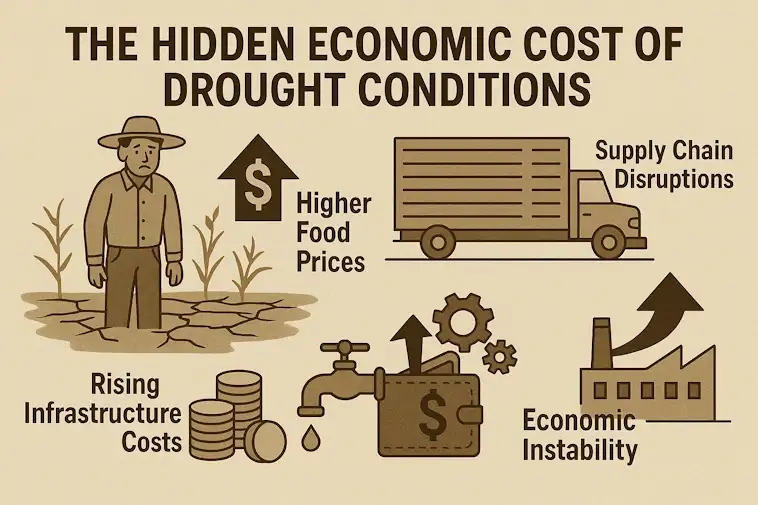
Farmers feel it first. Without enough water, crops wither, and yields drop. That leads to higher grocery bills, not just locally but across regions that rely on those crops. For families, it means stretching budgets even further. For businesses, it means thinner profit margins.
Why Water Shortages Hit Everyone’s Wallet
What often gets overlooked is how droughts ripple through supply chains. When agriculture slows, trucking, food processing, and retail all take a hit. Restaurants pay more for ingredients. Export markets shrink. Even industries like tourism and energy can struggle, especially in areas where water is vital for hydropower or attracting visitors.
Communities also face rising costs. Local governments may need to invest in emergency water supplies, while households spend more on bottled water or drilling deeper wells. These hidden expenses rarely make headlines, but they quietly build up and put pressure on everyday life.
Looking ahead, climate change is expected to make droughts more frequent and more severe. That means these economic shocks could become less of an exception and more of a regular challenge. Planning for water scarcity isn’t just about protecting the environment—it’s also about protecting wallets, jobs, and long-term economic stability.
Communities on the Frontline of Water Shortages
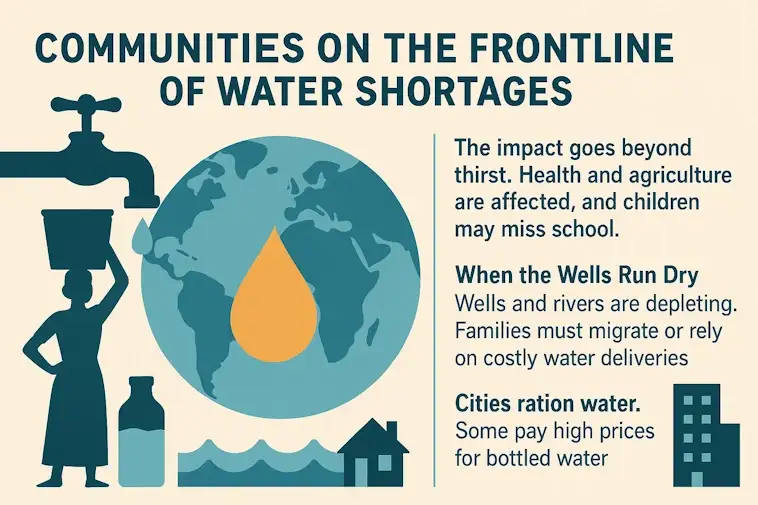
All around the world, communities are feeling the strain of water scarcity. What used to be an issue discussed in far-off regions is now reaching more towns and cities every year. For many, turning on the tap and wondering if water will flow is becoming a daily reality.
The impact is not just about thirst. It shapes health, agriculture, and even the ability of children to attend school. When families spend hours searching for clean water, time for education and work is lost. This creates a ripple effect that slows growth and limits opportunities.
When the Wells Run Dry
In rural areas, wells and rivers are often the only lifeline. But these are drying faster than they can be replenished. Droughts last longer, and rainfall has become unpredictable. Villages that once thrived are now forced to migrate or rely on costly water deliveries.
Urban areas are not spared either. Growing populations and aging infrastructure put cities under immense pressure. Some neighborhoods face rationing, while others must buy bottled water at inflated prices. The divide between those who can afford solutions and those who cannot is growing wider.
Still, these challenges also bring out resilience. Local groups are organizing community water banks, reusing greywater, and pushing for smarter irrigation. Innovation is often born from necessity, and these frontline communities are showing that adaptation is possible, even in the toughest circumstances.
What We Can Do to Combat the Drought Crisis
Droughts are becoming more frequent and more intense. While the scale of the problem can feel overwhelming, there’s a lot we can do—both as individuals and communities—to fight back against water scarcity. Small changes really can add up to big results.
Simple Swaps at Home
Start with everyday habits. Fix leaky faucets and turn off the tap while brushing your teeth. Swap out old showerheads for water-saving ones. Even choosing native plants for your yard can save gallons of water every week. These small steps make a real difference when multiplied across millions of households.
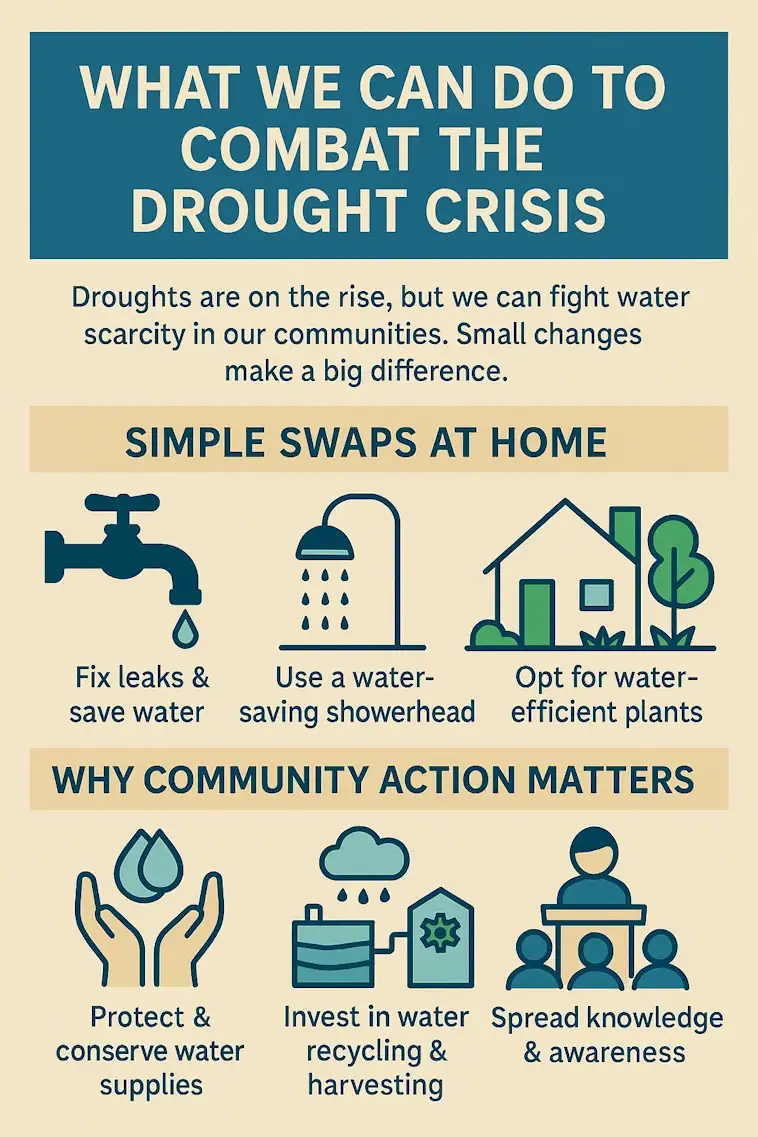
But it’s not just about personal choices. We need to push for change on a larger scale too. Supporting local policies that protect water supplies and promote smart irrigation can strengthen our communities.
Why Community Action Matters
Individual effort matters, but collective action has power. Towns and cities that invest in water recycling, rainwater harvesting, and drought-resistant landscaping see longer-lasting results. By working together, we can build systems that protect us from future shortages.
And don’t forget the role of education. Sharing knowledge—whether it’s with neighbors, schools, or online communities—helps spread awareness and inspires more people to act.
Here’s a possible closing section for your blog post that’s SEO friendly, conversational, and forward-looking:
Drought Conditions Are a Wake-Up Call We Can’t Overlook
Drought conditions are more than a passing hardship—they are a clear warning that our water security, food supply, and communities are at risk. The crisis is already reshaping how we live, grow food, and manage natural resources. But it also gives us a chance to rethink old habits and build stronger systems for the future.
By acting now—whether through smarter water use, investing in resilient agriculture, or supporting policies that protect our environment—we can turn this crisis into an opportunity for change. Ignoring drought isn’t an option. Facing it head-on is the only way forward.