
Pollinator Decline Could Spark Global Food Crisis
Pollinator Decline Is a Wake-Up Call for Us All
Pollinator decline is becoming one of the most pressing threats to global food security. As bees, butterflies, and other key pollinators vanish at alarming rates, the impact on crops and ecosystems is already being felt. These tiny creatures play a massive role in growing many of the fruits, vegetables, and nuts we rely on every day. Without them, food production could falter, prices could spike, and entire communities may face shortages.
The warning signs are clear, and the science is increasingly hard to ignore. Climate change, pesticide use, habitat loss, and disease are driving pollinators into decline. What happens next affects all of us—from farmers in rural fields to families shopping at grocery stores. The future of food may depend on how we respond today.
What’s Causing Pollinator Decline Around the World?
Bees, butterflies, and other pollinators play a huge role in our food system. Without them, many fruits, vegetables, and nuts simply wouldn’t grow. But around the world, these vital creatures are disappearing—and fast.
So what’s behind the global drop in pollinator populations?
The biggest driver is habitat loss. As cities expand and farmland spreads, the natural spaces pollinators rely on are shrinking. Fields once full of wildflowers are now paved over or sprayed with chemicals.
And speaking of chemicals—pesticides are a major problem. In particular, a group called neonicotinoids has been linked to bee deaths. These chemicals can harm pollinators even in small doses, affecting their ability to navigate, forage, and survive.

Climate Chaos Isn’t Helping
Then there’s the climate crisis. Rising temperatures, unpredictable weather, and longer droughts all make life harder for pollinators. Some flowers are blooming earlier than usual, while the insects that need them are arriving too late. That mismatch can be devastating.
Pollution, especially air pollution, can also affect a pollinator’s sense of smell. That makes it harder for them to find the flowers they depend on.
Finally, diseases and parasites are spreading, often made worse by weakened immune systems due to stress and poor nutrition.
It’s a perfect storm of problems. And while the scale feels overwhelming, there’s hope. More people are planting pollinator-friendly gardens, supporting organic farming, and calling for stronger protections.
Pollinators need us. And if we act now, we can still turn things around.
How Pollinator Decline Threatens Global Food Security
Pollinators are the quiet workers behind much of the food we eat. Bees, butterflies, birds, and even some bats help plants grow fruits, vegetables, and seeds. But their numbers are falling fast—and that’s a big problem.
Around 75% of the world’s crops depend on pollination in some way. Without it, foods like apples, almonds, strawberries, and tomatoes would be harder to grow. Prices would rise. Choices at the grocery store would shrink. And for millions of people, especially in poorer regions, that could mean less access to nutritious food.
More Than Just Honeybees
When we think of pollinators, we often picture honeybees. But wild bees, moths, beetles, and other insects play a huge role too. These creatures help keep ecosystems in balance. They also support the farming of over 100 major crops.

Unfortunately, habitat loss, pesticide use, climate change, and disease are all hitting pollinators hard. In some areas, bee populations have dropped by over 40% in just a few years. That’s not just sad—it’s alarming.
Farmers are already noticing lower yields in crops that depend on natural pollination. Some are even renting bee colonies to get the job done. But that’s not a long-term fix. It’s expensive, and it doesn’t solve the root of the problem.
If we want to protect our food supply, we need to act. That means planting pollinator-friendly gardens, reducing pesticide use, and supporting sustainable agriculture.
Pollinators may be small, but their impact is massive. Without them, our plates—and our futures—look a lot less full.
Crops Most at Risk from Pollinator Decline
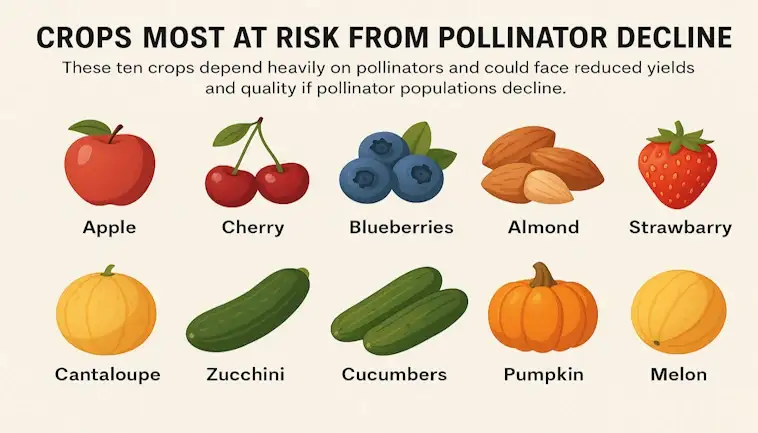
When we talk about pollinator decline, it’s easy to picture bees and butterflies. But the real story is about what happens to our food. Many of the crops we love — and rely on — depend on these tiny workers. Without enough pollinators, harvests drop, prices rise, and diets change.
Fruits are often the first to feel the impact. Apples, cherries, and blueberries are highly dependent on pollinators for good yields and quality. Without bees visiting blossoms, fruit is smaller and less plentiful. The same is true for crops like melons and strawberries, which can lose a large share of their production without adequate pollination.
Vegetables aren’t immune either. Zucchini, cucumbers, and pumpkins all depend heavily on insect visits to set healthy fruit. Even almonds, a major global crop, are almost entirely dependent on honeybees. In fact, the almond industry rents millions of hives each year just to meet pollination needs.
Why This Matters for Your Dinner Plate
It’s not just about losing variety. Pollinator decline can affect nutrition too. Many of these at-risk crops are rich in vitamins, minerals, and antioxidants. If their production falls, it can lead to higher prices and less access to healthy foods. This is especially concerning for communities that already face food insecurity.
Pollinators also play a role in supporting crops indirectly. By helping plants produce seeds and fruits, they maintain biodiversity, which keeps ecosystems healthy. And that, in turn, supports other crops and food systems.
Protecting pollinators isn’t just an environmental issue — it’s a food security issue. The more we understand which crops are most at risk, the better we can protect the delicate web that puts food on our tables.
Why Pollinator Decline Matters More Than You Think
When you hear the word “pollinator,” you might picture a busy honeybee. But pollinators are a whole team — bees, butterflies, moths, beetles, birds, and even bats. They work quietly, moving pollen from flower to flower. Yet without them, the world would look, and taste, very different.
Pollinators are responsible for helping most of the plants we eat grow. Apples, strawberries, tomatoes, coffee — yes, even your morning brew — rely on their help. Without pollinators, crops would fail, prices would rise, and many foods we love would disappear from our plates.
A World Without Color
Beyond food, pollinators keep our landscapes alive. They help wildflowers bloom, which in turn supports other wildlife. Lose them, and you lose a chain of life that stretches far beyond the garden. Imagine fewer flowers in spring, less fruit in summer, and fewer birds and animals finding food. It’s not just a farming problem. It’s an entire ecosystem at risk.
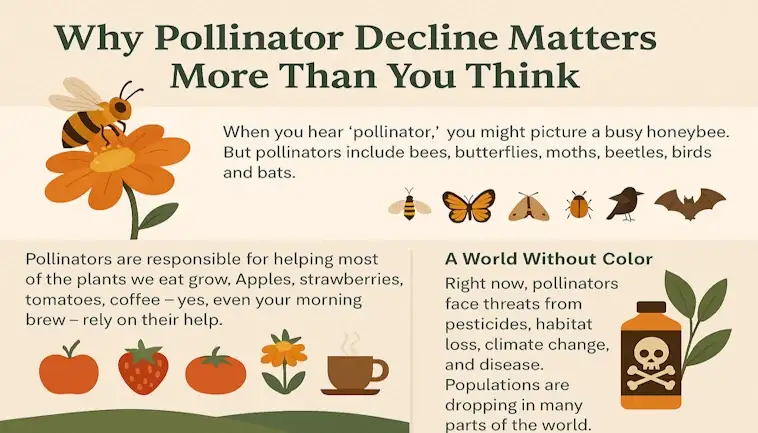
Right now, pollinators face threats from pesticides, habitat loss, climate change, and disease. Populations are dropping in many parts of the world, and once those numbers fall too low, recovery becomes difficult.
The good news? Small actions make a difference. Planting native flowers, avoiding harmful chemicals, and leaving wild spaces in gardens all help pollinators survive. Supporting farmers who protect pollinator habitats also makes a real impact.
Pollinator decline isn’t just about insects. It’s about food security, biodiversity, and the health of our planet. The choices we make today will decide whether the next generation grows up in a world buzzing with life — or one where silence replaces the hum of wings.
What We Can Do to Slow Pollinator Decline
Pollinators like bees, butterflies, and hummingbirds are vital for our food supply. They help plants grow, fruits ripen, and flowers bloom. Yet, their numbers are falling fast. The good news? We can all help slow this decline.
One of the simplest steps is planting more pollinator-friendly plants. Choose native flowers that bloom at different times of the year. This gives pollinators a steady food source. Even a small garden or balcony can become a safe stopover for them.
Avoid using pesticides and herbicides where possible. Many of these chemicals harm bees and other beneficial insects. Instead, try natural pest control methods. Companion planting, for example, can deter pests without hurting pollinators.
Creating Safe Spaces for Pollinators
Pollinators need more than food. They also need shelter and clean water. Leave a few wild areas in your yard for nesting. Add shallow water dishes with stones so insects can land safely while drinking.
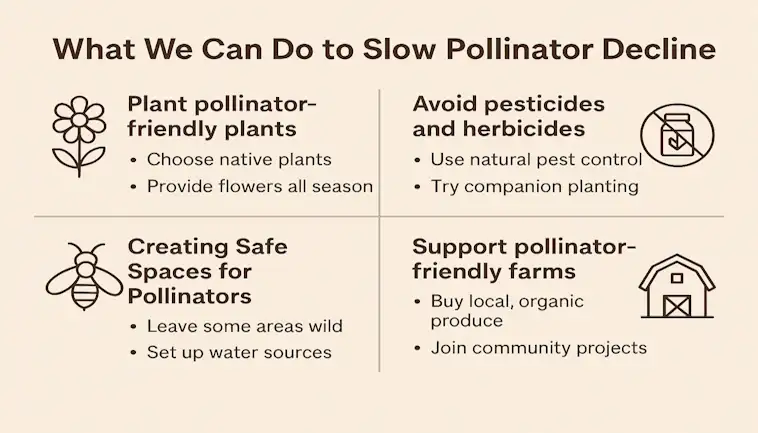
Support local farmers who use pollinator-friendly practices. When you buy honey, fruits, or vegetables, look for products from farms that protect biodiversity. This helps create a market for sustainable agriculture.
Get involved in community projects, too. Join local groups that plant pollinator gardens or restore natural habitats. Even sharing what you know with friends and neighbors can spark change.
Finally, remember that small actions add up. You don’t need acres of land or expensive tools to make a difference. Every flower planted, every chemical avoided, and every conversation started matters.
Pollinators give us beauty, food, and balance in nature. By acting now, we can give them a fighting chance for the future. And in doing so, we protect our own future too.
Protecting Pollinators: Why Our Future Depends on Them
Pollinators are more than just a sign of a healthy garden — they’re the backbone of our food systems and ecosystems. From bees and butterflies to birds and bats, these species play a vital role in fertilizing crops and wild plants. Yet their numbers are shrinking due to habitat loss, pesticide use, climate change, and disease.
The good news? We can still turn the tide. By planting native flowers, reducing chemical use, and protecting wild habitats, we give pollinators the resources they need to thrive. Every backyard, balcony, and community space can become part of the solution. The future of our food — and our planet’s biodiversity — depends on the choices we make today. Let’s act now to protect pollinators and keep our ecosystems buzzing with life.