

Cliff Collapses Are a Growing Coastal Threat
Cliff Collapses Are Changing Our Shorelines Fast
Cliff collapses are becoming more frequent—and more dangerous—in many coastal areas. As waves pound the shoreline and storms grow stronger, once-stable cliffs are giving way with little warning. Homes, roads, and entire landscapes are now at risk.
Rising sea levels and heavier rainfall are putting added pressure on already vulnerable cliffs. What used to be rare events are now happening with alarming regularity, especially in places where the land is made up of soft rock or soil. Local communities are being forced to rethink how close is too close to live near the edge.
Understanding why these collapses are happening more often—and what can be done to reduce the risk—is key to protecting people and preserving coastal land for future generations.
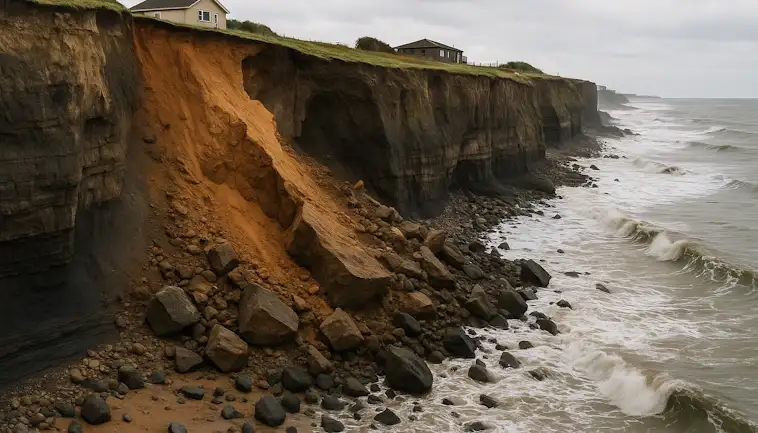
What Causes Cliff Collapses and Why They’re Getting Worse
Cliff collapses aren’t just rare geological flukes. They’re natural processes that are happening more often — and with more intensity. So, what’s behind these dramatic events, and why are they becoming increasingly common?
At the heart of most cliff collapses is a mix of erosion, weathering, and gravity. Over time, waves, wind, and rain wear away at the base of cliffs. This constant battering weakens the rock or soil, eventually causing large chunks to fall. In coastal areas, rising sea levels and stronger storms are speeding up this process. Inland, heavy rains and thawing permafrost can have the same effect on mountainsides and riverbanks.
Not Just Nature: Human Activity Plays a Role Too
While natural forces do the heavy lifting, humans aren’t helping. Construction near cliffs, poorly managed drainage, and the removal of vegetation can all destabilize slopes. Even foot traffic from tourists can add stress to already fragile areas. And as we continue to build in risky places, the stakes keep rising.
What’s making the situation worse today is climate change. It’s bringing heavier rains, more frequent freeze-thaw cycles, and rising seas — all of which accelerate erosion. In short, cliffs are being pushed to their limits faster than before.
The danger isn’t just about falling rocks. Cliff collapses can destroy roads, homes, and habitats. They can block access to coastal areas or trigger landslides. That’s why it’s so important to understand the warning signs and manage the risk early.
The bottom line? Cliff collapses are natural, but the pace and severity are increasing. And if we don’t take action — both environmentally and structurally — we’ll be dealing with far more than just falling rocks.
How Climate Change Is Fueling More Cliff Collapses
Cliff collapses aren’t just natural events anymore. Climate change is now a major driver, making these once-rare incidents happen more often — and with greater force. All over the world, we’re seeing coastlines and cliffs erode at alarming rates. But why now? And why so fast?
The answer lies in the new extremes we’re facing. Warmer global temperatures are intensifying the forces that weaken cliffs. Heavy rainfall, for example, is becoming more common. When too much water soaks into the ground, it adds weight and pressure, making slopes more likely to give way. At the same time, rapid shifts between freezing and thawing crack and break apart rock layers from within.
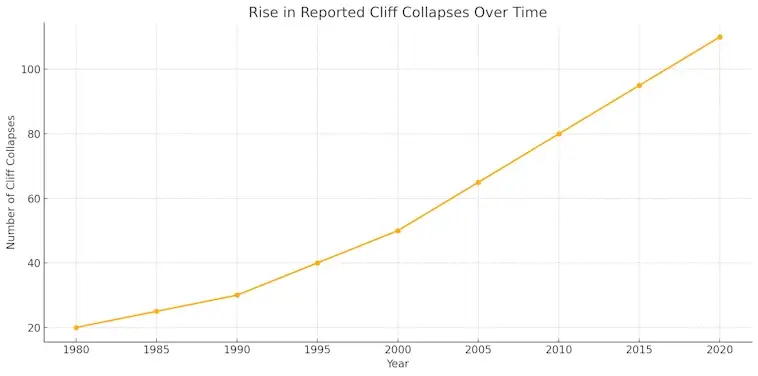
More Than Just Rain: Rising Seas and Stronger Storms
Along coastlines, the situation is even more fragile. Sea levels are rising, which means waves are hitting cliffs higher up and with more energy. Stronger and more frequent storms are pounding away at the base of cliffs, removing the natural support over time. As the foundation disappears, the upper layers eventually crumble.
What’s worse, many cliffs were already unstable due to centuries of erosion. Climate change is simply speeding up the timeline. A cliff that might have lasted another 50 years could now collapse within a decade.
The impacts go beyond the environment. Roads, railways, and homes built near cliffs are at greater risk. Communities that once relied on coastal access are being cut off. It’s a growing problem that demands attention.
To put it simply, climate change is turning up the pressure. If we don’t act quickly — with better planning, early warning systems, and strong climate policies — we can expect more dramatic and dangerous cliff collapses in the years ahead.
The Hidden Dangers of Cliff Collapses for Coastal Communities
For many coastal communities, cliffs provide stunning views, natural beauty, and even a sense of protection from the sea. But beneath that scenic surface lies a growing threat. Cliff collapses are becoming more frequent, and the risks go far beyond falling rocks.
These sudden events can happen without warning, turning everyday landscapes into danger zones. When a cliff collapses, it doesn’t just reshape the shoreline — it can destroy homes, damage roads, and sever access to essential services. For communities built close to the edge, the danger is both immediate and long-term.
Erosion Today, Relocation Tomorrow
One of the most pressing issues is erosion. As climate change intensifies, rising sea levels and stronger storms are speeding up the rate at which cliffs break down. This means that homes and businesses that were once safe can suddenly find themselves on the brink — literally.
In some places, entire neighborhoods have already been forced to relocate. The financial cost of rebuilding or moving can be devastating, especially for small towns with limited resources. Insurance may not always cover the damage, and in many cases, residents are left footing the bill.
There’s also a human toll. Cliff collapses can disrupt daily life, displace families, and create long-term mental and emotional stress. Tourists may stop visiting due to safety concerns, impacting local economies that depend on seasonal income.
The threat of cliff collapses is real — and growing. But it’s often hidden until it’s too late. That’s why it’s crucial for coastal communities to invest in early warning systems, sustainable planning, and protective infrastructure now.
Being aware of the risks today can help prevent disaster tomorrow.
Can We Predict Cliff Collapses Before They Happen?
Cliff collapses might seem sudden and unpredictable, but scientists are getting better at spotting the warning signs. The big question is: can we actually forecast them before disaster strikes? The answer is — we’re getting closer, but we’re not there yet.
Cliffs don’t fall without reason. They give off subtle clues as they weaken over time. Cracks widen, chunks of rock shift, and land near the edge may start to slump. With the right tools and enough data, these early signs can help experts assess which areas are most at risk.
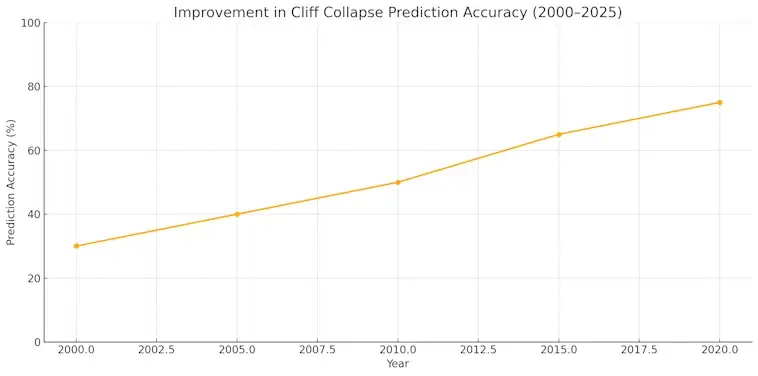
Technology Is Changing the Game
Today, geologists are using cutting-edge technology to monitor cliffs more precisely than ever. Drones, satellite imagery, and ground sensors can track tiny movements in the rock face. In some areas, 3D laser scanning is used to map changes in the cliff structure over time. This allows scientists to create models and predict where — and when — a collapse might occur.
But predicting cliff collapses isn’t foolproof. Nature is complex, and factors like rainfall, wave energy, and underground water flow make it hard to pinpoint the exact moment of failure. That’s why most predictions focus on identifying high-risk zones rather than offering precise forecasts.
Still, progress is being made. With better monitoring, we can give early warnings, close off danger zones, and evacuate areas before disaster hits. It’s not a perfect system, but it’s a growing field that could save lives and protect property.
In short, while we can’t predict every cliff collapse, we’re learning to read the signs more effectively. And that knowledge is key to keeping people safe in a changing climate.
What You Can Do to Stay Safe in Areas Prone to Cliff Collapses
Cliff collapses might sound like rare natural disasters, but in many coastal and hilly areas, they’re becoming increasingly common. The good news? There are practical steps you can take to stay safe — whether you live near cliffs or just visit them for recreation.
Understanding the risks is the first step. Cliff edges can be unstable even when they look solid. Erosion happens slowly at first, but it can weaken the base of the cliff until a sudden collapse occurs. That’s why it’s important not to assume that familiar terrain is always safe.
Know the Signs and Keep Your Distance
Look for early warning signs. Cracks in the ground near the edge, fallen rocks at the base, or changes in vegetation can all be signs of instability. Pay attention to local weather patterns too — heavy rain, strong storms, or rapid temperature swings can speed up erosion and increase the risk of collapse.
Staying safe also means keeping your distance. Avoid standing or walking too close to cliff edges, especially after bad weather. The ground can give way without warning. If you’re hiking or exploring, stick to marked trails and follow all posted warnings.
For homeowners and local authorities, maintaining proper drainage and avoiding construction near the edge are critical. Planting native vegetation can also help stabilize soil and absorb excess water.
Being informed and cautious can save lives. Whether you’re a local resident or just passing through, it’s important to respect nature’s power. By staying alert and making smart choices, you can enjoy these stunning landscapes without putting yourself at risk.
Understanding and Responding to Cliff Collapses
Cliff collapses are no longer rare, isolated events — they’re becoming more frequent, more destructive, and more tied to the changing climate. As erosion speeds up and weather patterns grow more extreme, the risk to coastal communities, infrastructure, and lives continues to rise.
But knowledge is power. By understanding what causes cliff collapses, how climate change is fueling the problem, and what signs to watch for, we can make better decisions — whether we’re building homes, planning communities, or simply spending time near cliffs.
Preparedness matters. From using modern technology to monitor unstable slopes to following local safety guidelines, there are clear actions we can take to stay safe and reduce long-term risks. The key is staying informed, alert, and proactive.
As the landscape changes, so should our awareness. The more we learn about cliff collapses, the better we can protect people, property, and the environment. So whether you live by the coast or love to visit, keep cliff safety on your radar — because when nature moves, it doesn’t always give a warning.