

Hurricane Force Winds Tear Through Everything in Sight
The Raw Power of Hurricane Force Winds Unleashed
Hurricane force winds can turn a calm day into chaos in seconds. These powerful gusts don’t just knock things over—they tear through buildings, uproot trees, and leave entire communities in ruins. When winds hit speeds of 74 miles per hour or more, they can shred rooftops, snap power lines, and send debris flying like missiles.
The destruction isn’t just dramatic—it’s life-altering. Roads get blocked, homes are damaged or destroyed, and power can be out for days or even weeks. These storms don’t just test infrastructure; they test resilience.
Understanding how hurricane force winds work, and why they’re becoming more intense and frequent, can help people better prepare for what’s coming. And with weather patterns shifting around the world, the threat isn’t going away anytime soon.

Hurricane Force Winds: What They Are and How They Form
Hurricane force winds are among the most powerful and dangerous natural forces on Earth. Defined as sustained winds of 74 miles per hour (119 km/h) or more, these winds are strong enough to uproot trees, damage buildings, and toss debris like missiles. But what exactly causes them? And why do they matter so much?
What Triggers These Fierce Winds?
At the heart of every hurricane is a low-pressure system. Warm ocean water fuels the storm, causing moist air to rise rapidly. As the air rises, it cools and condenses, releasing heat. This heat powers the storm, lowering the central pressure even more. In response, air rushes toward the center of the system—but because of the Earth’s rotation (a force known as the Coriolis effect), the wind doesn’t move in a straight line. Instead, it spirals, picking up speed.
The tighter the pressure gradient (the difference between high and low pressure), the faster the air moves. When that gradient becomes extreme, the result is hurricane force winds.
Why Wind Speed Matters
These high-speed winds are more than just a weather stat. They directly impact safety, power infrastructure, and even building codes. For example, winds above 74 mph can strip shingles off roofs or snap power poles in half. That’s why understanding how these winds form helps communities prepare better.
Climate change could also make these storms more intense in the future. As sea surface temperatures rise, hurricanes have more energy to work with—which could lead to stronger winds and more damage.
In short, hurricane force winds aren’t just fast—they’re part of a larger system fueled by nature’s most powerful forces. Knowing how they work is the first step to staying safe and adapting for the future.
The Devastating Impact of Hurricane Force Winds on Communities
When hurricane force winds strike, they leave more than just debris in their wake—they leave lasting scars on the communities they hit. These powerful winds, often exceeding 74 mph, have the strength to tear off roofs, topple power lines, and flatten entire neighborhoods. But their impact goes far beyond the physical damage.
Homes, Businesses, and Infrastructure at Risk
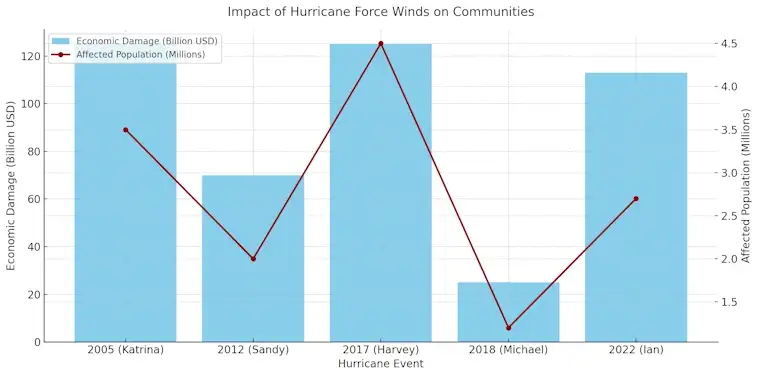
In the immediate aftermath of a hurricane, the destruction is often overwhelming. Homes are reduced to rubble, schools and hospitals are damaged, and roads become impassable. Essential services like electricity and clean water can be cut off for days—or even weeks. Small businesses, often the backbone of local economies, may never reopen. The rebuilding process takes time, money, and emotional resilience.
Insurance claims soar, and for those without coverage, the losses can be life-altering. Families may be forced to relocate, sometimes permanently, leading to a loss of community and culture that’s harder to rebuild than bricks and mortar.
Emotional and Economic Toll
Beyond the visible damage, hurricane force winds leave deep emotional wounds. The stress of evacuation, the trauma of loss, and the uncertainty of what comes next can have long-term effects on mental health. Children may struggle with anxiety, and adults often face job insecurity as businesses shutter.
Economically, the recovery effort can take years. Governments spend billions on disaster relief and rebuilding, while local economies suffer from lost tourism, displaced populations, and halted commerce.
As climate change fuels more intense storms, the risks to communities will likely grow. That’s why preparation, stronger infrastructure, and climate-aware planning are more important than ever. Reducing the impact of hurricane force winds means not just bracing for the next storm—but building smarter for the future.
Why Hurricane Force Winds Are More Common Than You Think
When we hear the term hurricane force winds, many of us picture massive storms slamming into coastlines. But the truth is, winds reaching 74 mph or more happen more often—and in more places—than most people realize. You don’t always need a named hurricane to experience their devastating effects.
Not Just a Coastal Threat
Hurricane force winds aren’t limited to tropical storms. They can occur in powerful winter storms, fast-moving derecho systems, and even intense thunderstorms. In some regions, like the Great Plains or the Northeast U.S., damaging wind events happen several times a year—without a hurricane ever making landfall.
High-elevation areas and exposed landscapes are especially vulnerable. Mountain passes, open plains, and even urban corridors can channel winds and amplify their strength. That means inland communities, far from any ocean, still face significant wind risk.
Hidden Dangers in Everyday Weather
These strong winds often strike with little warning. They can snap trees, blow over trucks, and peel back rooftops. Yet many people underestimate the danger because there’s no dramatic storm name attached.
Data shows that wind-related damage is one of the most common causes of property loss in the U.S. And with climate change fueling more extreme and unpredictable weather, we’re likely to see more frequent—and stronger—wind events in the years ahead.
That’s why it’s important to understand how widespread hurricane force winds really are. Whether you live along the coast or hundreds of miles inland, it’s smart to stay weather-aware, secure loose items, and prepare your home for high wind events.
Being prepared isn’t just for hurricane season. It’s a year-round necessity.
Staying Safe When Hurricane Force Winds Hit Your Area
When hurricane force winds are in the forecast, preparation can mean the difference between safety and serious harm. These powerful winds can cause widespread damage in a matter of minutes. But with the right steps, you can protect your home, your loved ones, and yourself.
Prepare Your Home Before the Storm
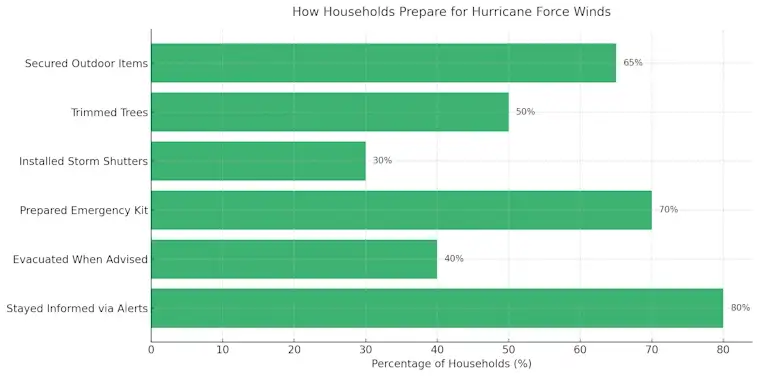
The best time to get ready is before a storm ever forms. Start by securing anything that could become airborne—like patio furniture, garden tools, or trash bins. Trim trees and remove dead branches that could snap under pressure. Reinforce windows with storm shutters or plywood, and check your roof for loose shingles.
If you’re in a mobile home or older building, consider relocating to a sturdier shelter well before the winds arrive. Make sure your emergency kit is fully stocked, with flashlights, batteries, bottled water, and essential medications.
Stay Informed and Take Warnings Seriously
When the storm is close, stay tuned to local weather alerts and warnings. Don’t rely on outdated information or rumors. Use trusted sources like the National Weather Service or local emergency management channels.
If authorities advise evacuation, don’t wait. Leave early to avoid traffic and worsening conditions. If you stay, move to a small interior room on the lowest level—away from windows and glass doors.
Power outages are common during high wind events, so charge devices ahead of time and avoid candles due to fire risk. Keep communication lines open and let family or friends know your plans.
Hurricane force winds may be fierce, but with smart preparation and calm action, you can stay safe. The more you know, the better you can protect what matters most.
How Climate Change Is Fueling Stronger Hurricane Force Winds
Hurricane force winds have always been dangerous, but in recent years, they’ve grown more intense and more frequent. Scientists agree: climate change is playing a major role in this shift. Warmer oceans and a hotter atmosphere are creating the perfect environment for stronger storms—and with them, stronger winds.
Warmer Water, More Wind Power
Hurricanes draw their strength from warm ocean water. As global temperatures rise, so do sea surface temperatures. This added heat gives storms more fuel, allowing them to grow faster and spin with greater force. The result? More hurricanes reaching Category 4 or 5 strength—with winds exceeding 130 mph.
In fact, recent studies show that today’s hurricanes are intensifying more rapidly than in the past. What used to take days can now happen in just a few hours. That leaves less time for preparation and increases the risk of wind-related destruction.
Slower Storms, Longer Impacts
Here’s another unexpected effect of climate change: hurricanes are slowing down. While their wind speeds are increasing, their forward movement is becoming more sluggish. That means hurricane force winds stay over communities longer, causing extended damage and putting more lives at risk.
This combination—stronger winds and slower movement—is a dangerous one. Homes and infrastructure built decades ago may no longer be able to withstand today’s storms.
If we want to reduce the risk, adaptation is key. That includes stronger building codes, improved forecasting, and smarter urban planning. But long-term, reducing carbon emissions is essential. Cutting greenhouse gases is one of the most effective ways to limit future warming—and future storm strength.
Hurricane force winds aren’t just a weather problem. They’re a climate signal. And it’s one we can no longer afford to ignore.
Understanding the True Cost of Hurricane Force Winds
Hurricane force winds are more than just extreme weather—they leave lasting damage in their path. From shattered homes and disrupted communities to the emotional toll of recovery, their impact is both wide and deeply personal. As storms grow stronger and more frequent, the risks are rising, especially for vulnerable areas.
But loss isn’t just measured in dollars. It’s measured in lost memories, displaced families, and communities struggling to rebuild. That’s why awareness, preparation, and climate resilience are more important than ever.
By understanding how these powerful winds form, how they impact daily life, and how we can respond, we can reduce the damage and recover faster. Investing in stronger infrastructure, early warning systems, and climate-smart planning helps protect lives—not just property.
In the end, reducing the loss caused by hurricane force winds means facing the future with knowledge and action. The storms may not stop, but we can become better prepared, more connected, and more resilient with every lesson learned.