

How Coastal Flooding Is Reshaping Our Shores
The Hidden Costs of Coastal Flooding and Erosion
Coastal flooding is no longer a rare event. Rising seas and stronger storms are reshaping shorelines around the world, threatening homes, businesses, and ecosystems. Once-safe neighborhoods now face frequent high tides and storm surges, while beaches and wetlands steadily erode. Scientists warn these changes are accelerating, and the impact will reach far beyond waterfront communities. Understanding why coastal flooding is increasing and what it means for the future is critical for anyone living near the water—or relying on the economies it supports.

What Causes Coastal Flooding and Why It’s Getting Worse
Coastal flooding happens when ocean water pushes onto land, covering roads, homes, and businesses. While storms often trigger it, flooding can also occur during calm weather. This is called “sunny day flooding,” and it’s becoming more common in many coastal towns.
Rising Seas Are a Big Factor
One of the biggest reasons coastal flooding is getting worse is sea level rise. As the planet warms, glaciers and ice sheets melt. At the same time, warmer water expands, adding to the rise. Even a few extra inches of water can make storm surges more destructive. High tides now reach farther inland than they did decades ago, turning what used to be rare floods into frequent events.
Stronger Storms, Bigger Problems
Climate change is also fueling stronger storms. Hurricanes and tropical storms now carry more rain and produce higher storm surges. When these storms hit, they can flood entire neighborhoods in hours. On top of that, cities along the coast are often built on land that is slowly sinking, which only worsens the flooding.
Urban development adds to the challenge. Paved roads and buildings leave little room for water to drain naturally. When heavy rain combines with high tides or storm surge, the results can be devastating.
Experts warn that without action, coastal flooding will keep getting worse. Communities can adapt by improving drainage, restoring wetlands, and building flood barriers. But slowing climate change by cutting emissions is just as important.
Coastal flooding isn’t just a future threat—it’s happening now, and it’s reshaping how millions of people live near the water.
How Coastal Flooding Impacts Communities and Wildlife
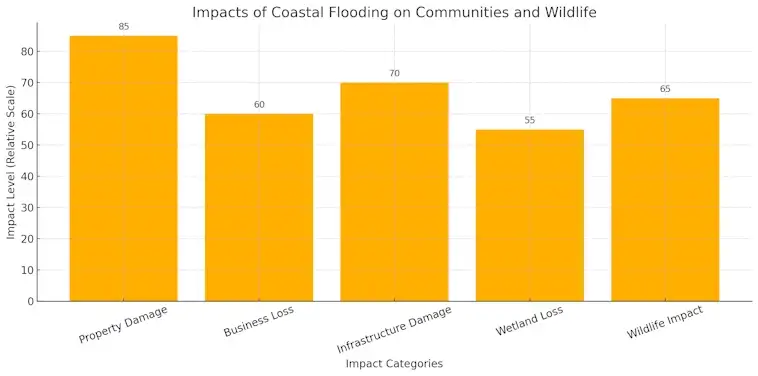
Coastal flooding isn’t just a problem for property owners. It affects entire communities, local economies, and the ecosystems that support them. As flooding becomes more frequent and severe, its impact is reaching further inland, changing how people and wildlife live along the coasts.
Disrupting Daily Life and Local Economies
When floodwaters rise, roads, homes, and businesses can be damaged or destroyed. Residents may face evacuation, property loss, and months of costly repairs. Local businesses, especially those that rely on tourism or fishing, can suffer long-term losses. Repeated flooding also drives down property values, leaving some families unable to sell or rebuild.
Infrastructure takes a heavy hit, too. Flooded roads, power outages, and damaged water systems can disrupt schools, hospitals, and emergency services. For some communities, especially smaller towns with fewer resources, recovering from even a single flood can take years.
Threats to Wildlife and Natural Habitats
Coastal flooding also harms the environment. Saltwater can seep into freshwater marshes, killing plants and displacing animals that depend on those habitats. Birds lose nesting grounds, and fish populations may decline when estuaries—nurseries for many species—are flooded or polluted.
Wetlands, which naturally absorb floodwaters, are disappearing as rising seas and stronger storms erode them. This creates a dangerous cycle, as the loss of wetlands leaves coastal areas even more exposed to flooding.
To protect both people and wildlife, experts say communities must adapt by restoring wetlands, creating natural flood barriers, and planning smarter development along the coast. These steps can reduce future risks while preserving the ecosystems that make coastal regions thrive.
Coastal Flooding and the Rising Cost to Shoreline Homes
Living by the water has always come with risks, but coastal flooding is making it far more expensive. Rising seas, stronger storms, and more frequent high tides are driving up costs for homeowners along the shoreline. These costs go beyond just repairs—they include higher insurance premiums, falling property values, and expensive upgrades to protect homes from future floods.
Soaring Insurance and Repair Bills
Homeowners in flood-prone areas are seeing their insurance rates skyrocket. In many coastal regions, insurance can cost thousands of dollars per year, and some companies are even pulling out of high-risk markets entirely. When floods hit, repair costs can be staggering. Water damage can ruin foundations, electrical systems, and interiors, often leaving families with bills far beyond what insurance covers.
Falling Property Values and Difficult Sales
Another growing challenge is declining property values. As flooding becomes more common, buyers are hesitant to invest in homes along vulnerable coastlines. Homes that once sold quickly are now sitting on the market, sometimes at steep discounts. For many families, this means losing wealth they counted on for retirement or passing down to future generations.
Communities are trying to adapt by raising roads, building seawalls, and updating building codes. But these solutions are costly, and in some areas, they only provide temporary relief.
Experts warn that as sea levels continue to rise, the financial toll on shoreline homes will grow. For homeowners, preparing now—by elevating homes, improving drainage, and understanding local flood risks—can help reduce future losses. But in the long term, addressing climate change is the only way to slow the rising costs.
Can We Prevent Coastal Flooding with Better Planning?
Coastal flooding is on the rise, but many experts believe smarter planning can help reduce its impact. While it may not be possible to stop all flooding, better design, infrastructure, and community strategies can make a huge difference in protecting people, homes, and natural habitats.
Building Smarter, Not Just Bigger
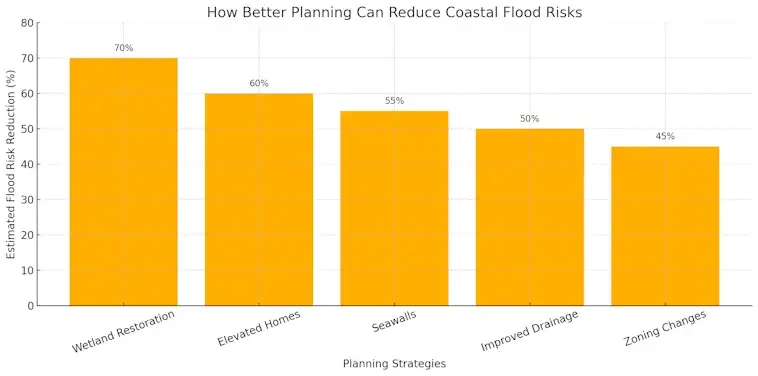
One key solution is designing cities and towns to work with water rather than fight against it. This includes elevating homes and critical infrastructure, creating stronger drainage systems, and restoring wetlands that naturally absorb floodwaters. Wetlands act as natural sponges, slowing waves and protecting inland areas from storm surges. By investing in nature-based solutions, communities can reduce flood risks without relying solely on expensive seawalls and pumps.
Planning for the Future, Not Just Today
Another important step is long-term planning. Many coastal cities still build in areas that are at risk of future sea level rise. By updating zoning laws and building codes, local governments can prevent new construction in high-risk zones and encourage development in safer areas. Cities can also create buffer zones—green spaces that absorb water during floods and provide recreational areas when dry.
Better planning also involves working closely with residents. Education programs can help homeowners understand their flood risks and take steps to prepare, such as elevating homes or purchasing flood insurance.
While we can’t completely prevent coastal flooding, proactive planning can make communities far more resilient. Combining natural defenses with modern infrastructure and thoughtful policies gives us the best chance to protect lives, property, and the environment as seas continue to rise.
What the Future of Coastal Flooding Means for Our Shores
Coastal flooding is no longer a distant threat—it’s shaping the future of our shorelines today. Rising seas and stronger storms are already changing how we live, work, and play along the coast. In the coming decades, these changes will only accelerate, affecting communities, economies, and the natural beauty of our beaches.
Shorelines Are Shifting Faster Than Ever
Sea levels are rising at a faster pace, causing more erosion and shrinking beaches. Some coastal areas that were once safe for homes, businesses, and tourism are becoming high-risk zones. As tides creep higher, more roads, utilities, and neighborhoods face regular flooding, forcing costly repairs and, in some cases, relocation. Popular vacation spots may see shorter tourist seasons as flooding disrupts access and damages infrastructure.
Protecting Nature While Protecting People
Coastal flooding also threatens critical ecosystems. Wetlands and estuaries, which provide natural flood protection and habitats for wildlife, are at risk of disappearing as waters rise. Without these natural barriers, flooding can hit harder and farther inland. Protecting and restoring these ecosystems will be crucial—not just for wildlife but for the millions of people who depend on healthy coasts for storm protection and clean water.
Looking ahead, experts believe the future of our shores will depend on how quickly we act. Communities can adapt by investing in resilient infrastructure, limiting risky development, and embracing nature-based solutions like dune restoration and wetland protection. While we can’t stop sea levels from rising overnight, we can take steps now to protect both our coastlines and the lives built around them.
Preparing for a Future of Rising Waters
Coastal flooding is no longer a rare event—it’s a growing challenge that impacts our homes, communities, and natural environments. Rising seas, stronger storms, and rapid shoreline changes are reshaping the way we live along the coast. While the risks are serious, the future isn’t set in stone.
Communities can reduce damage and protect lives by combining smarter planning with nature-based solutions. Restoring wetlands, elevating homes, improving drainage, and updating building codes all play a part. On a global scale, reducing carbon emissions is essential to slow sea level rise and limit the most severe impacts.
For homeowners, businesses, and local governments, the time to act is now. By planning ahead and adapting, we can protect our coastlines, safeguard wildlife, and ensure that future generations can enjoy thriving, resilient shores. Coastal flooding is a challenge we can meet—if we work together and prepare for the changes already on the horizon.