

Habitat Destruction Is The Silent Crisis We Can’t Ignore
Habitat Destruction Is The Silent Crisis We Can’t Ignore
Habitat destruction is accelerating at a pace the planet has never seen before. Forests, wetlands, and grasslands are disappearing to make room for cities, farms, and industries. As these ecosystems vanish, countless species lose their homes, and entire food chains collapse. The damage doesn’t stop with wildlife. Humans also feel the impact through rising floods, dwindling natural resources, and a changing climate. Understanding why habitat destruction is happening—and what can be done to stop it—is essential for protecting both nature and our future.

What Causes Habitat Destruction Around the World?
Habitat destruction is one of the leading threats to wildlife and ecosystems across the globe. It happens when natural areas are altered or removed, leaving animals and plants without the space and resources they need to survive. But what’s driving this widespread loss? The causes are complex, but a few major factors stand out.
Expanding Human Development
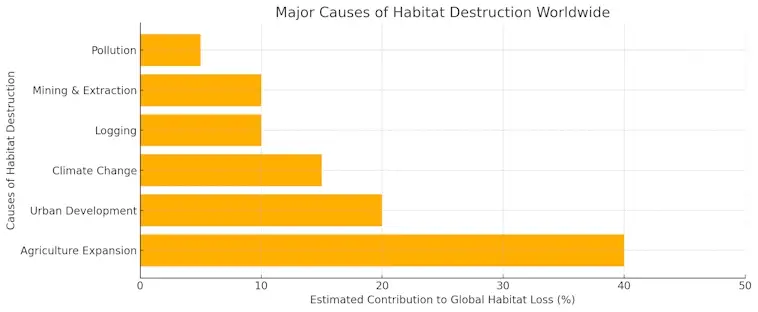
Cities, roads, and farms continue to spread as populations grow. Forests, wetlands, and grasslands are often cleared to make way for housing, agriculture, and infrastructure. While development supports human needs, it often fragments or wipes out ecosystems. For example, large-scale farming for crops like soy and palm oil has replaced millions of acres of rainforest, especially in South America and Southeast Asia. This not only destroys habitats but also reduces biodiversity and disrupts carbon storage.
Climate Change’s Growing Impact
Rising global temperatures are also a powerful force behind habitat loss. Shifting weather patterns, droughts, and stronger storms are transforming landscapes faster than many species can adapt. Coral reefs, for example, are bleaching and dying due to warming oceans. Polar habitats are shrinking as ice melts, forcing species like polar bears to travel farther for food. Even temperate forests face threats from more frequent wildfires and invasive pests linked to a warming climate.
Beyond these drivers, overexploitation of resources, mining, and pollution also play critical roles. Together, these forces are reshaping ecosystems faster than they can recover. Protecting habitats worldwide requires a balance between human needs and environmental stewardship. By understanding the causes, we can make choices that reduce destruction and help nature thrive for future generations.
How Habitat Destruction Impacts Wildlife and People
Habitat destruction doesn’t just threaten animals and plants. It also affects human communities, economies, and even our long-term survival. When ecosystems are disrupted, the ripple effects spread far beyond forests, oceans, and wetlands.
Wildlife at Risk
When forests are cleared or oceans degraded, countless species lose their homes and food sources. Many animals can’t adapt quickly, leading to population declines or even extinction. For example, orangutans in Borneo and Sumatra are losing their rainforest homes due to palm oil plantations. In the oceans, coral reef destruction has left fish populations dwindling, hurting the predators—and the fishing industries—that rely on them. These losses weaken ecosystems, making them less able to recover from disasters like storms or wildfires.
How People Feel the Impact
Humans also depend on healthy habitats for survival. Forests filter our air and water, wetlands reduce flooding, and oceans help regulate the climate. When these natural systems break down, communities face higher risks from disasters, food shortages, and economic challenges. For instance, deforestation can lead to soil erosion, hurting farmers, while the loss of pollinators like bees threatens global food supplies.
Beyond these immediate effects, habitat destruction contributes to climate change. As forests and peatlands are destroyed, they release large amounts of carbon into the atmosphere. This accelerates global warming, which in turn damages more ecosystems, creating a cycle that affects every species on Earth, including us.
Protecting and restoring natural habitats isn’t just about saving wildlife—it’s about securing a livable future for people everywhere. By understanding the impacts, we can make choices that protect both nature and human well-being.
The Role of Climate Change in Habitat Destruction
Climate change is one of the most powerful forces reshaping our planet’s landscapes and ecosystems. While human activities like deforestation and urban expansion remain major drivers of habitat loss, the warming climate is accelerating the destruction of natural environments in ways that are difficult to reverse.
Shifting Ecosystems and Extreme Weather
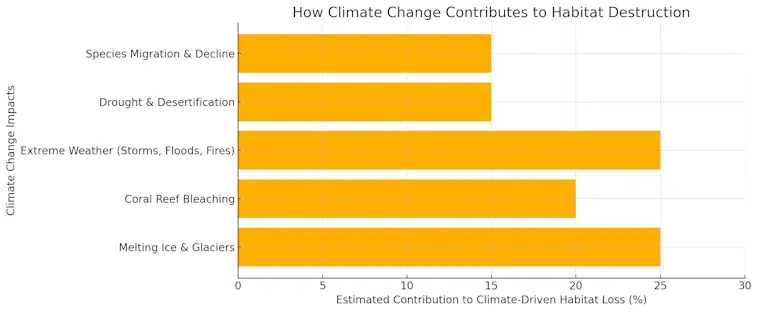
Rising global temperatures are causing habitats to shift and disappear. Glaciers are melting, reducing freshwater sources for both wildlife and people. Warmer oceans are leading to mass coral bleaching events, which destroy critical breeding grounds for marine species. On land, extreme heat and drought are turning once-thriving forests and grasslands into barren areas. These changes make survival harder for plants and animals, especially those that can’t migrate or adapt quickly enough.
At the same time, stronger storms, floods, and wildfires are becoming more common. These extreme events not only destroy habitats directly but also leave long-lasting scars on the ecosystems that remain. Recovery can take decades, if it happens at all.
A Feedback Loop That Speeds Up Loss
Climate change doesn’t just destroy habitats—it also creates a feedback loop that makes things worse. When forests, wetlands, or permafrost are damaged, they release stored carbon into the atmosphere. This adds to greenhouse gas levels, further warming the planet and fueling more habitat loss.
Addressing climate change is critical to slowing habitat destruction. Reducing greenhouse gas emissions, protecting carbon-rich ecosystems like rainforests, and restoring degraded areas can all help break the cycle. By acting now, we can protect both biodiversity and the natural systems that humans rely on for survival.
Solutions to Stop Habitat Destruction Before It’s Too Late
Stopping habitat destruction is possible, but it requires global action and local solutions working hand in hand. Protecting natural ecosystems isn’t just about saving wildlife—it’s about securing clean air, fresh water, and a stable climate for people, too. So, what can be done before it’s too late?
Protect and Restore Critical Ecosystems
One of the most effective solutions is safeguarding the places still rich in biodiversity, such as rainforests, wetlands, and coral reefs. Expanding protected areas and enforcing stronger conservation laws can prevent industries from clearing these regions. Restoration is equally important. Replanting native forests, reviving degraded wetlands, and rebuilding coral reefs help bring back vital habitats while capturing carbon from the atmosphere.
Governments, businesses, and communities can also invest in sustainable farming and forestry practices. Agroforestry, crop rotation, and reducing pesticide use help keep land productive without stripping it of life. These approaches protect habitats while ensuring food security.
Support Sustainable Choices and Climate Action
Individuals can make a difference, too. Choosing sustainably sourced products, reducing meat consumption, and supporting companies that prioritize conservation all add up. Reducing energy use and supporting renewable energy also help slow climate change, one of the biggest drivers of habitat loss.
At a larger scale, governments and organizations must commit to cutting greenhouse gas emissions and funding conservation efforts. International cooperation, such as global agreements to end deforestation, can create the momentum needed for real change.
By acting now—protecting habitats, restoring what’s been lost, and tackling climate change—we can help nature recover and secure a safer future for generations to come. The sooner we take action, the more species and ecosystems we can save.
What You Can Do to Fight Habitat Destruction Today
Fighting habitat destruction might sound like a massive task, but change often starts with small, everyday actions. When enough people make conscious choices, the impact can ripple across communities and even influence global policies. So, what can you do today to make a difference?
Make Sustainable Lifestyle Choices
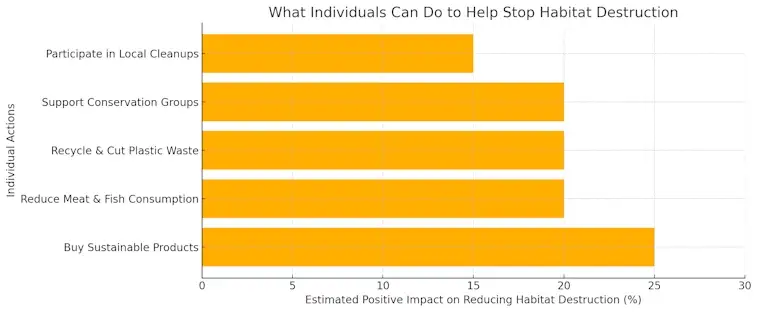
The products we buy and the food we eat have a direct connection to habitat loss. Choosing items made from sustainable materials, like certified wood or palm-oil-free goods, helps reduce the demand for practices that destroy forests and wetlands. Eating more plant-based meals or sourcing meat and fish from responsible farms can also ease pressure on ecosystems.
Reducing waste is another key step. Recycling, composting, and cutting back on single-use plastics help keep pollution out of oceans and rivers, protecting wildlife and their homes.
Support Conservation and Spread Awareness
Supporting conservation efforts—whether through donations, volunteering, or advocacy—can directly protect habitats. Many organizations work to restore forests, protect endangered species, and push for policies that reduce deforestation and pollution. Even sharing information on social media can inspire others to care and act.
Getting involved locally also makes a difference. Joining a tree-planting event, supporting community cleanups, or urging local leaders to adopt green policies all help strengthen natural areas where you live.
Each action, no matter how small, adds up when multiplied by millions of people worldwide. By making conscious choices and encouraging others to do the same, you can help slow and even reverse habitat destruction. The key is to start now—because protecting nature means protecting our own future.
Here’s a conclusion with a fresh title and SEO-friendly style:
Why Protecting Habitats Protects Our Future
Habitat destruction is accelerating faster than many realize, putting countless species—and humanity—at risk. Forests, oceans, and wetlands are more than homes for wildlife; they are vital systems that regulate our climate, purify our air and water, and provide food and resources. When these ecosystems are lost, the balance of life on Earth begins to unravel.
The good news is that there is still time to change course. By supporting conservation, making sustainable choices, and urging leaders to prioritize the planet, we can slow and even reverse the damage. Every action, from planting trees to reducing waste, adds up when millions of people work toward the same goal.
Protecting habitats isn’t just about saving endangered species—it’s about ensuring a stable, healthy future for everyone. The choices we make today will determine whether future generations inherit a thriving planet or one struggling to recover. Acting now is not optional. It’s essential.