

What Ocean Salinity Tells Us About Climate Change
What Ocean Salinity Tells Us About Climate Change
Ocean salinity is more than just the measure of salt in seawater. It acts like a global signal, revealing how Earth’s water cycle is shifting as the climate warms. Subtle changes in salinity can indicate where oceans are heating, ice is melting, and rainfall patterns are moving. These shifts are reshaping coastlines, weather systems, and the balance of life in the sea. Understanding what salinity trends show today helps scientists predict the future of our climate and how it may affect communities worldwide.

How Ocean Salinity Reflects a Warming Climate
The saltiness of our oceans is more than just a number—it’s a global climate signal. As the Earth warms, ocean salinity patterns are shifting in ways that reveal big changes in the planet’s water cycle. Scientists call salinity the “thermometer of the seas,” because it tracks how rainfall, evaporation, and melting ice are reshaping the oceans.
Why Salty Seas Are Getting Saltier
Warming temperatures speed up evaporation in hot regions. When water evaporates, it leaves salt behind, making some oceans even saltier. At the same time, melting ice and heavier rainfall are pouring fresh water into other areas, especially near the poles. This dilution lowers salinity there, creating a growing contrast between salty and fresh regions.

These changes act like fingerprints of climate change. Stronger evaporation and rainfall mean the global water cycle is intensifying. In other words, dry places are getting drier, and wet places are getting wetter—both on land and at sea.
Salinity as a Warning Sign
Tracking ocean salinity helps researchers understand how quickly Earth is warming. It also shows how ocean currents, which move heat around the planet, might be shifting. If those currents slow or change course, weather patterns could become more extreme.
In the future, salinity data could even help predict droughts, floods, and hurricanes. By studying these patterns, scientists are turning the oceans into an early warning system for a hotter, stormier planet.
Why Ocean Salinity Levels Are Rising in Some Regions
Ocean salinity isn’t uniform. In fact, some areas of the ocean are becoming saltier than ever, while others are growing fresher. These changes aren’t random—they’re a clear signal of how climate change is reshaping Earth’s water cycle.
Evaporation Is Driving Salt Build-Up
In warmer tropical regions, rising global temperatures speed up evaporation. When ocean water evaporates, the salt stays behind, concentrating in the water that remains. Over time, this natural process is pushing salinity levels higher in these already warm seas.

These saltier waters also become denser, which can impact how ocean currents move. Currents are vital for distributing heat across the planet. If these currents slow down or shift, it could disrupt weather systems and lead to stronger storms or unusual temperature swings.
Freshwater Inputs Change the Balance Elsewhere
While some oceans get saltier, melting glaciers, sea ice, and heavy rainfall are adding more fresh water to the polar regions. This contrast—saltier tropics and fresher poles—reveals a more intense global water cycle. Scientists see this pattern as proof that climate change is making wet places wetter and dry places drier, both in the ocean and on land.
Studying these salinity shifts helps researchers predict how ocean circulation might change in the future. If the balance tips too far, the effects could ripple through global weather, fisheries, and even sea levels.
The Link Between Ocean Salinity and Extreme Weather
Ocean salinity isn’t just a number on a chart—it’s a clue to how our climate is shifting. Changes in salinity reveal how water is moving around the planet, and these shifts can directly fuel extreme weather. By understanding these patterns, scientists can better predict future storms, floods, and droughts.
How Salinity Fuels Stronger Storms
In warmer tropical oceans, evaporation leaves behind saltier water. These saltier waters tend to be warmer and denser, which can store and transfer more heat. That extra heat energy becomes fuel for hurricanes and typhoons, helping them grow stronger and more destructive.

Salinity-driven changes in ocean circulation also play a role. If currents slow or reroute because of salinity imbalances, warm water can pool in certain areas, intensifying regional weather events like heavy rainfall or heat waves.
Salinity as a Climate Forecasting Tool
By tracking salinity levels, scientists can identify where the global water cycle is accelerating. Areas where salinity is rising may see drier conditions on land, while fresher regions could face heavier rainfall and flooding. These measurements can even help researchers predict when and where storms will form.
Looking ahead, ocean salinity may become one of the most important tools for forecasting extreme weather. It offers a window into how our warming climate is reshaping both the seas and the skies above.
What Ocean Salinity Reveals About Melting Ice and Rainfall
The ocean’s saltiness may seem like a small detail, but it tells a big story about our changing planet. Shifts in salinity reveal how melting ice and rainfall are transforming the seas—and what that means for the future of our climate.
Melting Ice Freshens the Seas
As glaciers and sea ice melt at record rates, massive amounts of fresh water are pouring into the oceans, especially near the Arctic and Antarctic. This influx dilutes the salt content, lowering salinity in these regions. Scientists use these changes as a marker of how quickly polar ice is disappearing.

Lower salinity doesn’t just affect the chemistry of the water—it can also slow down ocean currents. These currents regulate temperatures across the globe. If they weaken, it could lead to harsher winters in some regions and scorching heat in others.
Rainfall Patterns Leave Their Mark
It’s not only ice melt that changes salinity. Shifting rainfall patterns are also leaving an imprint. In some areas, heavier rain is adding more fresh water to the surface, making those oceans less salty. Meanwhile, drier regions experience more evaporation, which increases salinity as the water evaporates and the salt remains behind.
By tracking these salinity shifts, researchers can map the planet’s changing water cycle. These findings help predict where droughts, floods, and shifting weather patterns might strike next.
Can Tracking Ocean Salinity Help Predict Future Changes?
Ocean salinity is more than a number—it’s a powerful tool for understanding how our planet is changing. By studying where the seas are getting saltier or fresher, scientists can make better predictions about future climate shifts, weather extremes, and even sea level rise.
Salinity as a Climate Crystal Ball
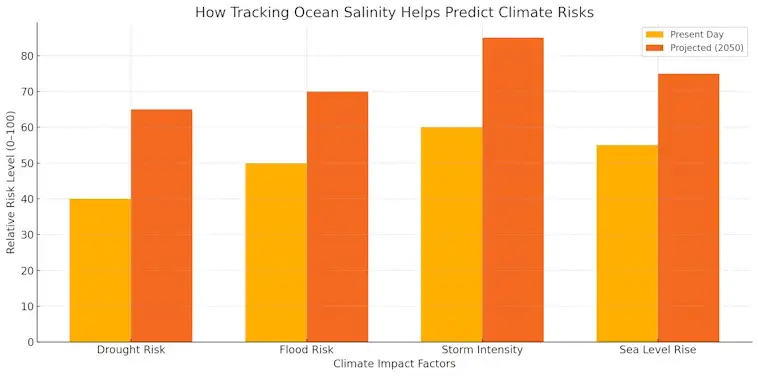
Changes in salinity reveal how the global water cycle is intensifying. Saltier regions often signal more evaporation and drier conditions on land, while fresher areas can indicate heavier rainfall or melting ice. These insights help scientists forecast where droughts, floods, or shifting monsoon patterns might occur.
Salinity also acts as a warning system for ocean circulation. If salinity shifts slow down major currents like the Gulf Stream, it could disrupt global weather, leading to more intense storms or unexpected temperature swings. Tracking these patterns lets researchers anticipate such tipping points.
How It Shapes Long-Term Climate Models
Salinity data feeds into advanced climate models, making future forecasts more accurate. By mapping how oceans are storing heat and moving water, scientists can better project rising sea levels and predict how warming will unfold region by region.
In the coming years, tracking salinity may become as critical as monitoring global temperatures. Together, they provide a clearer picture of what lies ahead—and give us more time to adapt before major changes hit.
Understanding Ocean Salinity Is Key to Our Climate Future
Ocean salinity is more than a measure of how salty the water is. It’s a signal of how our planet is changing. Shifting salinity levels reveal where ice is melting, rainfall is increasing, and evaporation is intensifying. Together, these patterns show us how the global water cycle is accelerating and how ocean currents are evolving.
By tracking these changes, scientists can better predict rising sea levels, shifting weather patterns, and the growing risk of extreme storms and droughts. Salinity acts like a global warning system, helping us understand what lies ahead so we can prepare for the challenges of a warming world.