
Beyond Convenience: The Startling Impact of Plastic Bags on Our Environment
Beyond Convenience: The Startling Impact of Plastic Bags on Our Environment
Plastic bags are everywhere—from supermarket checkouts to kitchen drawers. They’re lightweight, cheap to produce, and surprisingly durable. But beneath that convenience lies a far-reaching environmental cost that’s hard to ignore.
Every year, trillions of plastic bags are used globally. Most are tossed away within minutes, yet they linger in the environment for hundreds of years. Their impact stretches far beyond the landfill.
Understanding the full story behind plastic bags reveals why it’s time to rethink everyday choices. What seems like a small act—accepting or refusing a bag—can ripple outward in ways that affect wildlife, communities, and the planet’s future.
How Plastic Bags Became a Daily Habit—And Why That’s a Problem
Plastic bags weren’t always everywhere. But once they arrived, they spread fast.
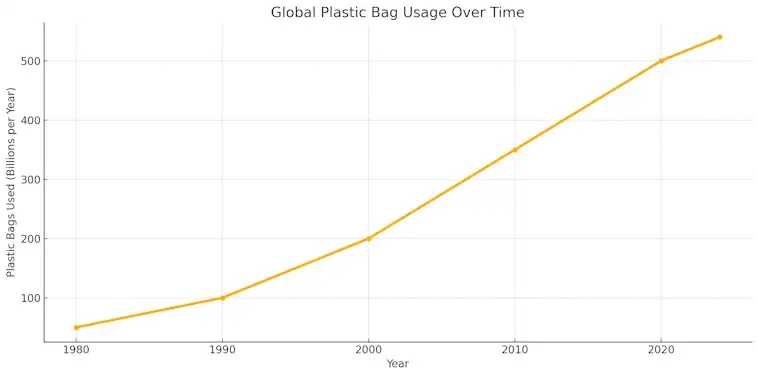
It all started in the 1960s, when the first lightweight, single-use plastic bags were invented. By the 1980s, they were showing up in supermarkets around the world. Shoppers quickly embraced them. They were free, strong, and easy to carry. Why wouldn’t you grab one?
Retailers loved them too. Plastic bags were cheaper than paper ones and took up less space. So stores encouraged their use—and customers responded. Within a decade, bringing home groceries in plastic became second nature.
Plastic Became a Habit
Here’s the thing: humans are creatures of habit. And plastic bags made life easier. Need to carry lunch? Use a plastic bag. Walking the dog? Grab another. Before long, it wasn’t just about shopping. Plastic bags were everywhere—kitchens, cars, parks, even school lunches.
But this daily convenience came at a cost most people didn’t see.
Why That’s a Problem
Plastic bags are made from fossil fuels and are designed to be used once. But they don’t just disappear after we toss them. Most aren’t recycled. Instead, they end up in landfills, rivers, oceans—and stay there for hundreds of years.
Here’s what’s happening:
- They pollute waterways and oceans. Sea turtles often mistake plastic bags for jellyfish.
- They clog drainage systems. In some countries, this has even contributed to flooding.
- They harm wildlife. Birds, fish, and other animals get tangled or choke on them.
- They break into microplastics. These tiny pieces make their way into food chains—and into us.
What started as a simple convenience has become a global environmental challenge. And because we got so used to using them without thinking, breaking the habit isn’t easy.
The good news? More cities and countries are waking up to the problem. Bans, taxes, and awareness campaigns are pushing people to rethink their choices. Reusable bags are becoming the norm in many places. And each small change adds up.
But for real impact, we need to understand how we got here—and why changing course matters.
The Hidden Environmental Cost of a ‘Free’ Plastic Bag
When you grab a plastic bag at the checkout, it feels like no big deal. It’s free, it’s light, and it disappears from your hand as soon as you’re home. But that bag doesn’t disappear from the planet—not for hundreds of years. And that’s where the real cost lies.
Plastic bags are marketed as disposable. But they’re made from non-renewable resources like crude oil and natural gas. They’re designed for convenience, not sustainability. And while they might be free for us, nature ends up paying the price.
The Toll on Ecosystems and Wildlife
Plastic bags don’t break down like paper or plant-based materials. Instead, they break apart—into smaller and smaller pieces called microplastics. These fragments then work their way into the soil, water, and food chain.
Here’s how that plays out in the real world:
1. Marine Life at Risk
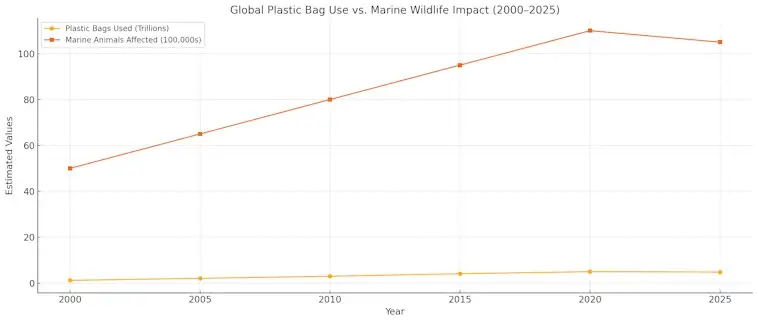
- Over 100,000 marine animals are killed every year by plastic bags.
- Sea turtles often mistake bags for jellyfish—swallowing them and suffering internal blockages.
- Fish and seabirds get entangled, leading to injury or death.
2. Land Ecosystems Aren’t Safe Either
- Plastic bags can smother plants and degrade farmland.
- Grazing animals often eat them by mistake, leading to malnutrition or poisoning.
- Insects and smaller animals can become trapped or affected by chemicals leaching into the soil.
3. Pollution Without Borders
- Carried by wind and water, plastic bags travel far—from urban gutters to remote coastlines.
- They clog waterways, harm coral reefs, and disrupt delicate habitats.
- And once they’re out there, they’re nearly impossible to clean up completely.
Why It Adds Up Fast
One plastic bag might not seem like much. But globally, we use up to 5 trillion plastic bags every year. That’s over 160,000 bags per second. Most are used for just a few minutes, yet they stick around for centuries.
Unlike natural waste, plastic bags don’t return to the ecosystem in a useful way. They just accumulate—layer by layer, year after year.
That “free” plastic bag is anything but. Its impact reaches far beyond your kitchen drawer. From oceans choked with debris to animals dying with plastic in their stomachs, the cost is real—and rising.
By understanding the hidden environmental cost, we’re one step closer to making smarter choices that protect the planet for future generations.
From Landfills to Oceans: Where Do Plastic Bags Really End Up?
When you toss a plastic bag in the bin, it feels like the end of the story. But for that bag, the journey is just beginning. Whether it ends up in a landfill, floating in a river, or drifting across the ocean, the truth is this: plastic bags don’t simply go away.
In fact, most of them continue to pollute the environment for decades—even centuries—long after their few minutes of use. Understanding where plastic bags go after we throw them out is key to understanding why they’re such a serious threat.
The Lifecycle of a Plastic Bag After Use
1. Landfills: Where Most Plastic Bags Are Buried
- The majority of plastic bags go to landfills, where they’re compressed under layers of waste.
- But plastic doesn’t decompose. It breaks into smaller pieces—microplastics—that leach chemicals into the ground and water.
- Wind often blows lightweight bags out of landfills, sending them back into the environment.
2. Recycling: A Rare Outcome
- Only about 5–10% of plastic bags are actually recycled.
- They often clog recycling machines, making them expensive to process.
- Many recycling centers reject plastic bags entirely due to contamination and cost.
3. Litter: A Common Destination
- Plastic bags are easily carried by the wind, ending up in storm drains, streets, and rivers.
- Once in waterways, they travel long distances, eventually reaching the sea.
- Cities with poor waste management systems see even higher rates of plastic bag litter.
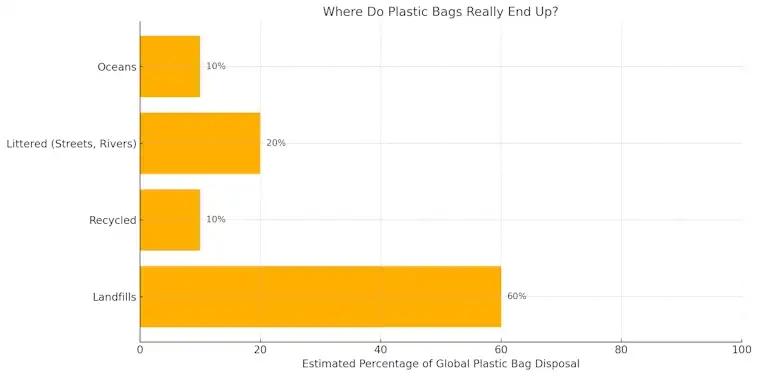
Oceans: The Final Stop for Many Plastic Bags
Once in the ocean, plastic bags become part of the growing marine plastic crisis. They float on the surface, drift in deep currents, or sink to the seafloor. Their presence is dangerous for sea creatures, coral reefs, and even humans.
Here’s what happens next:
- Sea animals often mistake bags for food, leading to injury, starvation, or death.
- Coral reefs can become smothered by plastic, reducing biodiversity.
- Microplastics from degrading bags enter the food chain, affecting everything from plankton to people.
A Global Issue With Local Consequences
Plastic bags may travel across oceans, but their impact is felt everywhere—from urban gutters to remote beaches. They clog drainage systems, contaminate water supplies, and degrade ecosystems.
The journey of a plastic bag isn’t linear—it’s a cycle of pollution that keeps repeating unless we step in to break it.
Every time we use a plastic bag, we risk adding to a global waste stream that doesn’t have a clear end. Whether buried, blown away, or washed into the sea, plastic bags find a way back into the environment.
Knowing where plastic bags really end up empowers us to make better decisions. The solution starts with awareness—and continues with action.
The Microplastic Menace: How Plastic Bags Break Down and Spread
When we think of plastic pollution, we often picture large items—bags drifting in the wind or bottles floating in the ocean. But the most dangerous plastic may be the kind we can’t see: microplastics.
These tiny plastic fragments, often invisible to the naked eye, come from bigger plastic items that slowly break apart over time. And plastic bags are one of the biggest culprits.
Though they seem harmless after a single use, plastic bags don’t biodegrade. Instead, they fragment—turning into microplastics that spread into our soil, water, and even the food we eat.
How Plastic Bags Become Microplastics
Plastic bags are made from polyethylene, a type of plastic that’s designed to be durable—not biodegradable. When exposed to sunlight, wind, and water, they begin to degrade physically but not chemically.
Here’s what happens:
- Sunlight breaks the plastic down into smaller pieces, but doesn’t destroy it.
- Friction and heat—from wind, sand, or water—further shred the plastic into micro and even nano-plastics.
- These fragments scatter easily and travel far, often ending up where they shouldn’t.
Once the breakdown begins, it’s nearly impossible to reverse. And these particles persist in the environment for centuries.
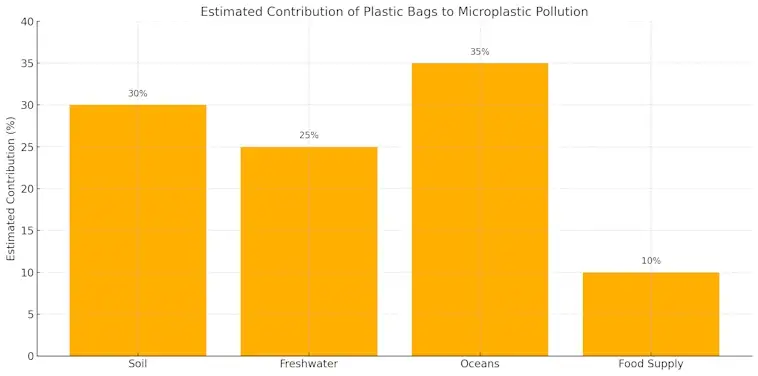
Where Microplastics Go—and What They Do
1. In the Soil
- Microplastics mix with dirt and alter soil structure, affecting plant growth.
- Earthworms and insects often ingest them, disrupting soil ecosystems.
- Crops can absorb particles through their roots, entering the human food chain.
2. In Water Systems
- Microplastics wash into rivers, lakes, and oceans, where they are consumed by fish and other marine animals.
- They can carry toxic chemicals, acting like sponges for pollutants.
- Once in the ocean, microplastics join vast gyres—swirling masses of debris that harm marine life.
3. In Our Food and Water
- Studies have found microplastics in bottled water, table salt, honey, and even fruits and vegetables.
- Humans may ingest thousands of particles per year—without realizing it.
- Long-term exposure is linked to inflammation, hormone disruption, and other health concerns still under study.
The microplastic problem isn’t just about the environment—it’s about public health, food security, and the future of our ecosystems. And it starts with things as ordinary as a shopping bag.
Plastic bags may seem small and disposable, but they leave behind a legacy of pollution. Each bag that breaks down adds to a growing, global issue that’s hard to see but impossible to ignore.
We can’t solve the microplastic menace overnight, but we can reduce the source. Every plastic bag avoided, reused, or replaced with a sustainable alternative is a step toward a cleaner, safer world.
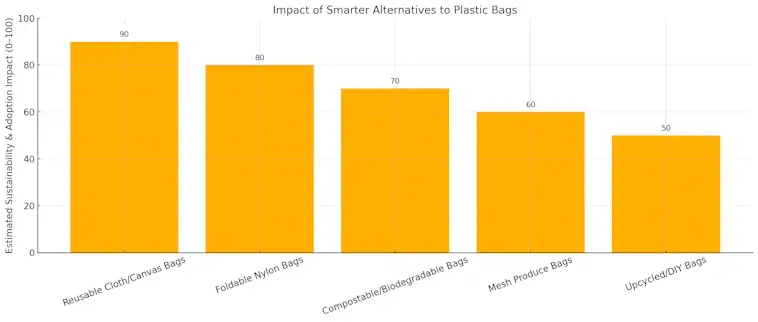
What We Can Do Now: Smarter Alternatives to Plastic Bags
Plastic bags have become part of everyday life—but they don’t have to be. While their environmental impact is massive, the solutions can start small. By making smarter choices, we can reduce our plastic footprint and inspire others to do the same.
The good news? Sustainable alternatives are more accessible than ever. Whether you’re shopping for groceries, packing lunches, or running errands, there are easy swaps that make a big difference.
Smart Swaps for Everyday Life
Here are practical, eco-friendly alternatives to plastic bags that anyone can adopt today:
1. Reusable Cloth or Canvas Bags
- Strong, washable, and long-lasting.
- Available in various sizes for groceries, produce, or general shopping.
- Many stores now sell them at checkout—making it easy to get started.
2. Foldable Nylon Bags
- Lightweight and compact—great for keeping in your purse or car.
- Durable and designed for multiple uses.
- Perfect for unexpected shopping trips.
3. Compostable and Biodegradable Bags
- Made from plant-based materials like cornstarch or cassava.
- Break down naturally in compost or soil, unlike traditional plastics.
- Ideal for lining bins or carrying items that need to be disposed of responsibly.
4. Mesh Produce Bags
- Replace single-use plastic produce bags at the grocery store.
- Washable and breathable—great for fruits and veggies.
- Many come in sets with different sizes.
5. Upcycled or DIY Options
- Old t-shirts, pillowcases, or jeans can be turned into shopping bags.
- Great for creative types looking to reduce waste and personalize their gear.
- Local workshops and online tutorials make it easy to learn how.
What Communities Can Do
Individual choices are powerful—but when communities act together, the impact multiplies. Here’s how local groups and governments can help:
- Ban or tax single-use plastic bags to encourage reusable options.
- Distribute free reusable bags at schools, markets, and events.
- Launch education campaigns about the environmental impact of plastic bags.
- Partner with local businesses to promote zero-waste shopping.
Small Steps, Big Impact
It might feel like one person can’t make much of a difference—but every plastic bag avoided is one less in a landfill or ocean. When those small actions are multiplied across neighborhoods, cities, and countries, the results are powerful.
Switching to smarter alternatives isn’t just better for the planet—it’s often more convenient and cost-effective in the long run.
The shift away from plastic bags doesn’t require perfection. It just requires a little more intention. With the right tools and mindset, we can all be part of the solution—and create a cleaner, healthier world for future generations.
The Bottom Line: It’s Time to Rethink the Bag
Plastic bags may feel like a small part of daily life, but their impact reaches far beyond the checkout line. What starts as a quick, convenient solution ends up polluting oceans, harming wildlife, and breaking down into microplastics that enter our soil, water, and even food.
This isn’t just an environmental issue—it’s a global challenge that affects our health, our ecosystems, and future generations.
The good news? Change is possible, and it starts with the choices we make every day. Saying no to single-use plastic, choosing reusable alternatives, and supporting smarter policies are all steps toward a cleaner, healthier world.
The planet doesn’t need a few people doing it perfectly—it needs millions doing it better.
Every bag left behind is a step forward.