

How Resource Depletion Is Threatening Our Future
How Resource Depletion Is Threatening Our Future
The world is changing fast, but not always for the better. Beneath the surface of modern convenience lies a growing crisis—our most essential natural resources are disappearing. From water and soil to fossil fuels and rare minerals, the foundations of life and industry are being stretched to their limits.
As demand continues to rise, the Earth’s ability to keep up is slowing down. What once seemed infinite is now running out, and the ripple effects are already being felt—from higher food prices to geopolitical tensions.
These aren’t just environmental issues—they’re economic, social, and political challenges that will shape how we live in the decades ahead. Understanding the urgency now can help build a future that isn’t defined by scarcity, but by resilience and smarter choices.
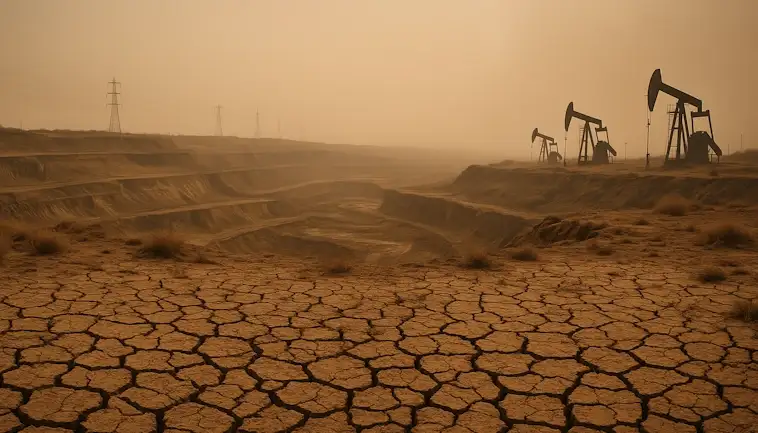
The Earth’s Limits: What Happens When We Run Out?
We live on a planet with boundaries—ecological, physical, and chemical. But for decades, we’ve acted like there are none.
From the air we breathe to the minerals powering our phones, Earth provides everything we need. Yet every year, we use more than the planet can regenerate. This isn’t just a future concern—it’s happening now, and the consequences are piling up faster than we’re adapting.
Why Resource Depletion Matters
Natural resources like fresh water, fertile soil, forests, and fossil fuels are being consumed at an alarming rate. Here’s why this matters:
- Water Scarcity: Groundwater reserves in many regions are drying up. Over two billion people already lack reliable access to clean water.
- Soil Erosion: Industrial farming is stripping away nutrient-rich topsoil. Once it’s gone, it takes centuries to restore.
- Deforestation: Forests are disappearing to make way for agriculture and development. That destroys biodiversity and reduces our planet’s ability to absorb carbon.
- Fossil Fuels: Coal, oil, and gas are finite. As extraction becomes harder and more expensive, energy prices could spike—and so could political tensions.
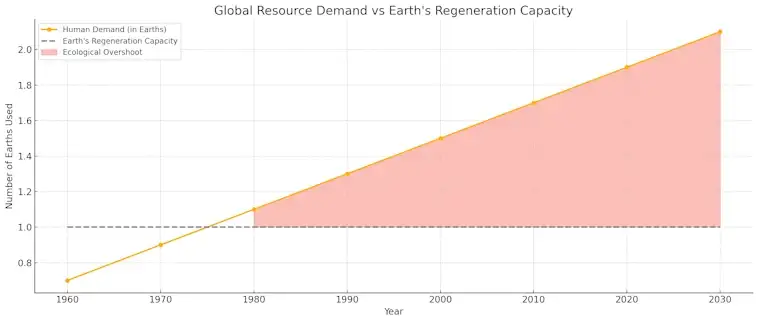
What Happens If We Cross the Line?
As we push against Earth’s limits, feedback loops kick in:
- Climate change accelerates, causing extreme weather, crop failures, and rising sea levels.
- Resource wars become more likely as countries compete for water, energy, and arable land.
- Economic instability follows, hitting vulnerable communities hardest.
It’s not just about running out. It’s about breaking the systems that keep life stable and sustainable.
What Can We Do?
The good news? There’s still time to act. But we need to shift how we live, build, and consume:
- Invest in circular economies that reuse and recycle materials instead of throwing them away.
- Transition to renewable energy like solar and wind to cut our reliance on fossil fuels.
- Rethink growth by measuring success in terms of well-being and sustainability, not just GDP.
We’re not powerless. But we are at a tipping point. The choices we make today—on everything from energy use to food systems—will shape the world future generations inherit. The Earth can’t give more than it has. It’s time we listened.
From Forests to Fossil Fuels: What We’re Losing Fast
Nature is disappearing before our eyes—and with it, the foundation of modern life.
From the trees that clean our air to the fossil fuels powering our cities, the natural world is under siege. We’re not just using resources—we’re using them faster than nature can replace them. This rapid depletion is already changing ecosystems, disrupting economies, and starting to reshape daily life for millions.
The Fastest Disappearing Resources
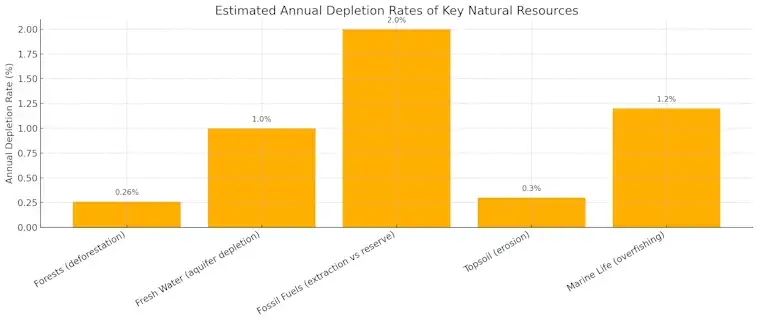
Here’s a look at some of the most critical natural resources vanishing at alarming speeds:
- Forests: Deforestation wipes out over 10 million hectares each year. Forests aren’t just pretty landscapes—they absorb carbon, regulate rainfall, and provide homes to 80% of Earth’s land-based animals. As forests fall, biodiversity collapses and climate change speeds up.
- Fresh Water: Underground aquifers and freshwater lakes are drying up, especially in heavily farmed and urbanized regions. With over 2 billion people already lacking safe water access, this crisis threatens both public health and food security.
- Fossil Fuels: Oil, coal, and natural gas are non-renewable. While we’re still extracting them at massive scales, reserves are shrinking. More importantly, burning them accelerates climate change, putting even more strain on the planet’s systems.
- Topsoil: Vital for growing food, fertile topsoil is eroding up to 100 times faster than it can naturally regenerate. Industrial agriculture, deforestation, and poor land management are the culprits.
- Marine Life: Overfishing and ocean pollution have driven key fish populations to collapse. Coral reefs are bleaching. Entire ecosystems are at risk—along with the livelihoods of more than 3 billion people who depend on oceans.
Why It Matters for Everyone
Resource depletion doesn’t just impact nature—it hits home in many ways:
- Higher prices for basics like food, energy, and water
- Supply chain disruptions across global industries
- Loss of jobs in agriculture, fishing, and forestry
- Increased migration and political conflict over scarce resources
A Turning Point for Humanity
We’re at a crossroads. If we continue down this path, resource scarcity could define the next century. But there’s another way forward:
- Support regenerative agriculture to rebuild soil and reduce water use.
- Switch to renewable energy to reduce dependence on fossil fuels.
- Promote sustainable forestry and fishing to protect ecosystems long-term.
We can’t afford to treat nature as infinite—because it’s not. The faster we act to protect what remains, the better chance we have to build a future that’s both resilient and fair.
The Hidden Costs of Overconsumption
We buy more. We use more. But we rarely stop to ask—at what cost?
Modern life is built on convenience and abundance. Fast fashion, one-click shopping, and 24/7 delivery have become the norm. But behind the scenes, our growing appetite for “more” is draining the planet, deepening inequality, and quietly pushing the world toward instability.
How Overconsumption Hurts the Planet
When consumption outpaces sustainability, the consequences ripple across ecosystems:
- Resource Exhaustion: To meet growing demand, we’re mining, drilling, and deforesting faster than nature can recover. This depletes vital resources like clean water, rare minerals, and fertile soil.
- Pollution and Waste: Mountains of waste—especially plastic and electronic—are choking landfills and oceans. Meanwhile, manufacturing processes dump harmful chemicals into air and water systems.
- Carbon Emissions: Every new gadget, garment, or meal leaves a carbon footprint. As consumption rises, so do global emissions—fueling climate change and extreme weather events.
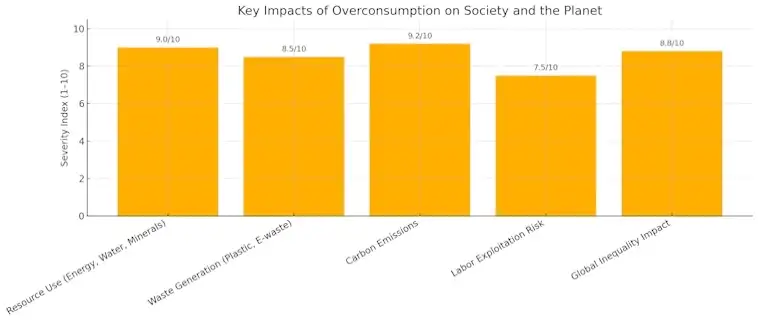
The Human Impact: Inequality and Instability
Overconsumption doesn’t affect everyone equally. Its hidden costs are often paid by the most vulnerable:
- Exploitation of Labor: Many goods are produced in low-income countries under poor working conditions and low wages—feeding a cycle of global inequality.
- Land and Water Conflicts: As wealthy nations and corporations extract resources, local communities are left with polluted environments and fewer means to survive.
- Economic Imbalance: While a small percentage of the world drives most of the demand, billions struggle to meet basic needs. This growing divide threatens long-term global stability.
The Cost of “More” Isn’t Just Environmental
It’s easy to think that overconsumption is just about waste, but it’s deeply tied to:
- Mental health: Studies show constant materialism increases stress and dissatisfaction.
- Social division: The wealth gap widens as some benefit from consumption while others bear the brunt.
- Political tension: Resource competition fuels unrest, migration, and geopolitical instability.
We’re not just consuming products—we’re consuming the future. But the good news is, every choice matters. By rethinking how and what we consume, we can protect the planet, support fair economies, and build a more stable world.
Tech Can’t Save Us (Yet): Why Innovation Alone Isn’t Enough
We’ve been told that technology will save the planet—but the truth is more complicated.
Green tech is booming. From solar panels to electric cars, innovation is making headlines as the answer to climate change and resource depletion. But while these advances are promising, they’re not a silver bullet. Technology can help us slow down the damage—but it can’t undo decades of overconsumption, pollution, and environmental neglect on its own.
What Green Tech Can Do
Let’s be clear: technology is a critical part of the solution. Here’s where it shines:
- Clean Energy: Solar, wind, and other renewables reduce reliance on fossil fuels and lower emissions.
- Smart Agriculture: Precision farming, vertical gardens, and AI-driven irrigation can save water and protect soil.
- Sustainable Materials: Innovations like lab-grown meat and biodegradable plastics offer low-impact alternatives to traditional products.
- Efficient Transport: Electric vehicles, improved batteries, and shared mobility systems are helping reduce urban emissions.
These are powerful tools—but they still rely on how we use them, scale them, and make them accessible to everyone.
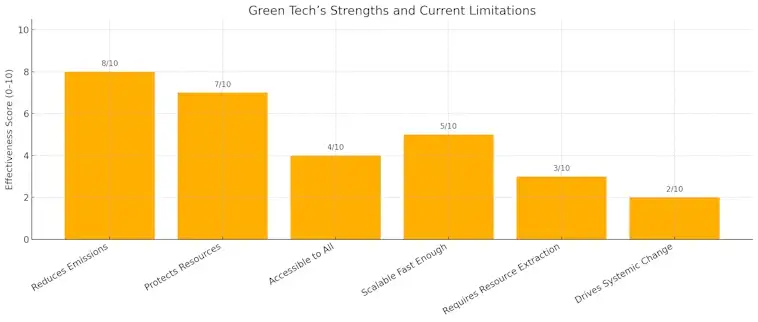
The Limits of Innovation
Here’s where technology hits a wall:
- Production Footprint: Building “green” tech still requires rare earth minerals, energy, and often generates emissions.
- Access and Affordability: New technologies often benefit wealthy nations first, leaving vulnerable communities behind.
- Rebound Effect: Efficiency can lead to more use, not less. For example, more efficient cars might encourage longer drives.
- Time Lag: Tech takes time to develop, test, scale, and replace older systems. Climate change and resource depletion aren’t waiting.
Why Behavior and Policy Still Matter
Without changes in consumption habits and global policy, even the best innovations won’t be enough:
- We need to reduce demand, not just make supply greener.
- Laws and regulations must support sustainable practices, not just market-driven solutions.
- Education and awareness are crucial to shift mindsets and consumer behavior.
The bottom line? Technology is a tool—not a cure. Yes, we should invest in green innovation. But we also need systemic change, smarter consumption, and stronger leadership. Only then can tech truly help us build a sustainable future.
What We Can Still Do: Actionable Steps Toward Sustainability
The damage is real—but so is our ability to respond.
It’s easy to feel overwhelmed by headlines about climate change, resource depletion, and environmental collapse. But this isn’t a story of doom. It’s a call to action. We still have the tools, knowledge, and momentum to change course. Sustainability isn’t just a buzzword—it’s a mindset and a movement, one that anyone can be part of.
What Individuals Can Do
Small changes, multiplied by millions of people, make a big impact. Here’s where to start:
- Consume Less, Choose Better: Buy fewer things. Choose quality over quantity. Support brands that prioritize ethics and sustainability.
- Eat More Plants: Shifting to a plant-based or plant-forward diet significantly reduces land, water, and energy use.
- Cut Energy Waste: Use energy-efficient appliances, switch to LEDs, and unplug devices when not in use.
- Travel Smarter: Walk, bike, carpool, or use public transit when possible. Fly less and offset emissions when you do.
- Speak Up: Your voice matters. Talk to friends, vote with your wallet, and support climate-conscious policies.
What Communities Can Do
When neighborhoods and local groups come together, real change happens:
- Start Local Initiatives: From community gardens to recycling programs, local action builds resilience and awareness.
- Support Local Food Systems: Farmers’ markets, co-ops, and urban farms reduce transportation emissions and keep money in the community.
- Educate and Empower: Host workshops, events, and conversations about sustainability. The more people know, the more they care.
- Invest in Greener Infrastructure: Push for bike lanes, clean energy, and green spaces in your area.
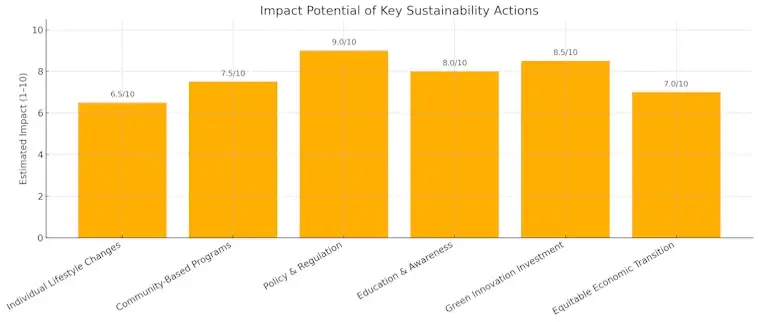
What Policymakers Must Do
Systemic change requires strong leadership and long-term vision:
- Enact Strong Environmental Laws: Ban harmful practices, set emissions targets, and protect natural habitats.
- Fund Renewable Energy and Innovation: Invest in clean tech, energy storage, and smart grids that future-proof our infrastructure.
- Support Equitable Transition: Make sure green policies include workers, low-income communities, and regions reliant on fossil fuels.
- Lead by Example: Governments at all levels can reduce their own footprint and set clear, science-based goals.
The future isn’t written yet. By working together—individuals, communities, and leaders—we can protect what remains and rebuild what’s been lost. Sustainability is not a sacrifice. It’s an opportunity to create a healthier, fairer, more resilient world for everyone.
The Future Is Still Ours to Shape
Resource depletion isn’t just an environmental issue—it’s a global wake-up call.
The forests, oceans, minerals, and soils that support life are disappearing faster than nature can renew them. If we continue down this path, we risk more than just environmental damage. We jeopardize food systems, clean water, economic stability, and human well-being around the world.
But this story doesn’t have to end in collapse.
- We have the knowledge to rethink how we live, consume, and grow.
- We have the tools to build cleaner, fairer systems that work with nature, not against it.
- We have the power—individually and collectively—to protect what remains and rebuild what’s been lost.
Change won’t come from waiting. It will come from what we do next. Every sustainable choice, every smarter policy, every innovation that respects the planet is a step toward a more secure, vibrant, and livable future.
The time to act is now—while there’s still something left to save.