
How Ozone Depletion Puts Our World at Risk
How Ozone Depletion Puts Our World at Risk
The ozone layer may be out of sight, but its impact is anything but invisible. This fragile shield in the Earth’s stratosphere protects life by absorbing most of the sun’s harmful ultraviolet (UV) radiation. When it thins, the consequences stretch far beyond sunburns. From rising cancer risks to damaged ecosystems, the effects touch every corner of the planet.
While there’s been global progress through agreements like the Montreal Protocol, the threat hasn’t disappeared. Climate change and chemical pollutants continue to challenge the delicate balance.
Keeping this issue front of mind means protecting both current and future generations. The stakes are high, but so is our capacity to act.
What Is the Ozone Layer and Why Should You Care?
You’ve probably heard about the ozone layer before—maybe in a science class, the news, or even on a sunscreen label. But have you ever really stopped to think about what it is or why it’s such a big deal? The truth is, the ozone layer is one of the unsung heroes of life on Earth. Without it, our planet would be a very different—and far more dangerous—place to live.
So let’s break it down. What is the ozone layer, why does it matter, and what can we do to protect it?
What Exactly Is the Ozone Layer?
The ozone layer is a thin, invisible shield of gas located in the stratosphere, about 10 to 30 miles above Earth’s surface. It’s made up of a special kind of oxygen called ozone (O₃). Unlike the oxygen we breathe (O₂), ozone has three oxygen atoms instead of two.
- This thin layer contains just a tiny fraction of the Earth’s atmosphere.
- But despite being so small, it plays a huge role in protecting us.
What makes it so special? The ozone layer absorbs the majority of the sun’s harmful ultraviolet (UV) radiation—especially the most dangerous types, like UV-B and UV-C. Without this filter, life on Earth would be bombarded with intense solar rays.
Why the Ozone Layer Matters
Think of the ozone layer as Earth’s natural sunscreen. It shields us from UV rays that can cause:
- Skin cancer and cataracts in humans
- DNA damage in animals and plants
- Weakened immune systems
- Disruption to ecosystems, including marine life like plankton, which are the foundation of the ocean food chain
Without this protective barrier, the sun’s radiation would be far more destructive. Crops would fail. Wildlife would suffer. And humans would face increased health risks just by stepping outside.
A Layer Worth Protecting
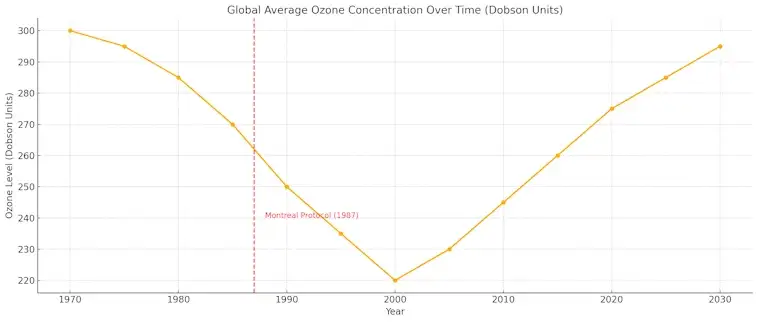
The ozone layer isn’t just a science topic—it’s something that affects all of us. In the late 20th century, scientists discovered it was being damaged by man-made chemicals like CFCs (chlorofluorocarbons), commonly found in refrigerants and aerosol sprays. Thanks to global action like the Montreal Protocol in 1987, those substances have been phased out, and the ozone layer is slowly recovering.
But that doesn’t mean we can take it for granted. Climate change, new industrial chemicals, and even rocket launches pose new challenges. Staying informed and supporting eco-friendly policies still matters.
The ozone layer keeps us safe, and we all have a role in keeping it intact. Next time you enjoy a sunny day without getting burned to a crisp, you have this incredible layer of gas to thank.
Let’s keep it that way.
How Ozone Depletion Happens: Causes You Didn’t See Coming
When you think about threats to the environment, climate change usually takes center stage. But there’s another silent crisis that’s been unfolding high above us—ozone depletion. While the headlines in the 1980s put ozone holes in the spotlight, what’s often overlooked is how this crucial layer gets damaged in the first place.
Spoiler alert: it’s not just old aerosol cans or air conditioners. Some of the causes might surprise you.
Let’s uncover what’s really behind the thinning of Earth’s ozone layer—both the man-made culprits and the natural ones we often forget.
The Human-Made Offenders
Man-made chemicals are the biggest contributors to ozone depletion. Here’s how they do their damage:
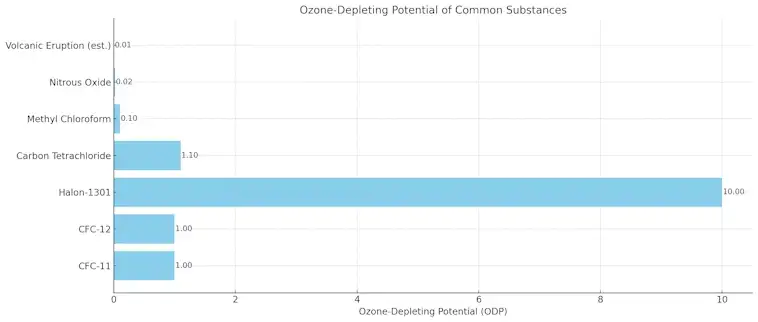
1. Chlorofluorocarbons (CFCs)
- Found in old refrigerators, air conditioners, and aerosol sprays.
- When released, these gases rise into the stratosphere and break down under UV light, releasing chlorine atoms.
- Just one chlorine atom can destroy over 100,000 ozone molecules.
2. Halons
- Used in fire extinguishers, and especially in aircraft and computer rooms.
- Release bromine, which is even more destructive to ozone than chlorine.
3. Carbon Tetrachloride and Methyl Chloroform
- Industrial solvents used for cleaning and degreasing.
- Although less talked about, they’re potent ozone-depleting substances.
4. Nitrous Oxide (N₂O)
- Often overlooked, but this greenhouse gas—commonly released from agriculture and fossil fuels—is now the biggest human-made ozone-depleting emission still being released today.
The Natural Contributors (Yes, They Exist!)
Nature isn’t entirely off the hook. While natural sources don’t deplete the ozone as aggressively, they still play a role.
1. Volcanic Eruptions
- Volcanoes release large amounts of water vapor and particulates that can enhance chemical reactions harmful to ozone, especially when combined with man-made pollutants.
2. Solar Flares
- Occasionally, solar activity can temporarily affect the ozone layer by increasing UV radiation or energetic particles in the atmosphere.
3. Lightning and Wildfires
- Natural events like lightning or wildfires can produce nitrogen oxides (NOₓ), which can contribute to short-term ozone breakdown.
Whether caused by industry or nature, the thinning of the ozone layer lets more UV radiation reach Earth’s surface.
Ozone depletion isn’t just a relic of the past—it’s a complex issue with both human and natural contributors. While we’ve made major progress through global action, continued awareness and action are key to keeping our sky shield strong.
The Real-World Impact: From Skin Cancer to Climate Chaos
The ozone layer might be invisible, but the effects of losing it are painfully visible. When it thins—even slightly—the consequences ripple through our lives, our health, and the planet itself. We’re not just talking about getting a sunburn a little faster. We’re talking about serious health issues, damaged ecosystems, and even changes in the climate.
So what exactly happens when the ozone layer breaks down? Let’s look at the real-world dangers that come with ozone loss—and why this invisible layer deserves a lot more attention.
Health Hazards You Can’t Ignore
When more ultraviolet (UV) radiation reaches Earth’s surface, our bodies—and our health systems—take the hit.
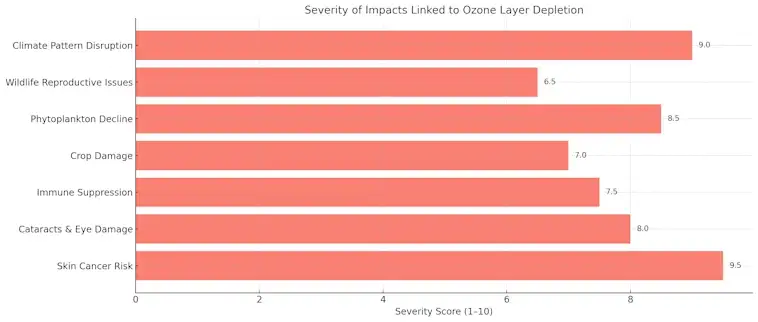
1. Skin Cancer on the Rise
- UV-B radiation is a major cause of melanoma and other skin cancers.
- According to the World Health Organization, a 1% drop in ozone can lead to a 2% increase in UV exposure, potentially boosting skin cancer rates worldwide.
2. Eye Damage and Cataracts
- UV radiation can lead to cataracts and other eye disorders, increasing vision problems globally, especially in vulnerable populations.
3. Weakened Immune Systems
- Excessive UV exposure may suppress the immune system, reducing our ability to fight off infections and diseases.
Environmental Disruption
The effects of ozone loss aren’t limited to humans—they extend deep into the natural world.
1. Harm to Plants and Crops
- UV radiation can inhibit plant growth, reduce crop yields, and interfere with photosynthesis, especially in sensitive crops like soybeans and wheat.
- This affects global food security, particularly in regions already struggling with hunger.
2. Ocean Life Takes a Hit
- The base of the ocean food chain—phytoplankton—is especially vulnerable to UV radiation.
- Less phytoplankton means less food for fish, whales, and other marine life, disrupting entire marine ecosystems.
3. Wildlife at Risk
- UV radiation can cause developmental and reproductive issues in amphibians and other wildlife.
- It also affects animals’ ability to forage, mate, and survive in their natural habitats.
A Tipping Point for Climate?
Ozone loss and climate change are closely connected, often in ways that amplify each other.
- Ozone-depleting substances are also greenhouse gases, contributing to global warming.
- Shifts in UV levels can influence weather patterns, especially near the poles where ozone holes are most severe.
- For example, the Antarctic ozone hole has been linked to changes in wind patterns, which affect rainfall and temperature far beyond the region.
When we lose ozone, we lose more than just a protective shield. We invite a host of dangers—from deadly diseases to climate instability. The stakes aren’t abstract. They’re real, global, and personal.
That’s why protecting the ozone layer isn’t optional—it’s urgent.
Are We Fixing It? Progress, Setbacks, and Global Action
You might be wondering—after all the warnings and headlines, have we actually made progress on the ozone layer? The good news is, yes—we have. In fact, the story of the ozone layer is often held up as a rare example of successful global environmental cooperation.
But the work isn’t done. While we’ve taken big steps forward, new challenges are emerging, and some setbacks are harder to ignore. So where do we stand today? And what can the ozone story teach us about solving other global issues?
Let’s dive into the progress, the pitfalls, and the path ahead.
The Montreal Protocol: A Global Success Story
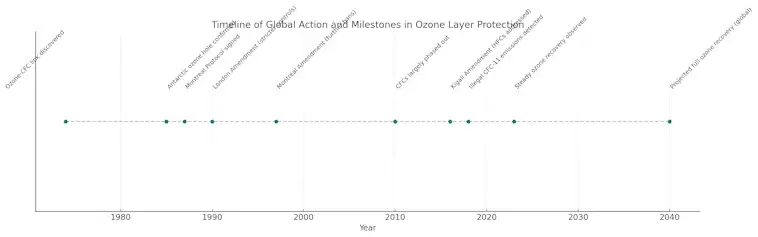
In 1987, nearly every country in the world came together to sign the Montreal Protocol, an international agreement to phase out ozone-depleting substances like CFCs and halons.
- Result: Over 99% of those harmful chemicals have now been eliminated.
- Impact: Scientists have observed that the ozone layer is slowly healing, with projections showing it could return to 1980 levels by mid-century.
- Bonus: Many of the banned substances were also potent greenhouse gases—so this action helped slow climate change too.
This kind of unified, science-driven policy response is rare—and it worked.
What’s Working
Here are the major wins that give us reason to stay hopeful:
- Global cooperation: Nearly 200 countries are on board, making the Montreal Protocol one of the most universally ratified treaties in history.
- Phased chemical bans: Newer alternatives to CFCs are less harmful, and companies have largely adapted.
- Monitoring and enforcement: Satellite and ground-based systems are tracking ozone recovery in real time.
- Public awareness: The “ozone hole” became a global symbol of environmental responsibility—one that sparked real behavior change.
The Setbacks We Can’t Ignore
Progress hasn’t come without bumps in the road. Here’s what’s not going so smoothly:
- Illegal emissions: In 2018, scientists discovered a spike in banned CFC-11, traced back to unreported use in eastern China. While action was taken, it shows how fragile enforcement can be.
- New threats: Chemicals like nitrous oxide (a common agricultural byproduct) aren’t banned under the Montreal Protocol but are now the largest ozone-depleting emissions still being released.
- Climate feedback loops: Warming temperatures can affect how ozone is distributed in the atmosphere, especially near the poles. The relationship between ozone depletion and climate change is complex—and still evolving.
So, Are We Fixing It?
Yes—but it’s a slow and ongoing process.
The ozone layer is healing, but it’s not fully healed. And as new industries, technologies, and environmental pressures emerge, continued vigilance is essential.
We’ve shown the world can come together to tackle a planetary crisis. Now the challenge is to stay committed—and apply that same focus to other big problems, like climate change.
The ozone story isn’t just about the atmosphere. It’s about what’s possible when science, policy, and people work together. We’re on the right track—but we can’t afford to look away just yet.
What You Can Do: Small Changes With a Big Impact
You might be thinking, “I’m just one person—how can I help protect something way up in the atmosphere?” The good news is, your everyday choices matter more than you think. While governments and industries play a huge role in protecting the ozone layer, individuals and communities have power too.
Every small action adds up. And when enough people make smarter, eco-friendly choices, the ripple effect can lead to lasting change. Here’s how you can do your part to keep the ozone layer strong and healthy—for yourself, your family, and future generations.
Everyday Actions That Protect the Ozone Layer
1. Choose Ozone-Friendly Products
- Look for products labeled “CFC-free” or “ozone-friendly.”
- Avoid old appliances, especially air conditioners or fridges made before the mid-1990s, which may still contain banned substances.
2. Maintain and Replace Cooling Systems Responsibly
- If you use air conditioning or refrigeration, get it serviced regularly.
- Make sure technicians properly handle refrigerants—leaks can release harmful gases.
- When upgrading, choose newer systems that use ozone-safe and energy-efficient alternatives.
3. Reduce Car Use
- Cars contribute to nitrous oxide emissions, now the biggest ozone-depleting gas from human activity.
- Walk, bike, carpool, or use public transit when possible.
- Support local and national efforts to switch to cleaner transportation.
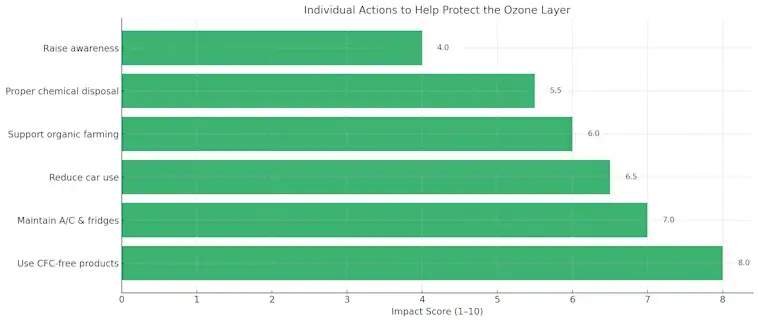
4. Support Organic and Sustainable Farming
- Agriculture is a major source of nitrous oxide.
- By choosing organic or low-emission produce, you support farming practices that are better for the air and soil—and the ozone.
5. Recycle and Dispose of Chemicals Properly
- Never dump old paint thinners, cleaning solvents, or aerosol sprays down the drain.
- Use eco-friendly alternatives and take hazardous waste to proper recycling centers.
6. Raise Awareness
- Talk to friends, family, and your community about the importance of the ozone layer.
- Share facts, get involved in local environmental groups, or even host an awareness day at your school or workplace.
Community-Level Impact
- Encourage schools and workplaces to go ozone-safe by upgrading equipment and using safer cleaning products.
- Advocate for green infrastructure—like better transit options or energy-efficient buildings.
- Support local leaders and policies that promote climate and air protection goals.
Why It Matters
Protecting the ozone layer isn’t just a global issue—it’s a personal one. Every decision we make, from the products we buy to how we travel, can either help or harm the thin shield that protects all life on Earth.
And the best part? Many of the actions that help the ozone layer also fight climate change and create cleaner, healthier communities.
You don’t need to be a scientist or policymaker to make a difference. With a few mindful habits and a bit of community spirit, you can help heal the sky—one small step at a time.
Conclusion
The ozone layer may be out of sight, but it should never be out of mind. It’s our planet’s invisible shield—quietly guarding us from harmful ultraviolet rays, supporting ecosystems, and helping maintain the balance of life on Earth.
Ozone depletion is not just a scientific issue; it’s a human one. It affects the air we breathe, the food we grow, the oceans we depend on, and the health of every living being. The damage was caused by human activity, and the solution depends on it too.
The encouraging part? We’ve already proven that global action works. The Montreal Protocol showed that with collaboration, science, and commitment, real healing is possible. But the job isn’t finished. New threats are emerging, and staying informed and engaged is more important than ever.
Whether it’s choosing ozone-safe products, supporting sustainable practices, or spreading awareness in your community, every choice matters. Together, we can protect the ozone layer—and in doing so, protect ourselves and the generations to come.
Because sometimes, the most powerful threats are the ones we can’t see—and the strongest solutions begin with simple actions.