

The Crisis of Aquifer Depletion and What It Means for Our Future
The Crisis of Aquifer Depletion and What It Means for Our Future
Water that once seemed endless is vanishing beneath our feet. Across the globe, underground aquifers—natural reservoirs that took thousands of years to fill—are being drained faster than they can replenish. This quiet crisis is unfolding in some of the most important agricultural and population centers, threatening food security, economic stability, and access to safe water.
Aquifer depletion isn’t just a distant issue affecting remote areas. It’s already reshaping how people live, farm, and plan for the future. As cities grow and climate patterns shift, the pressure on underground water sources is only intensifying. What happens when the wells run dry isn’t a hypothetical question anymore—it’s a present-day challenge.
This crisis isn’t just about water—it’s about how we live, grow food, and survive in a changing world.

What Is Aquifer Depletion and Why Should You Care?
Imagine reaching for a glass of water and finding out there’s none left—not just in the tap, but deep beneath your feet. That’s the growing reality in many parts of the world. Aquifers, the underground layers of water-bearing rock and sediment that supply our wells, rivers, and farms, are running dry. The cause? Aquifer depletion.
This isn’t just a distant, rural problem. Whether you live in a bustling city or a quiet suburb, aquifer depletion has the potential to impact your daily life—your food, your water, your future. So let’s break down what it is, how it happens, and why it matters now more than ever.
What Is Aquifer Depletion?
Aquifers are underground reservoirs that store freshwater. They’re like giant natural sponges made of rock, sand, and gravel that soak up rainwater and snowmelt over time. People have been tapping into aquifers for centuries to supply drinking water, irrigate crops, and support industries.
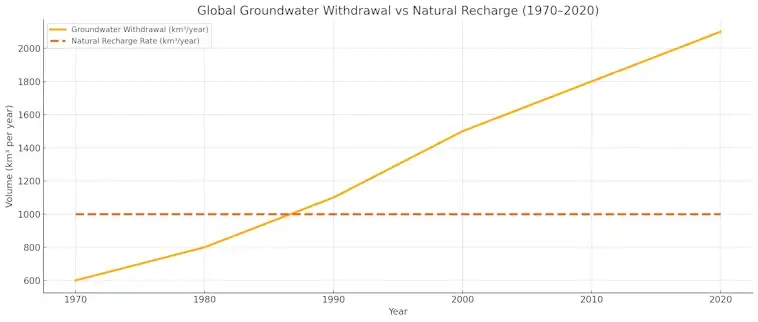
Aquifer depletion happens when we take water out faster than nature can put it back. Over time, this can lead to lower water tables, dried-up wells, and even permanent damage to the aquifer itself.
How Does Aquifer Depletion Happen?
Aquifer depletion is driven by both natural and human-made factors, but modern lifestyles and farming practices are accelerating the problem.
Key Drivers:
- Over-pumping for agriculture: Irrigation is the biggest user of groundwater worldwide. In dry areas, farmers often rely almost entirely on aquifers to grow crops.
- Urban and industrial demand: As cities grow, so does their thirst. Industries and households are pulling more and more water from underground.
- Climate change and droughts: Longer dry seasons and less predictable rainfall mean aquifers aren’t getting naturally refilled as they used to.
- Poor water management: In many regions, there’s little regulation or monitoring of groundwater use, leading to unchecked withdrawals.
Why Should You Care?
Aquifer depletion might seem like a hidden issue, but its impacts are wide-reaching—and increasingly hard to ignore.
The Real-World Consequences:
- Water scarcity: Once an aquifer is depleted, it’s incredibly hard (and sometimes impossible) to restore. Communities may face chronic water shortages.
- Food insecurity: Farms that rely on groundwater may produce less food, driving up prices and reducing availability.
- Economic stress: Water shortages can hurt businesses, lead to job losses, and force costly infrastructure changes.
- Environmental damage: Depleting aquifers can dry up rivers, harm wildlife, and even cause land to sink—a process called subsidence.
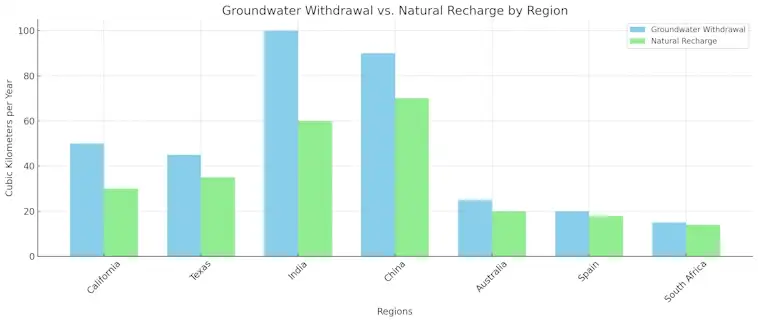
- Global ripple effects: Major aquifer systems around the world—from California’s Central Valley to India’s Indo-Gangetic Plain—are under threat. This isn’t just a local issue; it’s a global one.
Looking Ahead: What Can Be Done?
Solving aquifer depletion won’t be easy, but it’s not impossible. A mix of smarter policies, technology, and public awareness can make a difference.
Some promising solutions include:
- Better irrigation techniques: Drip irrigation and other water-saving methods can dramatically reduce groundwater use in farming.
- Recharge strategies: Some areas are experimenting with replenishing aquifers by directing stormwater or treated wastewater underground.
- Stronger regulations: Governments can help by monitoring groundwater withdrawals and enforcing sustainable limits.
- Public education: Awareness is the first step toward action. The more people understand aquifer depletion, the more pressure there will be for change.
Aquifer depletion is one of those invisible problems that sneaks up until it becomes a crisis. But by learning about it and advocating for smarter water use, we can help protect our water security—now and for future generations.
This isn’t just a story about groundwater. It’s a story about how we live, grow food, and build our world. And it’s one we all have a stake in.
Farms, Cities, and Thirst: Who’s Using Up Our Groundwater?
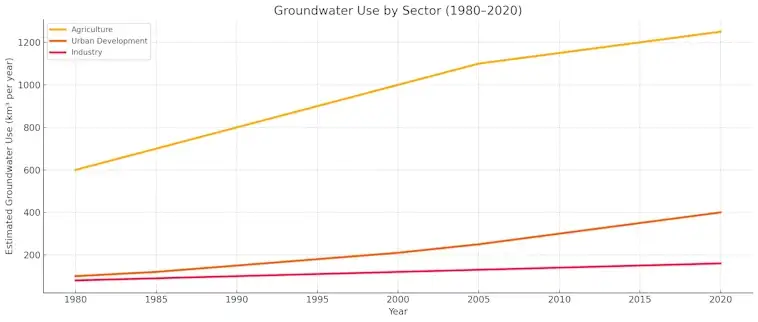
If you think groundwater is a worry only for farmers in remote areas, think again. Every time you wash your hands, drink a glass of water, or bite into a salad, chances are you’re tapping into underground water reserves. But these reserves—our aquifers—are being drained faster than they can naturally refill. The culprits? Agriculture, sprawling cities, and rising populations.
Groundwater isn’t an unlimited resource. It’s a lifeline for over two billion people worldwide. But right now, we’re using it like there’s no tomorrow. Let’s dig into how our daily needs and global demands are accelerating groundwater depletion—and what that could mean for the future of your water supply.
How Agriculture Becomes the Biggest Water User
The Hidden Cost of Feeding the World
Farming accounts for about 70% of all global freshwater use, most of which comes from underground aquifers. Crops like rice, wheat, and cotton—especially in arid or drought-prone areas—rely heavily on groundwater for irrigation.
- High water demand crops: Some of the most profitable crops (like almonds, sugarcane, and alfalfa) require massive amounts of water.
- Inefficient irrigation systems: In many regions, outdated flood irrigation wastes more water than it delivers to plants.
- Export-driven farming: Large-scale agriculture often exports water-intensive crops overseas, draining local aquifers for global markets.
Why it matters: When aquifers dry up, it’s not just a farming issue. It’s a food issue, and eventually, a global economic issue.
Urban Development: Cities on Thirst Mode
Building Over Recharge Zones
Cities aren’t just growing out—they’re growing down, into the water table. As urban areas expand:
- Concrete and asphalt replace soil, reducing rainwater absorption and natural aquifer recharge.
- High population densities lead to spikes in domestic water demand—from showers and toilets to washing machines and cooling systems.
- Industrial use ramps up, especially in manufacturing hubs where water is used for cooling, cleaning, and production.
Case in point: Cities like Mexico City, Jakarta, and Chennai are already experiencing severe groundwater depletion, leading to issues like sinking land (subsidence), cracked buildings, and water rationing.
Population Growth: More People, More Pressure
Every Drop Counts—And There Are Fewer to Go Around
The global population has more than doubled since 1970. More people means:
- More food to grow (hello, more irrigation).
- More homes to build (often over recharge areas).
- More water needed daily—for hygiene, cooking, and survival.
In many regions, groundwater is being used to meet short-term needs without plans for long-term sustainability. Once the aquifer is gone, it’s gone for good—or at least for centuries.
Why This Matters for Your Water Supply
Even if you live in a region with lots of rain or clean tap water, groundwater still plays a vital role:
- It buffers your local water system during dry spells.
- It feeds rivers and lakes, keeping ecosystems alive.
- It serves as a backup source when surface water runs low.
As aquifers dry up, you could face:
- Higher water bills due to deeper drilling and treatment costs.
- Reduced water quality, as the water table drops and salt or pollutants seep in.
- Water restrictions, especially during droughts or peak summer months.
What Can Be Done?
We don’t have to stand by and watch the wells run dry. Here’s how we can start turning the tide:
For Agriculture:
- Shift to efficient irrigation methods like drip systems.
- Support water-wise crop choices and regenerative farming.
- Encourage policies that reward conservation, not overuse.
For Cities:
- Protect green spaces and recharge zones.
- Invest in smart water infrastructure to reduce leaks and waste.
- Promote water recycling and reuse, especially in industry.
For Everyone:
- Use water mindfully—every drop adds up.
- Support leaders and policies focused on sustainable water management.
- Stay informed. Share what you know.
Groundwater is the planet’s hidden treasure—but it’s not infinite. Farms feed us, cities grow with us, and populations push us forward. But without thoughtful planning and responsible use, we risk drying out the very foundation of our future.
This isn’t just a conversation for scientists or farmers. It’s for everyone who turns on a faucet and expects water to come out. Because at the end of the day, we’re all drinking from the same well.
The Hidden Costs of a Sinking Water Table
When we talk about groundwater loss, most people think of empty wells or parched farmland. But the truth runs deeper—literally. As the water table sinks, it triggers a domino effect of hidden costs. We’re not just losing water; we’re damaging infrastructure, sinking land, and draining our wallets.
Beneath our feet, a slow-motion crisis is unfolding. Falling groundwater levels are reshaping the ground we walk on and the systems we rely on. And the impacts are starting to show up in places you wouldn’t expect—from cracked roads to higher water bills.
What Is the Water Table—and Why Is It Sinking?
The water table is the level below the ground where the soil or rock is fully saturated with water. It’s a crucial part of the natural water cycle and supplies drinking water for billions of people.
When we withdraw more groundwater than nature can replace, the water table drops. And when this happens consistently over time, it sets off a chain of environmental and economic problems.
The Real-World Consequences of a Falling Water Table
Let’s explore what happens when the water below runs out—and why it’s costing us far more than we think.
1. Land Subsidence: The Ground Is Actually Sinking
- As groundwater is pumped out, the land above can collapse or sink—a process called land subsidence.
- It happens when the empty spaces that once held water compact, causing the surface to lower.
- Some areas have sunk by several meters over decades, especially in places like California’s Central Valley, Mexico City, and parts of China and India.
Why it matters:
- It’s irreversible. Once the land compacts, it loses its ability to hold water in the future.
- It increases flood risk in low-lying areas.
- It can crack foundations, roads, and bridges, creating long-term safety hazards.
2. Damaged Infrastructure: Roads, Pipes, and Buildings at Risk
A falling water table doesn’t just affect farmland—it can crack the very bones of a city.
- Sewer lines and water pipes can bend, break, or collapse.
- Roadways and sidewalks may buckle or become uneven, leading to costly repairs.
- Buildings and homes may experience structural damage, including cracked walls and sinking foundations.
Bottom line: As the ground shifts, so do the systems built on top of it—and repairing them isn’t cheap.

3. Rising Costs for Water Extraction
As the water table sinks, wells have to dig deeper. That means:
- Higher drilling costs to reach deeper water.
- More energy needed to pump water from greater depths.
- More frequent equipment failures, as pumps strain under the pressure.
Result: Communities, farmers, and households end up paying more just to access the same amount of water.
4. Decreased Water Quality
As deeper layers of groundwater are tapped, water often contains more minerals, salts, or even pollutants.
- In coastal areas, this can lead to saltwater intrusion, where seawater contaminates fresh groundwater.
- In agricultural regions, deeper wells may draw up water with higher nitrate levels from fertilizers.
This leads to:
- Health concerns from poor drinking water quality.
- More expensive filtration and treatment, both at municipal and household levels.
A Cost We Can’t Afford to Ignore
The costs of a sinking water table go far beyond the loss of water itself. They ripple out into our economy, our infrastructure, our health, and our environment. And while these impacts may be hidden at first, they eventually become painfully visible—and expensive.
What Can Be Done?
Preventing further groundwater depletion requires a mix of awareness, innovation, and action.
- Better water management: Monitoring usage, enforcing limits, and promoting sustainable policies.
- Recharge projects: Capturing rainwater and redirecting it to refill aquifers.
- Smart infrastructure planning: Designing cities and buildings that account for ground movement and protect recharge zones.
- Conservation and efficiency: Encouraging responsible water use in agriculture, industry, and homes.
A sinking water table isn’t just an environmental issue—it’s a ticking time bomb under our cities, farms, and homes. The hidden costs are adding up fast, and we’re all footing the bill in one way or another.
But with smarter choices and shared responsibility, we can protect our underground lifeline. Because once the ground starts shifting, it’s not just wells that go dry—it’s the foundation of everything we depend on.
Can Technology Save Our Aquifers?
From smart irrigation systems to underground recharge projects, there’s a lot of excitement about how technology could help us solve the groundwater crisis. And there’s good reason for optimism—innovation has always played a big role in managing natural resources. But can technology alone save our aquifers?
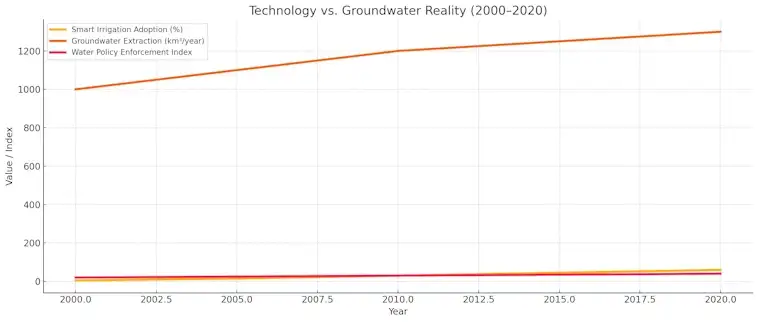
Here’s the hard truth: while tech solutions hold great promise, they can’t fix everything. Not when groundwater is being drained faster than ever. Not when policies lag behind science. And not when the will to act isn’t keeping pace with the urgency of the problem.
This isn’t a story about gadgets and apps. It’s about choices, priorities, and what happens when modern tools meet old habits.
The Promise: What Technology Can Do
Let’s start with the good news—there’s a wave of innovation aimed at protecting groundwater. These tools are smarter, faster, and more efficient than ever.
1. Smart Irrigation Systems
- Sensors and AI-driven software help farmers water crops only when and where needed.
- Drip and precision irrigation significantly reduce water use, especially in water-stressed areas.
- Remote monitoring gives real-time feedback, helping prevent overuse.
2. Aquifer Recharge Projects
- Some regions are using “managed aquifer recharge” (MAR) to redirect rainwater and treated wastewater back into underground reservoirs.
- Urban areas are redesigning parks and public spaces to double as stormwater catchment zones.
3. Water Data Platforms
- Governments and researchers are creating open-access maps and dashboards to track groundwater levels and usage patterns.
- These platforms help in early warning systems and smarter policy design.
4. Desalination and Recycling
- In some regions, desalination and wastewater recycling are reducing pressure on aquifers by providing alternative water sources.
- Though energy-intensive, they are becoming more cost-effective as tech improves.
The Hype: What Technology Can’t Do—Alone
Despite the promise, there’s a real danger in putting too much faith in technology alone.
1. It Doesn’t Address Overuse at the Root
- Most tech solutions improve efficiency—but if water continues to be over-extracted, efficiency alone won’t solve the problem.
- “Efficiency paradox”: More efficient use can lead to more use overall, not less.
2. It’s Not Equally Available
- Wealthy regions and large-scale farms often benefit most from new technologies.
- Smallholder farmers and developing regions are often left out due to cost and access gaps.
3. It Can’t Replace Governance
- No tool can substitute for effective water laws, regulation, and enforcement.
- In many areas, aquifers are unregulated, and water is pumped with no limits or monitoring.
4. Behavior Still Matters
- Technology can help you save water, but it can’t make you care.
- Without public awareness and behavior change, even the best tools fall short.
The Hard Truth: We Need More Than Just Innovation
Yes, technology is part of the solution. But it’s only as effective as the systems and decisions behind it.
What’s Still Missing:
- Strong, enforceable policies to regulate groundwater extraction.
- Cross-border cooperation where aquifers span nations.
- Public investment in water infrastructure—not just innovation for profit.
- Cultural shifts in how we value water.
We also need to stop seeing groundwater as an endless resource. It’s not. And the longer we delay action, the more expensive and painful the consequences will be.
A Hopeful Path Forward
Despite the challenges, there is a path forward—if we’re willing to walk it.
Combine Innovation With Action:
- Pair smart farming tools with groundwater caps.
- Use public data tools to hold governments and corporations accountable.
- Encourage community-led water monitoring to drive grassroots engagement.
Focus on Equity:
- Make sure water-saving technologies are affordable and accessible to all.
- Fund education and training programs that help smaller farmers adapt.
Push for Political Will:
- Support leaders who prioritize sustainable water policy.
- Push for national groundwater plans and climate-resilient strategies.
So—can technology save our aquifers? Not by itself. But it can help, in powerful ways, if we match it with smart policy, public support, and global urgency.
Innovation can give us tools. But saving our water depends on how we use them—and whether we’re brave enough to change the systems that got us here in the first place.
Because when it comes to groundwater, we’re not just running out of water—we’re running out of time.
What You Can Do About Aquifer Depletion—Starting Today
Imagine turning on your faucet one day—and nothing comes out. No water to drink, to grow food, or to flush toilets. This isn’t science fiction. It’s the growing reality in many parts of the world due to aquifer depletion—when we pump more groundwater than nature can replace.
Aquifers are underground reservoirs that store water in rocks and soil. They’re a hidden but essential part of our water system. In fact, they supply nearly half the world’s drinking water and more than 40% of water used for irrigation. But as droughts become more common and water demand rises, aquifers are drying up.
The good news? We’re not powerless. Whether you’re an individual, part of a community, or a local leader, there are meaningful steps you can take right now.
Small Actions, Big Impact: What You Can Do Today
1. Cut Everyday Water Waste
Reducing your personal water use matters more than you think.
- Fix leaks immediately. A dripping tap can waste over 3,000 gallons a year.
- Install low-flow fixtures like showerheads and toilets.
- Turn off the tap while brushing your teeth or washing dishes.
- Use dishwashers and washing machines only when full.
2. Landscape Smarter
Outdoor watering is often the biggest water use in homes, especially in dry regions.
- Choose native or drought-tolerant plants that need less watering.
- Water early or late in the day to minimize evaporation.
- Install drip irrigation systems to target plant roots directly.
3. Support Smart Water Policies
Laws and regulations shape how much water we use—and how we protect it. Get involved.
- Vote for candidates who support sustainable water management.
- Encourage local governments to track and manage groundwater use.
- Support water reuse initiatives like gray water systems or recycled wastewater.
4. Educate and Engage
Change starts with awareness.
- Talk about aquifer depletion with friends, family, and neighbors.
- Share articles, infographics, or short videos on social media.
- Organize or attend local workshops or town hall meetings on water issues.
5. Push for Innovation
The future of water conservation lies in smarter tech and planning.
- Advocate for smart water meters in your city. These help detect leaks early and monitor use.
- Support businesses and farms using precision irrigation and soil moisture sensors.
- Encourage local schools to teach water literacy starting in elementary grades.
6. Protect Recharge Zones
Aquifers refill naturally through recharge zones—places where rain and runoff seep into the ground.
- Oppose development projects that pave over open land and prevent water infiltration.
- Promote green infrastructure like permeable pavement and rain gardens in your area.
- Volunteer for or donate to wetland restoration projects that help recharge groundwater.
Every Drop Counts—And So Do You
Aquifer depletion is a massive challenge, but not an impossible one. When individuals, communities, and governments come together, we can reverse the damage and build a more resilient water future.
Start small. Talk about it. Take action. Protecting our underground water lifelines begins today—with you.
Conclusion
Aquifer depletion isn’t just a distant threat—it’s a clear warning that we’re using more than nature can give back. As water tables drop, the risks to farming, drinking water, and ecosystems grow more severe. This crisis affects all of us, whether we live in big cities, small towns, or rural farmland.
But there’s still time to change course.
With smarter water use, better policies, and greater public awareness, we can protect these underground reserves for generations to come. Every choice—from how we water our lawns to how we vote—can help rebuild the balance between what we take and what we give back.
The future of water security depends on action, not just concern. And the shift starts right now, with each of us doing our part.