

Solar Cycles: The Cosmic Clock That Might Be Ticking for Earth’s Climate
Solar Cycles: The Cosmic Clock That Might Be Ticking for Earth’s Climate
The Sun isn’t just the giver of light and warmth—it’s also running on a clock of its own. That clock, ticking in cycles of roughly 11 years, is known to scientists as the solar cycle. It’s a pattern that brings peaks and lulls in the Sun’s activity, like sunspots, solar flares, and bursts of radiation.
For decades, researchers have been watching these rhythms, asking a big question: could these cosmic patterns be nudging Earth’s climate in subtle, and not-so-subtle, ways? Some clues suggest they might.
Many people think of climate change purely in terms of greenhouse gases and human activity. While these are undoubtedly major players, the solar cycle adds another layer—a natural pulse that might amplify or mask what’s happening in our atmosphere.
Understanding the Sun’s clock isn’t just about astronomy—it’s about seeing the whole picture when it comes to climate. Could this ancient rhythm still be steering Earth’s climate more than we realize?
The Sun’s Hidden Rhythms: More Than Just a Ball of Fire
When you glance up at the sky on a sunny day, it’s easy to think of the Sun as a reliable, almost boring constant in our lives. It rises. It sets. It warms our skin and lights our days.
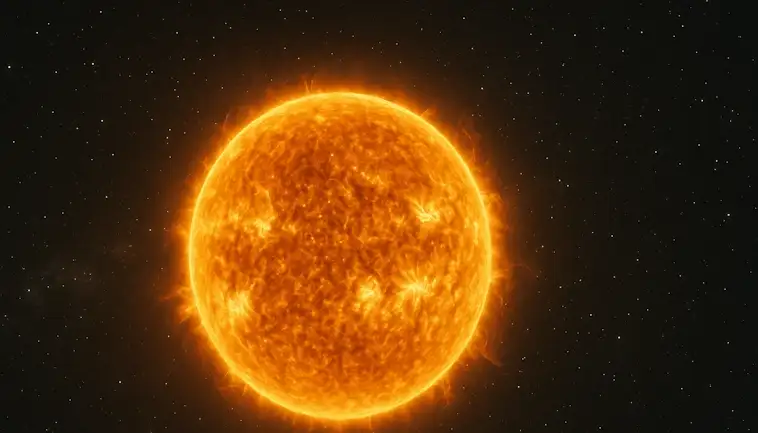
But that comforting glow hides a more mysterious truth: the Sun is not the steady, unchanging orb it appears to be. In reality, it’s a wildly dynamic ball of hot plasma, pulsing with patterns and cycles that have puzzled and fascinated humanity for millennia.
These subtle rhythms—once noticed only by the most patient sky-watchers—are now key to modern space science. They don’t just affect our view of the sky, either. They ripple across space, sometimes reaching Earth in ways that can disrupt power grids, knock out satellites, and even mess with your GPS.
Let’s step back in time—and into the future—and explore how humans have tried to make sense of the Sun’s cosmic “heartbeat.”
The Solar Cycle: The Sun’s 11-Year Pulse
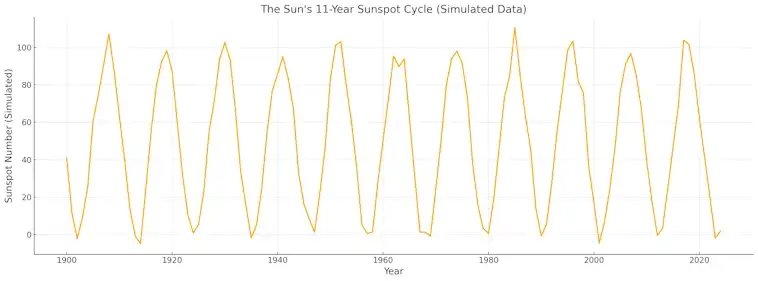
One of the best-known patterns is the solar cycle, an approximately 11-year rhythm where the Sun’s magnetic activity rises and falls. During solar maximum, the Sun is covered in sunspots—dark, cooler patches where magnetic fields are tangled and intense. At solar minimum, these spots virtually disappear, and the Sun seems calmer.
But here’s the twist: these cycles aren’t just for show.
- Sunspots and Flares: When the Sun is at its most active, it doesn’t just display more sunspots. It also throws tantrums in the form of solar flares and coronal mass ejections (CMEs). These are bursts of energy and charged particles that can travel all the way to Earth, sometimes triggering beautiful auroras—or disruptive geomagnetic storms.
- Not Always Exactly 11 Years: Though we often call it an 11-year cycle, the truth is, the length can vary between 9 and 14 years. And scientists still aren’t entirely sure why.
- A Magnetic Flip: Perhaps most fascinating of all? With every cycle, the Sun’s magnetic field actually flips. North becomes south, and south becomes north. It’s a reminder that the Sun’s surface is a lot more like a boiling pot of magnetic spaghetti than a smooth, glowing orb.
Ancient Sky-Watchers and Modern Sun Chasers
Our fascination with the Sun’s patterns is nothing new.
- Ancient Clues: Ancient civilizations carefully watched the sky, noting the Sun’s moods. The Chinese, Babylonians, and early European cultures recorded sunspots long before telescopes. They saw them as omens—sometimes of fortune, sometimes of doom.
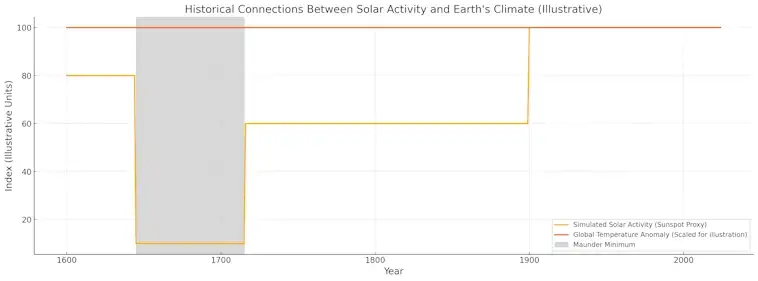
- Medieval Mysteries: In the 17th century, scientists noticed a strange lull in sunspot activity, known as the Maunder Minimum. This period, lasting from about 1645 to 1715, coincided with the Little Ice Age, when Europe shivered through colder-than-usual winters.
- Today’s Space Weather Forecasters: Now, scientists armed with satellites and solar telescopes track the Sun’s every move. They study these patterns not just for curiosity, but because they matter for our modern, tech-reliant world. Predicting the next solar storm is becoming as critical as forecasting the weather on Earth.
Why It Still Matters—and What’s Next
Understanding the Sun’s rhythms isn’t just an academic exercise. Solar storms can disrupt global communications, aviation, navigation, and even threaten astronauts in space. And with the Sun now climbing toward another solar maximum in the mid-2020s, researchers are on high alert.
But beyond the practical risks, there’s something poetic about these cycles. They remind us that the Sun has its own story—a story of change, of rhythm, of cosmic breath.
And by studying these patterns, we’re not just preparing for solar tempests. We’re continuing a timeless human tradition: looking to the sky, wondering, and trying to decode the heartbeat of the universe.
When the Sun Sneezes, Does Earth Catch a Cold?
It might sound dramatic, but our planet’s fate is closely tied to the moods of our star. While we often think of Earth’s climate as a mostly Earth-driven system—shaped by greenhouse gases, ocean currents, and cloud patterns—the Sun plays an often-overlooked role in this cosmic ballet.
The Sun is, after all, the Earth’s life-giver. Yet it’s also a sometimes-rowdy performer, throwing off powerful solar flares, sending massive clouds of charged particles toward our planet, and varying its radiant warmth in subtle but impactful ways.
These solar tempests and rhythms don’t just light up the sky with auroras. They might also tug on Earth’s atmosphere, nudge ocean currents, and perhaps even whisper into the long-term story of climate change.
Let’s dive into the fascinating, sometimes fiery, relationship between the Sun’s moods and Earth’s climate.
Solar Flares and CMEs: The Sun’s Temper Tantrums
Think of solar flares and coronal mass ejections (CMEs) as the Sun’s cosmic sneezes. When they erupt, they send waves of energy and charged particles streaming into space. Sometimes, Earth stands right in the splash zone.
- Magnetic Shakes: When these blasts reach Earth, they can jostle our planet’s magnetic field. While this mostly affects satellites and radio signals, some scientists wonder if these energetic outbursts might also stir the upper atmosphere and subtly tweak weather patterns.
- Atmospheric Ripples: There’s even evidence that intense solar storms can temporarily heat the upper atmosphere, causing it to puff up slightly—like a balloon in the Sun. This can change how energy flows through the atmospheric layers, although the effects on weather at the surface remain a topic of debate.
The Sun’s Dimming and Brightening: A Cosmic Dimmer Switch
While solar flares are dramatic, perhaps more intriguing is the quieter, slower heartbeat of the solar cycle—the Sun’s waxing and waning activity over roughly 11 years. During times of high activity (solar maximum), the Sun shines just a little brighter. During low activity (solar minimum), it dims ever so slightly.
- Not Just Light, But Energy: This change might seem tiny—about 0.1% difference in total solar radiation—but when you’re dealing with a star that powers an entire planet, even small shifts can have outsized effects.
- Cloud Puppeteers?: Some theories suggest that during solar minimum, when the Sun’s ultraviolet output dips, it might change the way clouds form by altering the chemistry of the upper atmosphere. Clouds, in turn, are powerful climate levers, reflecting sunlight and cooling the Earth.
Historical Clues: The Sun’s Quiet Moods and the Little Ice Age
History gives us some compelling hints that the Sun’s quieter phases have had earthly consequences.
- The Maunder Minimum: Between 1645 and 1715, the Sun entered an unusually quiet phase. Astronomers of the time recorded almost no sunspots. This era, known as the Maunder Minimum, coincided with the Little Ice Age—a period when Europe and parts of North America endured bitterly cold winters, frozen rivers, and failed crops.
- Sunspots and Climate Dips: Though cause and effect remain debated, many scientists believe that this solar lull played at least some role in the cooling, perhaps by reducing solar energy reaching Earth or by influencing atmospheric circulation patterns.
Could the Sun Still Be a Climate Player Today?
Here’s the million-dollar question: Could the Sun’s moods still be influencing our climate in the age of human-driven warming?
- Yes, but… Scientists agree that the Sun does impact Earth’s climate—but most studies suggest that its role in today’s rapid warming is small compared to greenhouse gas emissions.
- Watching the Sky: That said, understanding the Sun’s cycles remains crucial. The next deep solar lull or unexpected burst of activity could temporarily tip the climate’s scales, or intensify certain regional patterns.
In short, the Sun might not be the main conductor of today’s climate orchestra, but it’s still playing an important, if sometimes overlooked, instrument in the background.
And as we push deeper into the 21st century, keeping an eye on both the skies and our own emissions might be the wisest approach. After all, the Sun may not be the only actor in Earth’s climate drama—but it remains a star worth watching.
Solar Cycles and Climate Change: Friends, Foes, or Just Coincidence?
In the age of rapid climate change, the question often arises: How much of Earth’s warming is caused by us, and how much might be driven by the Sun?
It’s a question with deep roots—and plenty of heat.
For centuries, people have looked to the sky to explain Earth’s shifts in weather and climate. And for good reason. The Sun is the ultimate engine of life on Earth. It powers the seasons, feeds the plants, and drives the winds and oceans.
But in the last century, as Earth’s temperature has risen sharply alongside skyrocketing greenhouse gas emissions, the debate has sharpened.
Could the Sun still be calling the shots, or have humans become the dominant force behind Earth’s changing climate?
The answer, as with many things in science, isn’t black and white. It’s a complicated, evolving story.
View 1: The Sun’s Influence Is Modest—but Still Matters
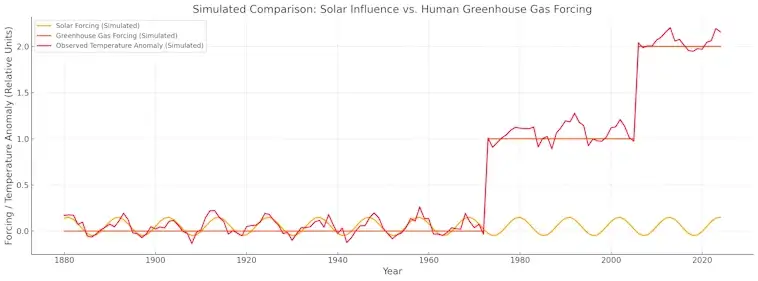
Most climate scientists agree on one key point: Since the mid-20th century, the overwhelming driver of global warming has been human-caused greenhouse gases, especially carbon dioxide from burning fossil fuels.
- Evidence from Models and Observations: Climate models that include only solar variations can’t explain the rapid rise in temperatures seen since the 1950s.
- Satellite Measurements: Since the late 1970s, satellites have measured solar radiation directly. These show only minor changes—too small to account for the warming we see.
- Fingerprint Studies: Scientists use “fingerprints”—distinct patterns of change in the atmosphere—to identify causes. Greenhouse gases warm the surface while cooling the upper atmosphere. Solar-driven warming would heat both. The observed pattern matches greenhouse gases, not solar influences.
In this view, the Sun still plays a role—modulating Earth’s natural cycles, impacting space weather, and influencing certain regional patterns—but it’s no longer the lead actor in the global warming story.
View 2: The Sun’s Role Might Be Underestimated
However, some researchers argue that the Sun’s influence might be more subtle and indirect than models currently account for.
- Amplification Theories: Some studies suggest that small changes in solar radiation might trigger larger effects through mechanisms we don’t fully understand, such as altering cloud formation, affecting ocean currents, or tweaking jet streams.
- Historical Patterns: Periods like the Maunder Minimum and the Little Ice Age are often cited as examples of the Sun’s ability to cool the planet, adding weight to the idea that the Sun can have outsized effects.
- Natural Variability: Advocates of this view often point to the complexities of Earth’s climate system and the possibility that the Sun’s role interacts with other natural cycles, such as El Niño or volcanic activity, in ways that are still poorly understood.
The Real Challenge: A Complex Climate Symphony
One reason the debate persists is that separating solar effects from human-driven ones is notoriously tricky.
- Overlapping Patterns: Solar cycles, volcanic eruptions, ocean currents, and greenhouse gases all influence the climate—often at the same time, sometimes reinforcing each other, sometimes masking each other.
- Modeling Both Together: Newer climate models are getting better at simulating both solar variability and human factors together. Recent studies attempt to untangle these overlapping influences, showing that while the Sun does play a role, the bulk of recent warming still points squarely to human activity.
- A False Either/Or?: Most experts urge caution against framing the debate as a simple contest between the Sun and human emissions. Climate is a messy, interconnected system. Both the Sun and humans influence it—but on different scales and through different mechanisms.
Where Science Stands Today—and What’s Next
Today, the scientific consensus is clear that human-caused greenhouse gases are the main driver of recent climate change. Yet, the Sun’s role—especially in modulating regional climates, influencing weather extremes, or contributing to natural variability—is an area of active research.
Looking forward, climate scientists are watching the Sun carefully. Could a future grand solar minimum temporarily cool Earth’s climate? Some models suggest yes—but not enough to counteract human-driven warming. Instead, such a dip might merely pause the warming for a short period—before the longer-term trend reasserts itself.
In the end, the climate story is less about the Sun vs. us, and more about understanding how all these forces—human and natural—interact in an ever-changing planetary system.
And as our tools and models improve, we might get even closer to untangling this intricate, cosmic dance.
The Cosmic Clock is Ticking: What the Next Solar Cycle Could Mean for Us
For thousands of years, humans have looked to the Sun not just for warmth and light, but for clues about what the future might hold.
Today, that curiosity is more urgent than ever.
As our technology becomes more intertwined with the rhythms of space, the Sun’s moods matter in new ways. From satellites and power grids to climate models and agriculture, understanding what the Sun might do next isn’t just for astronomers—it’s for all of us.
So where are we now in the Sun’s endless dance, and what might the next few decades bring?
Where We Are: Climbing Toward Solar Maximum
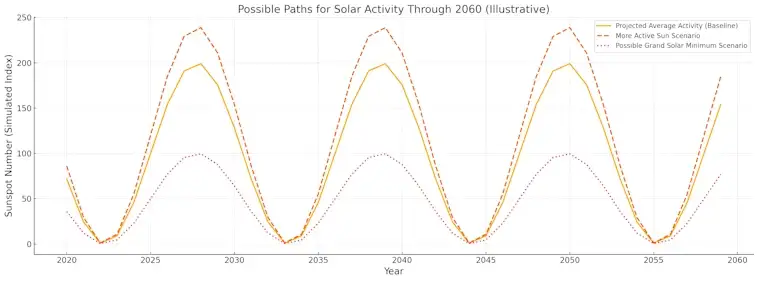
We are currently in Solar Cycle 25, which began in December 2019. According to NASA and NOAA, this cycle is expected to peak between 2025 and 2026. Early observations suggest that Cycle 25 might be slightly more active than initially predicted, with more sunspots, flares, and solar storms than seen in the relatively quiet Cycle 24.
- A Return to Higher Activity? This uptick is grabbing attention, especially after the quieter cycles of the early 2000s.
- No Grand Minimum on the Horizon (Yet): Some speculated a few years ago that we might be heading for a prolonged solar lull, similar to the Maunder Minimum. But recent data suggest the Sun is not showing clear signs of that—at least not yet.
Looking Ahead: What the Next Decades Might Hold
The truth is, predicting solar cycles decades in advance is tricky business. But based on current models and patterns, here are some possible scenarios:
- Continued Moderate Activity: Most forecasts lean toward average to slightly above-average solar activity through the 2030s and 2040s. This means we can expect occasional strong solar storms, but likely nothing extreme—unless the Sun surprises us.
- Grand Solar Minimum? Still Possible, But Unlikely Soon: Some models suggest that while a new grand minimum is possible in the future, it probably won’t occur until well after 2050, if at all.
- Impact on Earth’s Climate? Limited: Even if a quiet phase does occur, most scientists agree it wouldn’t be enough to offset human-driven warming, but it might temporarily cool certain regions or slightly ease the pace of warming.
Preparing for a Sun-Connected Future
Regardless of whether the Sun decides to be feisty or mellow, the next decades will require smart planning.
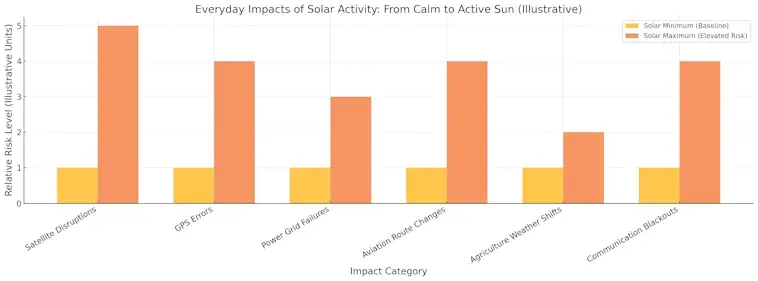
- Protecting Satellites and Power Grids: Strong solar storms can damage satellites, disrupt GPS, and overload power grids. Space agencies and utilities are investing in better early-warning systems and shielding technologies to protect our critical infrastructure.
- Space Weather Forecasting Gets Serious: New satellite missions, like NASA’s Parker Solar Probe and ESA’s Solar Orbiter, are giving scientists unprecedented close-up views of the Sun’s magnetic behavior. This could make future solar forecasts as routine—and essential—as weather forecasts on Earth.
- Agriculture and Aviation: Solar activity can affect crop yields indirectly through changes in weather patterns or by disrupting communication and navigation systems. Airlines, too, are watching the Sun carefully, especially for high-latitude flights vulnerable to solar radiation.
The Big Picture: A New Era of Solar Awareness
In the coming decades, the Sun will remain a wild card—but one we are better equipped than ever to monitor and understand.
Whether it’s a period of relative calm or an uptick in space weather chaos, our growing knowledge means we can prepare, adapt, and even thrive under the Sun’s sometimes unpredictable gaze.
After all, while the Sun may not be the puppet master of Earth’s modern climate, it’s still a cosmic force that deserves our attention—and respect.
Why Paying Attention to the Sun Still Matters in a Warming World
When people think about climate change today, the conversation quickly turns to carbon dioxide, fossil fuels, and melting ice sheets. And rightly so. Human emissions are reshaping our planet at a pace never seen before.
But in this urgent story, it’s easy to forget that the Sun—our ancient, fiery neighbor—is still on stage, still shaping the script in ways both obvious and subtle. While the spotlight is rightfully on human activity, the Sun continues to play a supporting, yet crucial, role in Earth’s climate drama.
In fact, some might say it’s a character we’ve started to take for granted.
Why the Sun Still Deserves Our Attention
Even if its role in the current climate story isn’t the headline, the Sun’s influence remains all around us—and sometimes shows up in surprising ways.
- Space Weather Impacts on Daily Life: Solar flares and coronal mass ejections can knock out satellites, disrupt GPS signals, or cause power grid failures. These aren’t just rare science fiction scenarios. In our hyper-connected world, the Sun’s tempers can ripple through banking systems, airline routes, and even agriculture supply chains.
- Agriculture and Growing Seasons: Shifts in solar activity can subtly influence weather patterns, jet streams, and ocean currents. Farmers, particularly in sensitive regions, might feel these changes long before they make headlines.
- Polar Flights and Astronaut Safety: Airlines now carefully monitor space weather forecasts, adjusting routes over the poles to protect passengers and pilots from increased radiation during solar storms. Astronauts on the International Space Station? They, too, are acutely aware of the Sun’s moods.
An Unpredictable Partner in a Changing World
One of the reasons the Sun deserves our respect is precisely because it’s still somewhat unpredictable.
We can track sunspots and solar flares, and forecast solar cycles within certain limits—but surprises still happen. A sudden, strong solar storm could throw a wrench in modern technology at any time. And if the Sun were to enter an unexpected quiet phase, it could briefly tilt regional climates in ways we’re only beginning to understand.
A Call for Curiosity—and Preparedness
In this era of climate urgency, it’s tempting to see the Sun as a background actor in Earth’s unfolding story. But it’s wiser—and more scientific—to view it as a dynamic, ongoing influence. It’s still part of the dance. And ignoring it would mean missing part of the picture.
That’s why scientists continue to launch solar missions, monitor the Sun’s every flicker, and improve space weather forecasting. It’s not just about curiosity. It’s about resilience.
About being ready for the Sun’s surprises.
And about embracing the fact that even in our human-dominated era, we’re still part of a larger, cosmic system—where the Sun, our ancient companion, continues to shape our world in ways both grand and granular.
Conclusion
The Sun has always been more than just a source of daylight. It’s a restless star with a rhythm of its own, ticking away in cycles that ripple through space and sometimes reach deep into Earth’s atmosphere, oceans, and climate.
While human actions are now the dominant force reshaping our world, the Sun remains an unpredictable player in this unfolding story. Its storms can disrupt the technologies we rely on. Its subtle rhythms might still influence weather patterns in ways we don’t fully grasp. And its long-term cycles remind us that Earth’s climate system is a dance between many partners—both human and cosmic.
Looking ahead, the real challenge is not choosing between the Sun or human-driven change, but recognizing how both forces shape our world together. Staying curious about the Sun’s rhythms, investing in better forecasting, and preparing our infrastructure for solar surprises will help ensure that we remain resilient—no matter how the cosmic clock ticks next.
In the end, the Sun isn’t just a backdrop to Earth’s climate story. It’s a living, breathing part of it. And it deserves our attention, our respect, and perhaps even a little awe.