

Lights Out, Planet Happy: Top Tips for Illuminating Your Home Efficiently
Lights Out, Planet Happy: Top Tips for Illuminating Your Home Efficiently
Bright, beautiful lighting can completely change the mood of your home. But when every switch adds to your energy bill—and your carbon footprint—it’s worth thinking smarter about how you light your space. The good news? Efficient lighting doesn’t mean settling for dim rooms or cold, lifeless bulbs. With the right choices, you can create a warm, inviting home that’s also kinder to the planet.
Lighting technology has come a long way. Today, it’s easier than ever to find beautiful options that are both stylish and sustainable. Whether you’re outfitting a new space or upgrading what you’ve got, a few smart changes can make a big difference.
Here’s how to light your home with intention—and save energy while you’re at it.
Let There Be (Smart) Light: The Power of LED and Automation
Lighting is one of those everyday things we don’t often think about. But what if we told you that a small change—like swapping out your old bulbs—could lead to real savings on your energy bill and a smaller environmental footprint? Let’s shed some light (pun fully intended) on why LED bulbs are such a smart switch and how adding a bit of tech can make your home both smarter and greener.
Why LED Bulbs Outshine the Rest
Traditional incandescent bulbs might have a warm nostalgic glow, but they’re energy hogs. Here’s how LEDs leave them in the dust:
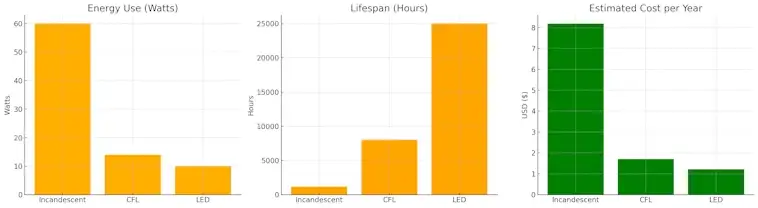
- Energy Efficiency: LEDs use up to 80% less energy than incandescent bulbs. That means less power wasted and more money in your pocket.
- Long Lifespan: An LED bulb can last 15 to 25 times longer than a regular bulb. That’s years without needing a replacement.
- Lower Heat Output: LEDs stay cool to the touch. Incandescents waste 90% of their energy as heat—LEDs avoid that.
- Better for the Planet: Using less energy means fewer greenhouse gas emissions. It’s a small change with a big climate impact.
Switching your entire home to LEDs is one of the easiest upgrades you can make—and it starts paying off right away.
How Smart Bulbs Take It Further
LEDs are great on their own, but pairing them with smart tech takes energy savings and convenience to the next level.
Smart Bulbs
These Wi-Fi or Bluetooth-enabled bulbs give you control right from your phone. You can:
- Turn lights on or off remotely.
- Dim them without a separate dimmer switch.
- Set timers or create custom schedules.
- Change colors to set the mood (great for movie nights or winding down).
The Bonus: They’re perfect for people who forget to turn lights off. (We’ve all been there.)
Motion Sensors
Why keep a light on if no one’s in the room? Motion sensors help:
- Automatically turn lights on when you enter and off when you leave.
- Work especially well in closets, hallways, bathrooms, and garages.
- Reduce wasted energy without needing you to lift a finger.
Lighting Schedules
Smart lighting apps let you automate everything:
- Schedule porch lights to turn on at dusk and off at dawn.
- Set bedroom lights to dim gradually at bedtime.
- Use vacation mode to make it look like someone’s home.
It’s all about saving energy and adding a layer of ease and safety to your life.
Small Switches, Big Wins
Switching to LED bulbs—and upgrading to smart lighting—might seem like a tiny move. But multiply that by every room in your house, every hour the lights are on, and every month of your electric bill, and it adds up fast.
Here’s what you get:
- Lower energy bills
- Longer-lasting products
- Less waste
- More control and comfort
You don’t need to overhaul your whole house at once. Start with one room. Try a motion sensor in the bathroom. Replace that porch light with a smart bulb. These small, simple switches can lead to big savings—and a brighter future for everyone.
Room by Room: Matching Light to Mood and Function
Lighting does more than help us see—it shapes how we feel in a space. It can energize or relax us, focus our attention or help us wind down. Yet many of us settle for one-size-fits-all lighting that’s either too harsh or too dim, wasting energy and missing out on comfort.
The good news? With just a bit of thought (and the right kind of bulb or fixture), you can tailor lighting to match the purpose and mood of each room. That means less wasted energy, more comfort, and a home that just feels better.
Let’s break it down room by room.
Bedrooms: Go for Warm and Cozy
Your bedroom is your retreat, not a spotlighted stage. Lighting here should help you relax, not rev you up.
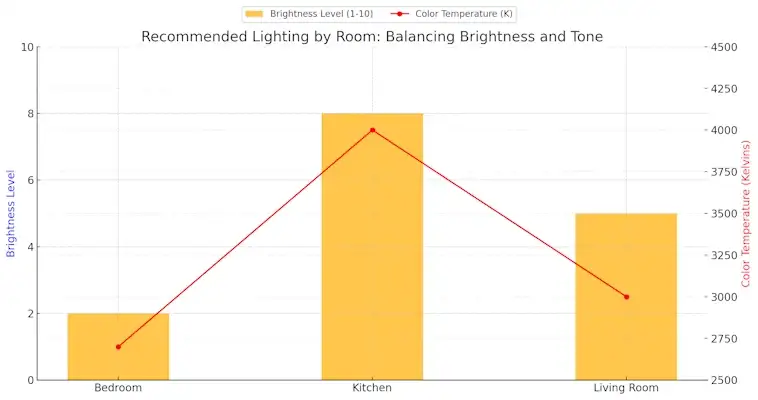
- Use soft, warm-toned bulbs (2700K is ideal) to create a calm atmosphere.
- Table lamps or wall sconces work great for bedtime reading—especially ones with dimmers or adjustable levels.
- Smart bulbs are perfect here. Schedule them to dim as bedtime approaches or shift color to help your body wind down.
A tip: Avoid bright overhead lights before bed—they send mixed signals to your brain about sleep.
Kitchens: Bright and Focused
The kitchen is a workspace, and it needs lighting that helps you see clearly and stay safe while cooking and prepping.
- Task lighting is key. Use under-cabinet LED strips to illuminate countertops and prep areas.
- Cooler color temperatures (3000K–4000K) keep things bright and energizing without feeling sterile.
- Overhead fixtures or recessed lights provide general illumination, but should be paired with more focused lights for key tasks.
A bonus: LEDs are great here because they stay cool and handle frequent on/off cycles without burning out.
Living Rooms: Layer It Up
Living rooms wear many hats. They host movie nights, family hangouts, quiet evenings, or lively gatherings. That means flexible lighting is a must.
- Start with ambient lighting—this could be a ceiling fixture or strategically placed floor lamps.
- Add task lighting for reading or hobbies, like adjustable lamps by chairs or couches.
- Accent lighting (like wall sconces or LED strips behind shelves) adds depth and highlights artwork or architectural features.
- Smart dimmers can shift the mood instantly—from bright and lively to soft and relaxing.
The goal here is layers. Think of lighting like music—sometimes you want bass, treble, and everything in between.
Why the Right Light Matters
Tailoring lighting isn’t just about aesthetics—it’s also about:
- Saving energy: You only use what you need, where you need it.
- Improving mood and productivity: Bright light helps with focus. Warm light helps you relax.
- Creating a sense of place: Lighting shapes the function and feel of each room.
So, don’t settle for one bulb to rule them all. Light your home like you live in it—with comfort, efficiency, and intention.
Sunlight Still Wins: Maximizing Natural Light All Year Round
Here’s something simple but powerful: sunlight is free. It’s bright, beautiful, and doesn’t cost a dime in electricity. And yet, many homes barely take advantage of it. We close the blinds, paint our walls dark, and flip the light switch at noon.
By learning how to harness more daylight, we can cut down on our energy use, reduce our electric bills, and create warmer, more inviting spaces. It’s about working with natural light—not against it.
Here’s how to make the most of what the sun already offers.
Bright Ideas for Bringing in More Natural Light
Use Mirrors to Reflect the Light
Mirrors aren’t just for checking your outfit—they’re excellent at bouncing daylight around a room.
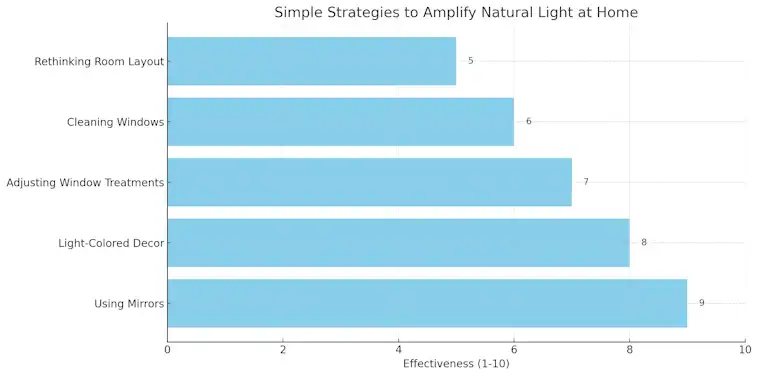
- Place a mirror opposite or adjacent to a window to reflect light deeper into the space.
- Try mirrored furniture, metallic décor, or even glass surfaces to increase reflection.
- Bonus: mirrors also make rooms feel larger and more open.
Choose Light-Colored Walls and Furniture
Dark colors absorb light, while lighter shades reflect it. That’s why a room with white or pale walls looks brighter even with less sunlight.
- Opt for whites, soft grays, or pastels on walls and ceilings.
- Choose light-toned wood or fabrics for furniture and rugs.
- If you love color, try it in smaller accents—like pillows or art—rather than large surfaces.
Update Your Window Treatments
Heavy drapes and dark blinds can block daylight without you realizing it. The fix is simple:
- Use sheer curtains or light-filtering blinds that let light in while offering privacy.
- Try top-down, bottom-up shades so you can let light in from above while covering the bottom for privacy.
- Keep window coverings fully open during the day, especially in south-facing rooms.
Clean Your Windows
It sounds obvious, but clean windows can let in noticeably more light. Dust, smudges, and grime act like a film, reducing brightness.
- Aim to clean them at least once a season—inside and out.
- Remove obstacles from windowsills or outside that block sunlight.
Rethink Room Layouts
You can also position your furniture to take advantage of sunlight.
- Put reading chairs or workspaces near windows so you rely less on lamps during the day.
- Avoid placing tall furniture (like bookshelves or wardrobes) in front of windows—they steal daylight.
The Benefits of Embracing Natural Light
Letting daylight do more of the work isn’t just smart—it’s good for your wallet and your well-being.
- Save energy: Fewer lights on during the day = lower electricity bills.
- Boost mood and focus: Natural light has been linked to better mental health and productivity.
- Support your body’s rhythm: Daylight helps regulate your sleep-wake cycle, especially in the morning.
- Make your home feel more alive: Sunlight brings warmth, dimension, and energy that artificial light can’t quite replicate.
Lighten Up—Literally
Shifting your home toward daylight-friendly design doesn’t require major renovations. Small updates—like swapping heavy curtains for sheers, adding a mirror, or choosing lighter paint—can make a big difference.
Start with one room. Notice the change. Enjoy the glow.
Because when we make the most of the light we already have, everything starts to look a little brighter.
Ditch the Vampire Lights: How to Cut Hidden Energy Use
You turn off your TV. You power down your game console. You flick the switch on your coffee maker. Done, right? Not quite.
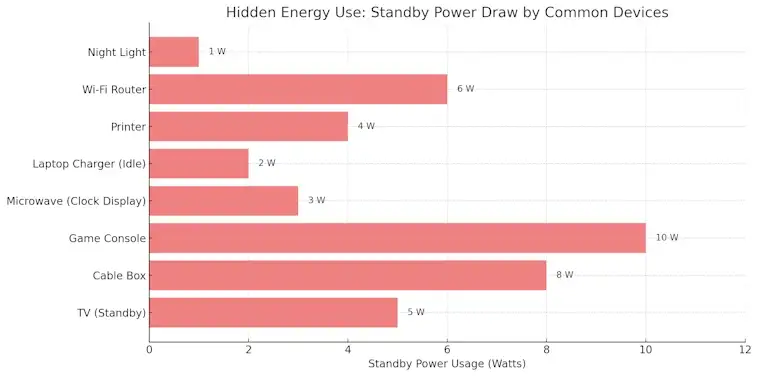
Many devices still sip electricity even when they’re supposedly off. That little red standby light on your TV? It’s quietly costing you. That nightlight in the hallway you never think about? It’s doing the same.
These small, silent energy drains are called phantom loads or vampire power, and they can add up to 5–10% of your home’s electricity use. It’s like paying for a service you’re not using—all day, every day.
But the good news? Once you spot the sneaky culprits, they’re easy to deal with.
Where Energy Hides: Common Phantom Load Offenders
Here are a few devices that often draw power even when not in use:
- Televisions (especially with standby modes)
- Cable boxes and streaming devices
- Microwaves and coffee makers (with clocks or displays)
- Chargers left plugged in (even if nothing’s charging)
- Gaming consoles
- Night lights and plug-in air fresheners
- Printers, scanners, and routers
Each one might use just a little power on its own—but together, they add up.
How Much Does It Really Cost?
Let’s break it down with an example:
- A TV in standby mode may use 5 watts.
- Left on 24/7, that’s 43.8 kilowatt-hours per year.
- At $0.15 per kWh, that’s about $6.50 a year—for just one device doing nothing.
Multiply that across 10+ devices, and you’re potentially looking at \$50–\$100 a year wasted on phantom power.
Simple Solutions to Kill the Vampires
Luckily, there are easy ways to stop the silent energy drain.
Unplug What You Don’t Use
- If you don’t use the toaster or blender every day, unplug them.
- Chargers? Unplug them when you’re not charging anything.
It’s old-school—but effective.
Use Smart Power Strips
- These strips automatically cut power to devices when they’re not in use.
- Some detect when a “master” device (like a TV) turns off, and then cut power to everything else (like speakers or consoles).
- Others are programmable or app-controlled.
Group and Control Devices by Zone
- Put all entertainment devices on one power strip.
- Same for computer gear in a home office.
- Turn everything off with a single switch or schedule.
Swap Out Night Lights and Plug-Ins
- Choose LED night lights with sensors that only turn on when needed.
- Or use motion-activated lights in hallways or bathrooms.
A Few Minutes = Real Savings
Tackling phantom loads doesn’t require rewiring your home. It just takes awareness and a few small habits:
- Scan each room for always-on devices.
- Plug them into smart strips.
- Unplug when not in use.
Think of it like finding loose change under the couch cushions—except it adds up year after year.
Turn Off, For Real
When it comes to cutting waste and lowering your power bill, it’s not always about big upgrades or expensive gadgets. Sometimes, it’s just about being smarter with what you already have.
Start with the things you thought were off. Because if they’re glowing, humming, or charging when you’re not looking—they’re still costing you.
Bright Future, Greener Planet: Building Better Lighting Habits
When it comes to saving energy at home, most of us think about the big stuff—solar panels, energy-efficient appliances, maybe smart thermostats. But what if the biggest savings came from the smallest daily habits?
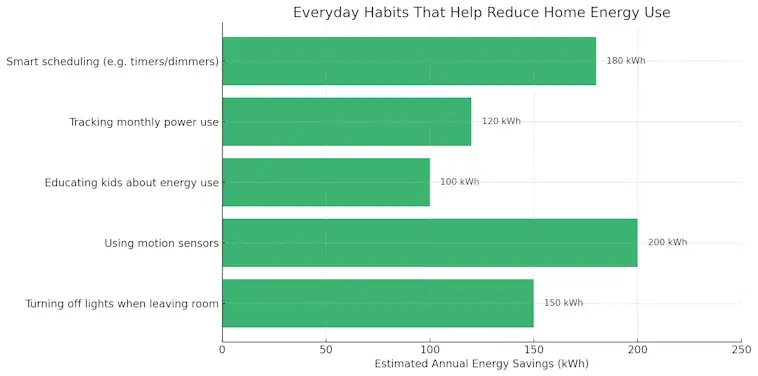
Turning off lights. Teaching your kids why energy matters. Keeping an eye on your power bill. These little actions are easy to overlook, but over time, they can make a real difference—to your wallet, your home’s carbon footprint, and even how your family thinks about energy.
And the best part? You don’t need fancy tools or a big budget to start. Just a bit of awareness and some simple routines.
Bright Habits for Smarter Living
Flip the Switch—Literally
This one’s basic, but it’s powerful: turn off the lights when you leave a room.
- It’s one of the easiest energy-saving habits you can build.
- Make it second nature, like closing the fridge or locking the door.
- Use reminder notes for kids (or forgetful adults) near light switches.
If you want some backup, install motion sensors in places where lights tend to be left on—like bathrooms, basements, or hallways.
Make It a Family Thing
Kids are quick learners—and great messengers.
- Teach them why saving energy matters, in simple terms: “We save power so the Earth stays happy—and our bills stay lower.”
- Turn it into a game: who can remember to turn off lights the most this week?
- Give them mini “energy manager” roles for fun and responsibility.
Creating awareness early helps raise energy-smart adults later.
Track Your Power Use Monthly
Knowing your energy use is the first step toward lowering it.
- Most utility companies let you view your energy use online or through an app.
- Track how much you use month to month, and look for patterns.
- Try setting small goals: “Let’s use 5% less this month than last.”
When you see the numbers, it’s easier to connect your daily habits to real savings.
A Quick Glimpse at the Future of Lighting
Energy-saving habits will always matter—but the future of lighting is getting even brighter:
- Solar-powered indoor lighting is on the rise, especially for daytime lighting in sunlit spaces.
- Smart home systems will increasingly automate efficiency, turning lights off when no one’s home—or adjusting brightness based on natural light.
- Energy tracking apps will get more advanced, offering real-time insights and personalized tips for saving even more.
In the not-so-distant future, your lighting could adjust itself to the time of day, your mood, and the weather—all while keeping your energy use low.
Keep It Simple. Keep It Consistent
Building energy-saving habits isn’t about being perfect—it’s about being aware. A few conscious actions every day can ripple into meaningful change over time.
So start small:
- Flip that switch.
- Talk to your family.
- Track your progress.
Because when we all do a little, it adds up to a lot—and that’s a future worth lighting up.
Conclusion
Lighting your home efficiently isn’t just about saving money—it’s about living with more intention and less waste. Every smart switch, every light turned off, and every daylight-filled room is a step toward a brighter, more sustainable future.
The best part? These changes are easy. They don’t require a total overhaul—just a few new habits, a little awareness, and the willingness to think differently about the way we use light.
So whether you’re swapping in an LED, unplugging a forgotten nightlight, or just opening the curtains a little wider each morning, you’re making a difference.
And when more of us start flipping the switch—both literally and in how we think—everyone wins. Including the planet.