

Pollen and Allergens What’s in the Air
Pollen and Allergens What’s in the Air
Spring air feels fresh—until the sneezing starts. For millions, the warmer months come with an invisible warning: pollen is in full swing. Whether it’s a tickle in your throat or a full-blown allergy attack, what’s floating in the air can seriously affect your day.
Allergens like pollen aren’t just a seasonal annoyance—they’re becoming a growing concern. As climate patterns shift, so does the way plants release pollen. That means longer seasons, more intense reactions, and a bigger challenge for anyone sensitive to airborne triggers.
It’s not just about managing symptoms anymore. Understanding what’s changing in the air around us is the first step to staying ahead of it.

What Is Pollen and Why Does It Trigger Allergies?
Spring rolls in with blooming flowers, longer days—and for many, a stuffy nose and endless sneezing. If that sounds familiar, you’re not alone. Millions of people react to something you can’t even see: pollen. But what exactly is pollen, and why does it turn a nice day outdoors into a sneezy mess for so many? Let’s break it down.
What Is Pollen?
Pollen is a fine powder made by plants. It’s essential for plant reproduction, helping flowers and trees grow new generations. Plants release pollen into the air so it can travel—sometimes for miles—looking for another flower to fertilize.
You can think of it as nature’s version of matchmaking.
Where Does Pollen Come From?
There are three main plant types that produce the most pollen that bothers people:
- Trees – especially in spring (like oak, birch, and maple)
- Grasses – common in late spring and summer (like Bermuda or ryegrass)
- Weeds – such as ragweed, especially in late summer and fall
These plants release large amounts of lightweight pollen into the air. That makes it easy for the wind to carry it—and for you to breathe it in.
Why Does Pollen Affect People?
Here’s where your immune system comes in. For most people, pollen is harmless. But if you have a pollen allergy (also called hay fever or seasonal allergic rhinitis), your immune system sees it as a dangerous invader—like a virus or bacteria.
To fight back, your body launches a defense:
- It releases chemicals like histamine
- This causes inflammation in your nose, eyes, and throat
That’s why you sneeze, get itchy or watery eyes, and feel congested. It’s your body overreacting to something that isn’t actually a threat.
A Common Problem That’s Getting Bigger
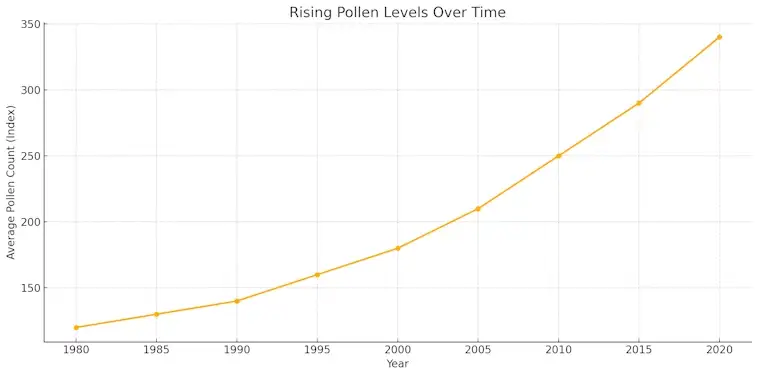
Pollen allergies affect tens of millions of people, and the numbers are rising. One reason? Climate change. Warmer temperatures and longer growing seasons mean plants produce more pollen—and for more days each year.
More pollen in the air means more people are affected, and symptoms last longer.
When Pollen Strikes: Understanding Allergy Seasons
If you’ve ever wondered why your allergy symptoms hit hardest in certain months—or why your friend suffers in spring while you’re fine until fall—it all comes down to timing. Different types of plants release pollen at different times of the year. This creates pollen seasons, and knowing when each one peaks can help you prepare and feel better.
The Pollen Calendar: What Blooms When
Pollen isn’t a year-round problem for most people. But it comes in seasonal waves, depending on what plants are growing where you live.
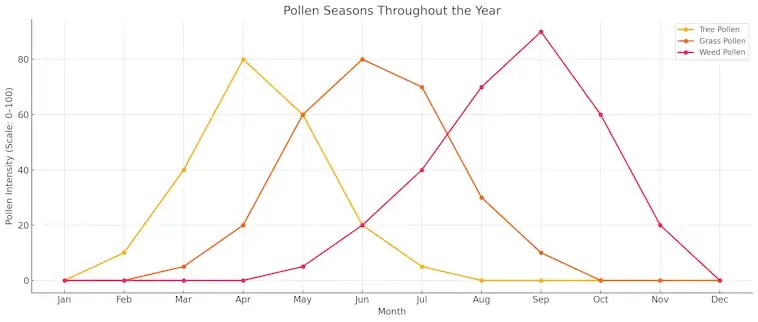
Spring: Tree Pollen Takes Over
- Timing: March through May (sometimes earlier in warmer areas)
- Main offenders: Oak, birch, maple, cedar, elm
- What to expect: Sneezing, runny nose, itchy eyes as trees wake up and flood the air with pollen
Spring is often the worst season for allergies. Trees release massive amounts of pollen all at once, and it travels far.
Late Spring to Summer: Grass Pollen Arrives
- Timing: May through July
- Main offenders: Timothy, ryegrass, Bermuda, Kentucky bluegrass
- What to expect: Persistent sneezing and congestion, especially during mowing or outdoor activities
Grass pollen doesn’t travel as far as tree pollen, but it’s close to the ground—right where we breathe.
Late Summer to Fall: Weeds Take the Lead
- Timing: August through October
- Main offenders: Ragweed (a major one), sagebrush, pigweed, and tumbleweed
- What to expect: Runny nose, sinus pressure, and even asthma symptoms in some people
Ragweed alone can produce up to a billion grains of pollen per plant—and it can travel hundreds of miles.
The Role of Climate Change
Here’s the tricky part: pollen seasons aren’t as predictable as they used to be.
- Warmer temperatures cause plants to bloom earlier in the year.
- Longer growing seasons extend how long pollen is in the air.
- More CO₂ in the atmosphere helps plants produce even more pollen.
That means:
- Allergy seasons are starting sooner.
- They’re lasting longer.
- And symptoms can be more intense.
For allergy sufferers, this isn’t just annoying—it’s a growing health concern.
Knowing when each type of pollen peaks can help you plan better, manage symptoms, and enjoy more of the year without sneezing through it.
The Invisible Enemy: Common Indoor and Outdoor Allergens
Ever shut your windows, stayed inside, and still couldn’t stop sneezing? If you thought escaping pollen was as simple as staying indoors, you’re not alone—and you’re not wrong. But the truth is, pollen isn’t the only allergen out there. Your home might be hiding other invisible triggers, and sometimes these allergens work together to make symptoms even worse.
Let’s look at the most common indoor culprits and how they can team up with pollen to keep your allergies going strong.
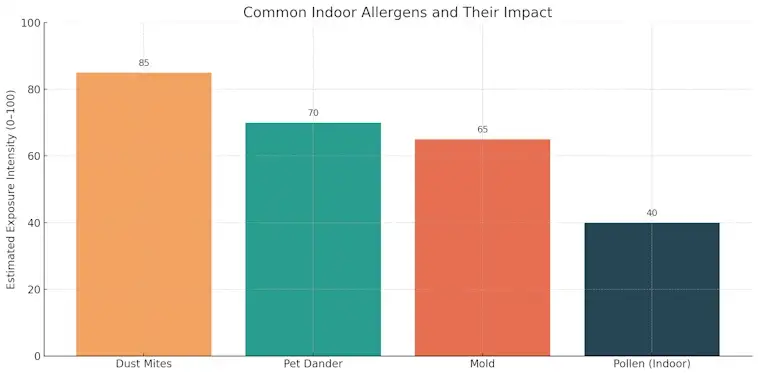
Dust Mites: Microscopic but Mighty
- What they are: Tiny bugs that feed on dead skin cells
- Where they live: Bedding, carpets, upholstered furniture, stuffed animals
- How they affect you: Their waste particles float in the air and can cause year-round allergic reactions
Fun fact (or not-so-fun): Even the cleanest homes have dust mites. They thrive in warm, humid environments—like your bed.
If you’re already reacting to pollen, exposure to dust mites can make symptoms feel more intense.
Pet Dander: Not Just Fur
- What it is: Tiny flakes of skin, saliva, or urine from cats, dogs, and other furry pets
- Where it sticks: Everywhere—floors, furniture, clothes, air ducts
- How it causes trouble: These particles are light and sticky, and they linger in the air for hours
If your pet goes outside, they may also carry pollen indoors on their fur. So now you’ve got dander and pollen in your home.
Mold: The Hidden Threat
- What it is: A type of fungus that releases spores into the air
- Where it grows: Damp areas like bathrooms, kitchens, basements, and around leaky pipes or windows
- How it affects you: Mold spores can trigger allergic reactions similar to pollen—sneezing, coughing, and itchy eyes
Mold becomes especially problematic in spring and summer, when humidity rises.
How Allergens Sneak Inside
Even if you’re keeping the windows shut, allergens can still find a way in:
- Open windows or doors: Especially during peak pollen seasons
- Clothing and shoes: Pollen sticks to fabric and gets brought inside
- Pets: They act like little allergen magnets, tracking in pollen and mold from outside
- HVAC systems: If filters aren’t changed regularly, they can circulate allergens throughout your home
Why This Matters
If you’re sensitive to more than one type of allergen (which many people are), your symptoms can get worse—indoors and out. It’s called the “allergic load”: the more allergens your body faces at once, the harder it is to keep reactions under control.
So if pollen’s got your nose running and you’re also reacting to dust mites or pet dander, it’s no wonder you feel miserable—even while binge-watching indoors.
Taming the Triggers: How to Manage Allergies Day-to-Day
Allergies might feel like they’re in control—but they don’t have to be. Whether your triggers come from trees, grasses, pets, or dust, there are smart, science-backed ways to reduce symptoms and breathe easier. You don’t have to suffer through the season with a box of tissues and wishful thinking. Small changes and the right tools can make a big difference.
Let’s break down the most effective ways to fight back against allergens—indoors, outdoors, and with medical support.
Daily Habits That Make a Difference
These everyday actions can reduce how much pollen and other allergens reach you:
- Check the daily pollen forecast. Websites and weather apps often include pollen levels. If it’s high, limit time outdoors, especially in the morning when pollen peaks.
- Keep windows closed—especially on windy days. As tempting as fresh air is, it can fill your home with pollen and mold spores.
- Use an air purifier with a HEPA filter. These can remove over 99% of airborne allergens in your home.
- Change clothes and shower after being outside. Pollen clings to clothing, skin, and especially hair. A quick rinse can keep it from spreading to your furniture and bedding.
- Vacuum and dust regularly using a HEPA filter. This helps reduce indoor allergens like dust mites and pet dander.
- Wash bedding weekly in hot water. This kills dust mites and removes settled pollen or dander.

Medical Options: When to Get Extra Help
For many people, lifestyle changes alone aren’t enough. Here are medical tools that can offer real relief:
- Over-the-counter antihistamines These help reduce sneezing, itching, and runny nose. Look for non-drowsy options like cetirizine or loratadine.
- Nasal sprays Steroid sprays like fluticasone (Flonase) reduce inflammation and are especially effective if used daily during allergy season.
- Decongestants (used carefully) Pills or sprays like pseudoephedrine or oxymetazoline can relieve stuffy noses, but shouldn’t be used for more than a few days in a row.
- Allergy eye drops These target redness and itching without drying your eyes out.
- Talk to a doctor about immunotherapy This long-term option trains your immune system to stop overreacting. It’s usually done through allergy shots or daily tablets and can dramatically reduce symptoms over time.
You don’t have to tough it out or let allergies rule your life. With a few changes and the right treatment plan, you can cut down your symptoms and enjoy more of the year—sneeze-free.
The Future of Allergy Relief: What’s Next in Science and Tech
Allergies may be ancient, but the ways we deal with them are anything but stuck in the past. Thanks to new technology and medical breakthroughs, managing allergies is getting smarter, faster, and more personalized. If you’ve ever wished for better tools or a more lasting solution, the future has some good news for you.
Let’s look at how today’s innovations—and tomorrow’s treatments—are helping people take control of their health like never before.
Smart Tools for Allergy Sufferers
Technology is making it easier to track, manage, and reduce exposure to allergens in daily life.
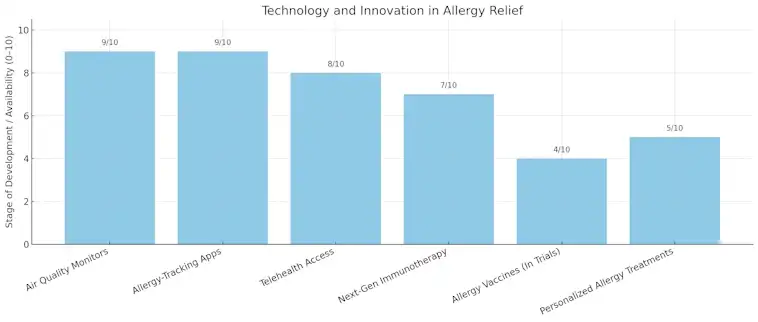
Air Quality Monitors
- Smart devices like Airthings or IQAir sensors can detect pollen, dust, mold spores, and pollution in real time.
- They give you personalized alerts so you can decide when to open windows or head outside—or when to stay in and turn up the purifier.
Allergy-Tracking Apps
- Apps like Pollen Wise, Zyrtec AllergyCast, and My Pollen Forecast use weather and environmental data to give daily allergy risk updates.
- Many let you log symptoms and track trends over time, which is helpful when talking to a doctor.
Telehealth for Allergy Care
- Virtual consultations are now widely available, making it easier to see an allergist from home.
- Doctors can prescribe treatments, suggest testing, or monitor your response to medication without a clinic visit.
Medical Breakthroughs on the Horizon
Science is also delivering new and more effective treatments for allergies.
Next-Gen Immunotherapy
- Traditional allergy shots work, but they take time. Researchers are developing faster, more convenient versions—like dissolving tablets, patches, and shorter-duration injection schedules.
- These are designed to train your immune system with fewer side effects and quicker results.
Allergy Vaccines
- Several vaccines are in development that aim to prevent or dramatically reduce allergic reactions before they start.
- Some target specific allergens (like grass or cat dander), while others look at the immune response itself.
Personalized Medicine
- In the near future, treatments could be based on your unique allergy profile—thanks to genetic testing and immune mapping.
- This means more targeted therapy, fewer side effects, and better outcomes.
The Takeaway: Relief Is Getting Smarter
Technology is helping people take back control—one app, one device, one discovery at a time. Whether you’re tracking pollen levels on your phone or exploring long-term immunotherapy, the tools for living better with allergies are improving fast.
It’s an exciting time for allergy sufferers. Help is not only available—it’s getting better every year.
Conclusion
Allergies might be a part of life for many of us, but they don’t have to take over. Understanding how pollen and other allergens affect your body is the first step toward feeling better. From seasonal triggers like tree and grass pollen to everyday indoor culprits like dust and pet dander, knowing what you’re up against makes all the difference.
The good news? You have more tools and choices than ever before. Whether it’s tracking pollen levels on your phone, upgrading your air filters, or finding the right medication, there are simple, effective ways to take control. And with science moving forward—through better treatments and smarter tech—relief is only getting closer.
So don’t just brace for allergy season. Prepare, protect, and stay informed. You’ve got options, and you’re not alone.