
Waterways in Crisis: What’s Polluting Our Freshwater—and How We Can Stop It
Our rivers, lakes, and streams are in trouble. Freshwater is supposed to sustain life, not threaten it. But right now, too many waterways are choking with pollution—runoff from farms, chemicals from industry, and waste from cities. This is more than an environmental issue. It’s a public health concern, an economic threat, and a warning sign about how we treat one of our most vital resources.
Here’s what’s going wrong:
- Agricultural runoff: Fertilizers and pesticides wash into rivers and lakes, feeding toxic algae blooms and dead zones.
- Industrial waste: Factories still discharge harmful chemicals, some of which are barely regulated or even tracked.
- Sewage and urban runoff: Overflowing sewers and stormwater pick up oil, trash, and bacteria—especially after heavy rain.
- Plastics and microplastics: Even remote lakes now contain fragments from packaging, synthetic clothing, and tires.
- Climate change: Warmer temperatures reduce oxygen in water and intensify droughts or floods, stressing ecosystems.
Solutions exist—but they need action and commitment. From smarter farming practices to stronger regulations and better infrastructure, the tools are within reach. What’s missing is the will to make water protection a priority—not just for nature, but for ourselves.
Waterways in Crisis: What’s Polluting Our Freshwater—and How We Can Stop It
What’s Really Polluting Our Water?
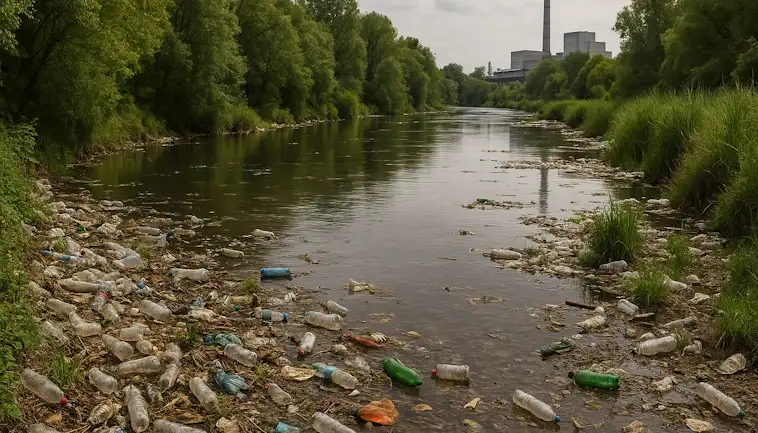
When people picture water pollution, they often think of oil spills or floating plastic bottles. But most of today’s freshwater pollution is invisible. It flows quietly into rivers, lakes, and groundwater. And once it’s in, it’s incredibly hard to get out.
Freshwater is essential—for drinking, farming, hygiene, and entire ecosystems. But it’s under constant threat from pollutants that don’t make headlines. Many of these threats are complex, hard to see, and even harder to fix.
The Big (and Not-So-Obvious) Offenders
Agricultural Runoff
- Fertilizers and pesticides wash off fields during rainstorms.
- These chemicals fuel toxic algal blooms and “dead zones” in rivers and lakes.
- Animal waste adds harmful bacteria and excess nutrients to the mix.
Industrial Waste
- Factories may still discharge heavy metals, solvents, and other pollutants.
- Even when regulated, accidental leaks or outdated systems can contaminate water supplies.
- Many older sites still leach toxins decades later.
Sewage Overflow
- Aging sewer systems overflow during storms.
- Untreated or partially treated waste can flood into waterways.
- These overflows carry bacteria, viruses, and nutrients that harm both ecosystems and human health.
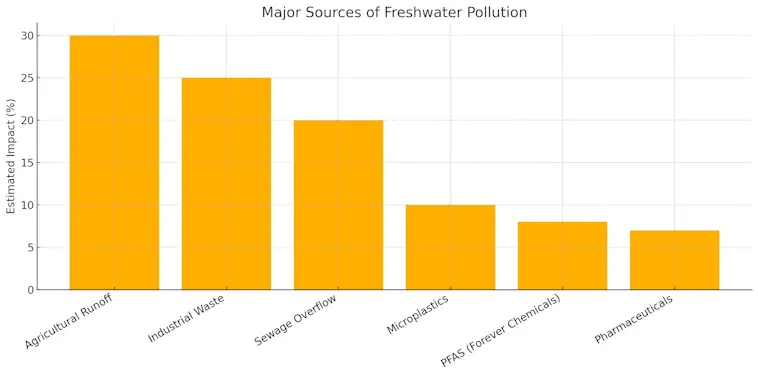
The Stealth Pollutants
Microplastics
- These tiny plastic particles come from synthetic clothing, cosmetics, and degraded trash.
- They’re small enough to slip through water treatment plants.
- Fish and other animals ingest them—so do we, through drinking water and seafood.
PFAS (“Forever Chemicals”)
- Found in non-stick pans, waterproof gear, and fire-fighting foams.
- They don’t break down naturally, making them nearly impossible to remove from water.
- Linked to cancer, immune issues, and hormone disruption.
Pharmaceuticals
- Traces of antibiotics, antidepressants, and painkillers end up in water via toilets and drains.
- They’re not removed by most treatment systems.
- Over time, this disrupts aquatic life and may contribute to antibiotic resistance.
Why This Matters—and What We Can Do
This kind of pollution isn’t dramatic like an oil spill. But it’s more widespread. It builds up slowly, making water less safe and ecosystems more fragile over time.
The good news? Many solutions exist:
- Smarter farming techniques to reduce runoff.
- Upgrading old water systems to handle modern waste.
- Developing filtration that targets microscopic and chemical pollutants.
And on a personal level:
- Avoid flushing medicine or pouring chemicals down the drain.
- Support products and companies that reduce microplastics and PFAS use.
The Role of Agriculture in Water Pollution
We rely on agriculture to feed nearly 8 billion people. But growing all that food has a hidden cost. Farms are now one of the biggest sources of freshwater pollution—more than factories, cities, or landfills.
This pollution doesn’t look like much at first. It doesn’t pour out in thick black sludge. Instead, it seeps into the ground or gets washed into rivers and lakes every time it rains. And over time, it changes entire ecosystems and threatens the water we drink.
How Agriculture Pollutes Freshwater
Fertilizer Runoff
- Farmers use nitrogen and phosphorus fertilizers to boost crop yields.
- But plants don’t absorb all of it. Rain carries the excess into nearby waterways.
- These nutrients feed algae, causing blooms that choke lakes and deplete oxygen—killing fish and other aquatic life.
Pesticide Runoff
- Pesticides don’t just stay on plants. Rain and irrigation can wash them into streams and groundwater.
- These chemicals can be toxic to aquatic insects, fish, and even birds.
- Some remain in the water long after they’re used, affecting biodiversity.
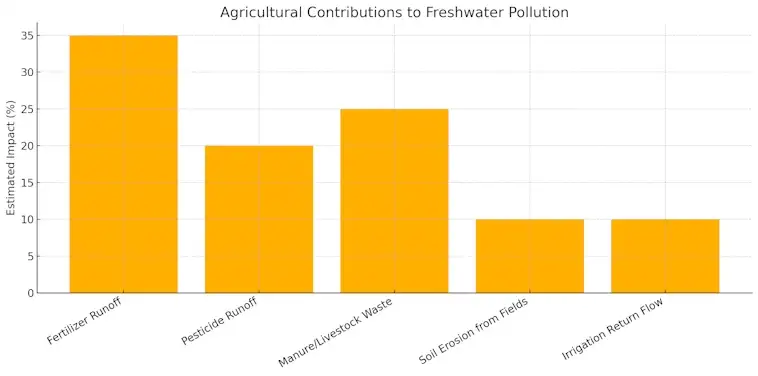
Manure and Livestock Waste
- Livestock operations produce tons of waste.
- When stored improperly or used as fertilizer near waterways, that waste leaks into rivers and lakes.
- It carries bacteria, parasites, antibiotics, and nutrients—creating health risks for both animals and people.
Soil Erosion and Irrigation Runoff
- Tilled fields and bare soil are easily eroded.
- Rain washes sediment into streams, making water muddy and smothering aquatic habitats.
- Irrigation can pick up fertilizers and salts, returning them to rivers in concentrated flows.
The Tension Between Food and Water
Here’s the hard truth: modern agriculture feeds the world, but it also pollutes the very water we need to survive.
We can’t just stop growing food. But we also can’t ignore what’s happening to our rivers, lakes, and aquifers. The solution isn’t either/or—it’s finding a better balance.
- Smarter fertilizer use (only what crops need, when they need it)
- Buffer zones between fields and waterways
- Better manure management
- Investment in more sustainable, soil-friendly farming
These changes won’t be easy. But they matter—especially as climate change makes both farming and water supplies more uncertain.
How Urban Life Is Choking Our Waterways
Cities and suburbs are expanding faster than ever. More homes, more streets, more people. But here’s the catch: much of this growth is outpacing the infrastructure needed to manage pollution.
You might not see the damage happening. But every time it rains, or someone flushes the wrong thing down the drain, the local water system takes a hit. The sources of pollution here are everyday actions—multiplied by millions of people.
How Urban Life Pollutes Freshwater
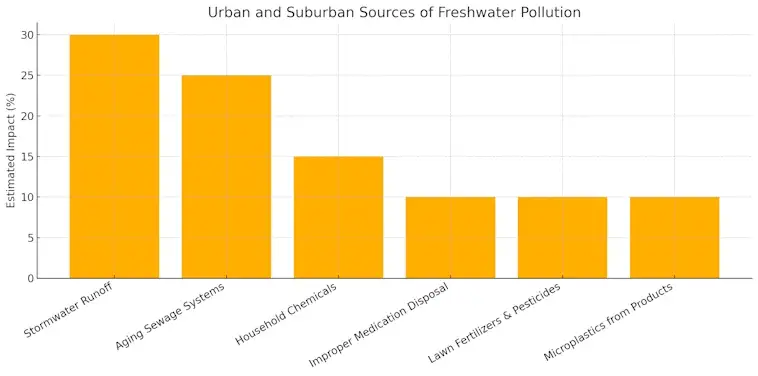
Stormwater Runoff
- Rain runs off rooftops, roads, and sidewalks—picking up oil, trash, metals, and bacteria along the way.
- This mix flows into storm drains and straight into rivers and lakes.
- It doesn’t get treated, and in heavy storms, it can overwhelm sewer systems too.
Aging Sewage Infrastructure
- Many cities use combined sewers for both wastewater and rainwater.
- During storms, these systems overflow—sending raw sewage into waterways.
- Even without storms, leaky pipes can let contaminants seep into groundwater.
Household Chemicals
- Cleaners, paints, and garden products often end up down the drain or in runoff.
- Most treatment plants can’t fully remove these chemicals.
- Over time, they build up in aquatic environments and harm wildlife.
Everyday Actions That Add Up
Here’s where it gets personal. Many of the pollutants in urban water don’t come from factories—they come from us.
Flushing Medications
- When people flush unused medicine, it enters the water supply.
- Most water plants aren’t designed to filter out pharmaceuticals.
- These drugs end up affecting fish and may contribute to antibiotic resistance.
Microplastics in Personal Care
- Scrubs, toothpaste, and synthetic fabrics shed tiny plastic particles.
- These microplastics are too small for filters and get into streams, lakes, and drinking water.
Overwatering Lawns
- Water runs off fertilized lawns, carrying nitrogen, phosphorus, and pesticides.
- This runoff mimics the agricultural problem—just on a smaller but widespread scale.
Cities Need Smarter Water Solutions
As populations grow, cities need to rethink how they handle water. This means:
- Green infrastructure like rain gardens and permeable pavements
- Upgrading old sewer systems
- Public education about what not to flush or pour down the drain
It’s also about each of us taking small steps. Because when millions of people take small steps in the right direction, the effects add up quickly.
Why Clean Water Can’t Wait
Water is life—but only if it’s clean. When freshwater becomes polluted, the consequences ripple far beyond the riverbank. It impacts what we drink, the food we eat, where we play, and how communities make a living.
This isn’t just about dirty lakes or ugly rivers. It’s about kids getting sick from the tap, fishermen losing their livelihoods, and towns watching tourism dry up. And it’s happening more often than people realize.
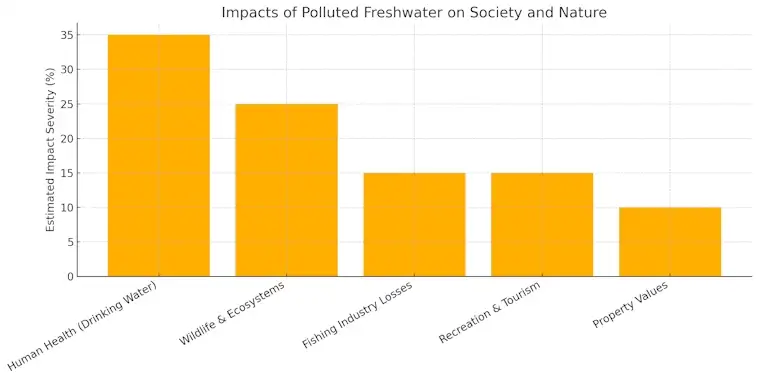
Human Health Risks
Unsafe Drinking Water
- Over 2 billion people globally drink water contaminated with feces, according to the World Health Organization.
- In the U.S., Flint, Michigan became a national symbol when lead in the water sickened thousands.
- Contaminants like nitrates (from fertilizer) and PFAS (“forever chemicals”) have been found in public water supplies across the country.
Disease Outbreaks
- Polluted freshwater spreads waterborne illnesses like E. coli, cholera, and hepatitis A.
- These outbreaks are especially dangerous in rural or underserved communities with limited access to healthcare or safe alternatives.
Wildlife and Ecosystem Damage
Mass Fish Kills
- Nutrient pollution from farms and lawns causes algal blooms that deplete oxygen.
- In 2022, millions of fish died in Australia’s Darling River due to a toxic bloom combined with extreme heat.
Biodiversity Loss
- Pesticides, heavy metals, and pharmaceuticals disrupt aquatic ecosystems.
- Amphibians and freshwater invertebrates—key species in the food web—are declining rapidly worldwide.
Local Economic Costs
Fishing Industry Losses
- Polluted waters kill fish, reduce catches, and lead to costly bans on commercial harvesting.
- The Chesapeake Bay, once a hub for fishing, has lost billions in potential seafood revenue due to nutrient pollution and dead zones.
Recreation and Tourism
- When lakes are closed due to bacteria or toxins, communities lose money from tourism, boating, and fishing.
- In Florida, red tide events linked to water pollution cost coastal areas millions each year in lost business and cleanup.
Declining Property Values
- Homes near polluted water bodies lose value.
- A 2020 study found that lakefront properties in Wisconsin dropped by up to 18% when water clarity decreased due to pollution.
The Takeaway: Urgency + Action
Water pollution is no longer a distant, industrial problem. It’s in our neighborhoods, at our beaches, and in our kitchens. It threatens our health, wildlife, and wallets.
Solutions are possible—but they require both top-down investment and grassroots awareness:
- Better treatment infrastructure
- Stronger pollution laws
- Smarter consumer choices
Solutions That Actually Work
Freshwater pollution isn’t a problem we can ignore. But it’s also not a problem we’re powerless against. The good news? There are real, workable solutions at every level—government, community, and individual.
Pollution is a layered issue. It flows from factories, farms, homes, and streets. And cleaning it up requires a layered response. The power to protect our rivers, lakes, and drinking water doesn’t lie with any one group. It’s shared.
What’s Polluting Our Water
- Agricultural runoff – Fertilizers, pesticides, and animal waste from farms
- Urban runoff – Oil, trash, and chemicals from streets and lawns
- Aging infrastructure – Leaky pipes and overflowing sewers
- Industrial waste – Chemicals and heavy metals from factories
- Household products – Microplastics, medications, and cleaning agents
Solutions by Level
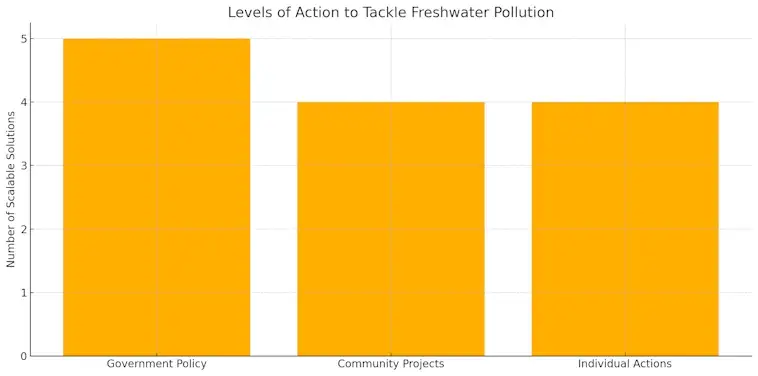
Government Policy
Governments have the power to shape national water quality. Here’s how:
- Stronger water quality standards – Tighter limits on pollutants like nitrates, PFAS, and phosphorus
- Funding green infrastructure – Grants for rain gardens, permeable pavements, and restored wetlands
- Support for regenerative agriculture – Incentives for farmers who reduce chemical use, plant cover crops, and rebuild soil
- Upgrading sewage systems – Investing in modern pipes, sensors, and overflow controls
- Monitoring and enforcement – Real-time tracking of pollution sources and strict penalties for violations
Community Projects
At the local level, people are taking action:
- Watershed councils – Groups monitoring streams, restoring riverbanks, and planting native vegetation
- Rain garden and bioswale programs – Managing stormwater in neighborhoods
- School and youth initiatives – Teaching water stewardship and organizing cleanups
- Local water monitoring networks – Citizen scientists testing and reporting on water quality
Individual Actions
Everyday choices have impact—especially when lots of people make them:
- Avoid flushing meds and harsh chemicals – Use proper disposal sites
- Choose microbead-free and low-chemical products – Help reduce waterborne plastics and toxins
- Conserve water at home – Fix leaks, turn off taps, and water lawns wisely
- Reduce fertilizer and pesticide use – Especially near driveways and storm drains
- Join local cleanups – Help remove trash and monitor streams
Why Now Is the Time
The stakes are high. But the tools are in our hands. What’s encouraging is that solutions already exist—and when scaled up, they work.
This isn’t just about protecting nature. It’s about safe drinking water, stable jobs, vibrant communities, and future resilience. The more people know and act, the better the outcomes.
Conclusion
The challenges facing our rivers, lakes, and streams are serious—but they’re not unsolvable. Pollution may be widespread, but so is the power to fix it.
Every drop of action matters. Whether it’s a city upgrading its storm drains, a farmer planting cover crops, or a neighbor choosing a safer cleaning product, change begins with choices. And when those choices add up—across communities, industries, and governments—they create real momentum.
Clean water is not a luxury. It’s a basic need, a shared right, and a reflection of how we care for one another and the planet. The crisis is clear—but so is the opportunity. If we act with urgency and vision, our waterways can recover. They can thrive. And so can we.