
Rewilding the Future: How Nature’s Comeback Could Change Everything
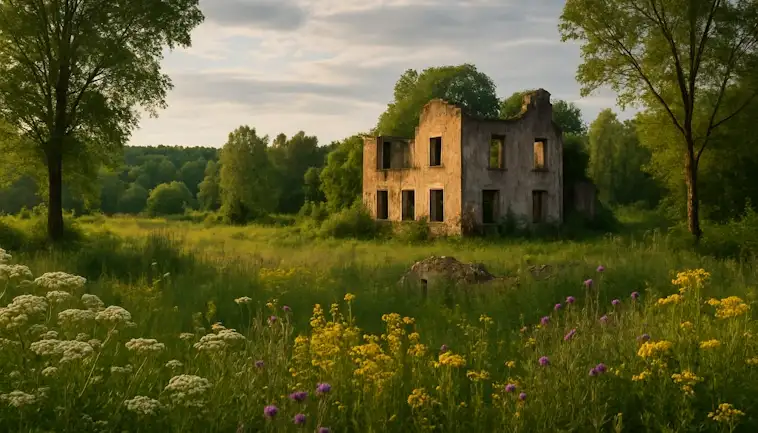
Nature is making a quiet but powerful comeback. From abandoned farmland turning into wildflower meadows to wolves returning to old hunting grounds, something remarkable is unfolding. Rewilding—helping ecosystems recover with minimal human interference—is reshaping how we think about conservation, land use, and even the future of cities.
It’s more than just bringing back forests or big animals. Rewilding touches climate resilience, mental health, food systems, and the way communities connect with their environment. As species return and landscapes heal, unexpected possibilities are emerging.
Here’s why it matters—and where things might be headed:
- Biodiversity rebounds: With space and time, many plants and animals can recover rapidly, boosting ecosystems and making them more stable.
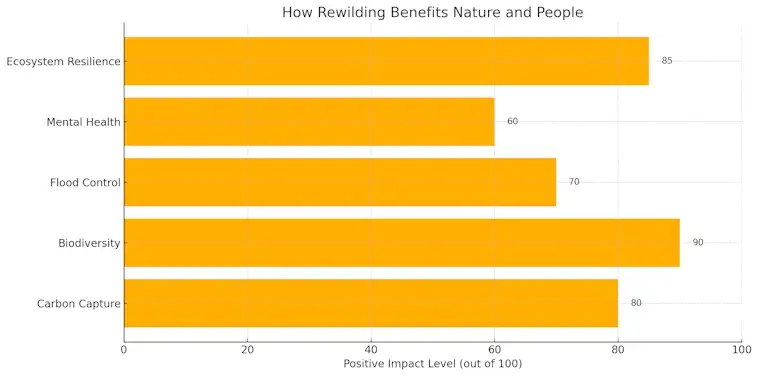
- Carbon capture: Rewilded lands often store more carbon than heavily managed ones, offering a natural solution to climate change.
- Flood and fire resistance: Healthy ecosystems help regulate water and reduce fire risks by balancing natural processes.
- Urban rewilding: Green corridors, rooftop habitats, and community gardens are bringing nature back into the heart of cities.
- New economies: Nature-based tourism, regenerative farming, and green jobs are becoming viable in places once seen as “wilderness only.”
- Cultural revival: Indigenous knowledge and local traditions are playing a key role in shaping rewilding projects, blending old wisdom with new science.
There’s a shift happening—from controlling nature to collaborating with it. And the ripple effects could change more than just the landscape.
Rewilding the Future: How Nature’s Comeback Could Change Everything
What Is Rewilding—And Why Now?
Rewilding is about giving nature the space and time to heal. It’s the idea of letting forests grow back, rivers flow freely, and animals return to places where they once thrived. Think of it like a “reset” button for the natural world.
At its core, rewilding means:
- Bringing back native species, like wolves or wild horses.
- Restoring natural landscapes, such as woodlands, wetlands, and grasslands.
- Letting ecosystems function on their own, without constant human management.
Instead of controlling every inch of land, rewilding encourages a hands-off approach. It trusts that nature, when given the chance, can restore balance better than we can.
Why Rewilding Matters Right Now
We’re facing big challenges. Climate change, vanishing wildlife, and growing mental health struggles are all linked in some way to how we’ve changed our environment. Rewilding offers a surprisingly simple but powerful way to address all three and more.
Fighting Climate Change
- Restored forests and wetlands can absorb large amounts of carbon.
- Rewilded land reduces the need for intensive farming or industry.
Saving Biodiversity
- By bringing back native plants and animals, ecosystems become richer and more stable.
- This helps prevent the extinction of species.
Boosting Mental Health
- Natural spaces improve mood, reduce stress, and encourage physical activity.
- Rewilded areas offer quiet, wild places for people to explore and connect with nature.
Protecting Against Natural Disasters
- Rewilded floodplains soak up water and prevent urban flooding.
- Forests stabilize the soil and reduce landslides.
A Hopeful Path Forward
What’s exciting is that rewilding doesn’t need fancy technology. It works with what we already have—land, time, and patience. Across Europe and beyond, places once used for farming or industry are now slowly turning wild again. And people are seeing the benefits.
Rewilding isn’t just about nature—it’s about us, too. It offers a vision of the future that’s not just less harmful, but actively healing.
Let’s let nature do what it does best—thrive.
What Rewilding Looks Like on the Ground
Rewilding sounds great in theory, but what does it actually look like? It’s not just about letting things grow wild. It’s about real, physical change—on land, in rivers, and across entire ecosystems. And in many places, it’s already happening.
From big mammals to tiny microbes, rewilding brings back the web of life, one piece at a time.
Wolves in Yellowstone: A Ripple Effect
One of the most famous rewilding efforts happened in Yellowstone National Park, USA.
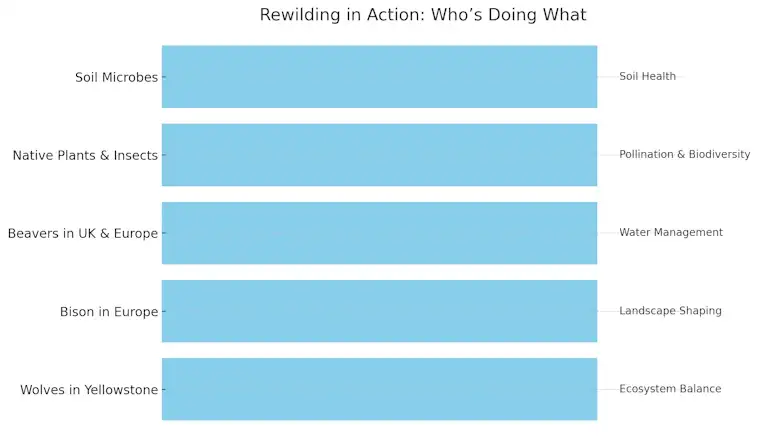
- In the 1990s, wolves were reintroduced after being wiped out nearly 70 years earlier.
- Their return changed everything—not just for the wolves, but for the whole ecosystem.
Here’s how:
- Elk populations were kept in check, which allowed willow and aspen trees to regrow.
- That new plant growth stabilized riverbanks, bringing back birds and beavers.
- Beavers built dams, creating wetlands that supported frogs, fish, and insects.
All from the return of one species.
Bison on the European Plains
In places like Poland, Romania, and the Netherlands, European bison—once nearly extinct—are being reintroduced.
- These giant grazers keep landscapes open, preventing forests from overgrowing grasslands.
- Their movement aerates the soil, helping plants and fungi thrive.
- They also spread seeds and nutrients, building healthier, more diverse ecosystems.
Bison don’t just belong to the past—they’re shaping the future.
Beavers: Nature’s Engineers
Beavers are making a major comeback in parts of the UK and Europe.
- By building dams, they slow down water flow, reducing the risk of flash floods.
- Their ponds recharge groundwater and create safe havens for fish and amphibians.
- They also filter out pollutants, improving water quality naturally.
Beavers don’t just reshape landscapes—they solve problems we’ve been trying to fix for decades.
The Small But Mighty Players
It’s not just about big animals. Rewilding depends on the smallest parts of nature too:
- Native plants like wildflowers support bees, butterflies, and birds.
- Insects pollinate crops, recycle nutrients, and provide food for other animals.
- Soil microbes help break down organic matter and keep ecosystems alive from the ground up.
In a rewilded area, the return of mosses, mushrooms, and ants can be just as important as elk or bears.
What It All Means
These examples show that rewilding works. It can revive landscapes, help prevent disasters, and bring back the richness of life. It’s not just a nice idea—it’s a practical, proven approach with real-world results.
The key takeaway? When we give nature even a little space, it gives back in a big way.
The Unexpected Benefits of Letting Nature Lead
When we talk about rewilding, it’s easy to focus on animals and plants. But here’s the surprising truth: rewilding isn’t just good for wildlife. It’s good for people too.
By giving nature room to breathe, we end up creating cleaner, safer, and more joyful places for humans. From better air to stronger local economies, the benefits reach far beyond the forest.
The Human Benefits of Rewilding
Cleaner Air and Water
- Trees and plants act as natural air filters, absorbing pollution and pumping out oxygen.
- Wetlands—especially those restored by beavers—filter out harmful chemicals from water.
- Fewer pesticides and less intensive land use also means safer drinking water.
Natural Flood Control
- Rewilded landscapes soak up rain like a sponge.
- Forests, peat bogs, and wetlands slow water runoff, reducing the risk of flash floods.
- Beavers help create small dams and ponds that act as buffers during storms.
Climate Protection Through Carbon Capture
- Forests and peatlands are powerful carbon sinks.
- Rewilded areas pull CO₂ from the air and store it in trees, soil, and wetlands.
- That makes rewilding one of the cheapest, most natural ways to fight climate change.
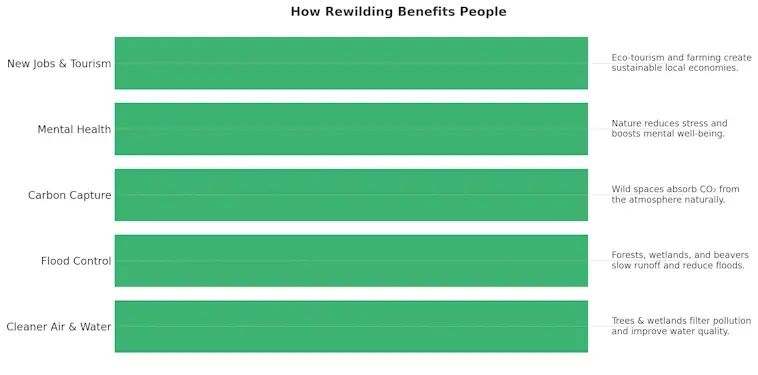
Better Mental Health and Well-Being
- Time spent in nature is proven to lower stress, anxiety, and depression.
- Green, wild spaces promote exercise, creativity, and a sense of peace.
- Even short walks in rewilded areas can boost mood and reduce blood pressure.
New Economic Opportunities
Rewilding can also boost local economies—especially in rural areas that need fresh ideas and income sources.
Eco-Tourism
- Wild landscapes attract visitors, from hikers and birdwatchers to photographers and campers.
- Places with bison, wolves, or wild horses see a surge in sustainable tourism.
- This supports small businesses like lodges, guides, and local food producers.
Regenerative Farming
- Rewilding doesn’t mean giving up farming—it can go hand-in-hand.
- Regenerative agriculture focuses on soil health, biodiversity, and low-impact methods.
- It creates more resilient farms and healthier food while restoring the land.
Rewilding shows us a different path forward—one where nature isn’t something separate from us, but something that supports us every day. Whether it’s protecting our homes from floods or offering a mental break from busy lives, rewilded spaces are full of value.
We don’t have to choose between wild nature and human needs. When we help the natural world recover, it helps us thrive too.
Why Rewilding Isn’t Always Easy
Rewilding sounds like a beautiful idea—let nature return, and everything will heal. But in the real world, things aren’t that easy. Behind every landscape are people with deep ties to the land. There are laws, livelihoods, and histories to consider. That’s where it gets tricky.
While the benefits of rewilding are real, so are the challenges. For rewilding to work long-term, it has to be more than an ecological plan. It needs to be a social one too.
The Real-World Challenges of Rewilding
Land Ownership and Control
- Much of the land that could be rewilded is privately owned.
- That means getting landowners on board is essential—but not always easy.
- Some worry they’ll lose control over how they use or manage their property.
Farming Traditions and Local Economies
- Many rural areas rely on farming for income and identity.
- Rewilding can feel like a threat to that—especially if it involves removing livestock or stopping crop production.
- Generations of knowledge, culture, and pride are tied to how land has been used.
Fear and Safety Concerns
- The return of predators like wolves or lynx stirs debate.
- Farmers fear for their livestock. Parents may worry about safety.
- Even if risks are small, emotions and perceptions matter.
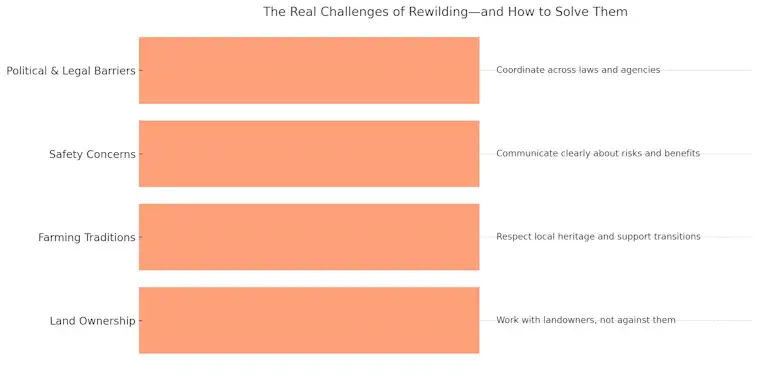
Political and Legal Barriers
- Wildlife protection laws, land-use zoning, and environmental regulations can create red tape.
- Different agencies or governments might have conflicting goals.
- What’s allowed in one region might be banned in another.
Why People Must Come First
To succeed, rewilding needs more than ecological science—it needs trust.
Here’s what works:
- Start with listening. Talk to farmers, hunters, and residents before making decisions.
- Offer benefits. This could be payments for carbon storage, eco-tourism training, or help transitioning to regenerative farming.
- Involve communities. When locals help shape the project, they’re more likely to support and protect it.
- Be flexible. One size doesn’t fit all. What works in one region might not in another.
Shared Land, Shared Future
Rewilding isn’t about erasing people from the landscape. It’s about finding ways for people and nature to thrive together. That means honest conversations, careful planning, and shared goals.
When done right, rewilding can actually strengthen communities—by creating new jobs, improving local environments, and offering young people reasons to stay. But it has to be done with respect, not just ambition.
Nature can bounce back. But for that to happen, people need to believe they’re part of the story—not pushed out of it.
How We Can All Be Part of the Comeback
Rewilding isn’t just a trend. It’s a growing global movement. In some places, it means connecting wild spaces across entire continents. In others, it’s as simple as letting a backyard go a little wild.
Wherever it starts, the goal is the same: to help nature heal—so we can all thrive.
The Big Vision: Wild Corridors Across Countries
Imagine wolves and lynx roaming from the Alps to the Carpathians. Or butterflies migrating freely across restored grasslands from Portugal to Poland.
This isn’t science fiction. It’s already underway.
Large-scale rewilding projects are happening across the world:
- Rewilding Europe is creating wildlife corridors stretching across multiple countries, reconnecting ecosystems fragmented by roads and cities.
- In North America, proposals like the Yellowstone to Yukon Conservation Initiative (Y2Y) aim to link parks and protected lands along the Rocky Mountains.
- Africa’s Great Green Wall is restoring forests and grasslands across the Sahel to fight desertification and climate change.
These are ambitious projects. But they’re working—boosting wildlife populations, restoring water cycles, and drawing in eco-tourism.
The Power of Small Actions
You don’t need a national park to rewild. You just need a little space—and a little patience.
Here are simple ways anyone can join in:
Plant Native Species
- Swap your lawn or garden plants for wildflowers, native grasses, and shrubs.
- These support bees, butterflies, birds, and other local wildlife.
- Even a balcony box can become a mini haven.
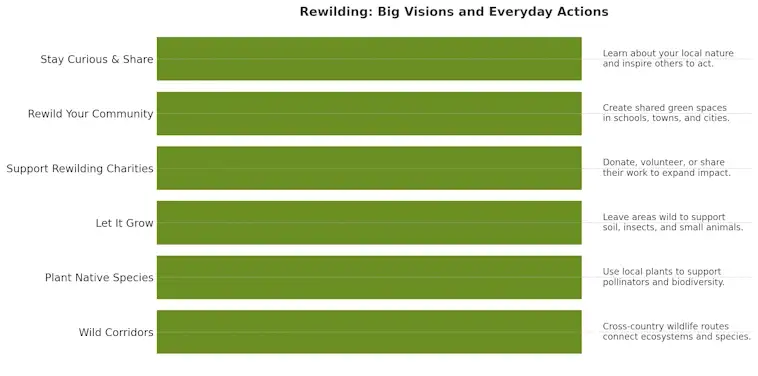
Let It Grow
- Leave part of your garden unmowed or wild.
- Allow fallen leaves, old wood, and natural debris to support insects and fungi.
- This builds healthy soil and attracts all sorts of wildlife.
Support Rewilding Charities
- Donate, volunteer, or spread the word about organizations restoring wild places.
- Groups like Rewilding Britain, Trees for Life, and Re:wild are doing powerful work.
Rewild Your Community
- Talk to neighbors about creating connected green spaces.
- Support local parks, urban wild areas, and wildlife-friendly zoning.
- Even schools and office rooftops can be rewilded.
Stay Curious and Share
- Learn about your local ecosystem—what used to live there? What could return?
- Share rewilding stories online or in your community. Hope spreads.
Why It All Matters
Rewilding gives us a vision of the future that’s hopeful. One where nature comes back—not just to remote places, but to our doorsteps. One where kids can hear birdsong, towns are safer from floods, and farms are more resilient.
And the best part? You don’t have to wait for permission. Nature is ready to return the moment we make space.
A Wilder, Healthier Future Starts Here
Every wildflower, every hedgehog, every stream that runs clear again—these are signs of a world moving in the right direction.
Rewilding is big and bold, but it also begins with small choices. Whether you’re planting a pollinator patch or supporting cross-border conservation, you’re part of the same movement.
Let’s grow a wilder future—together.
Conclusion
Rewilding is more than a way to heal the land. It’s a way to rethink our place in the world. By stepping back just a little, we give nature the chance to step forward—and when it does, the benefits ripple out to everything and everyone.
Cleaner air. Safer water. Wilder places. Healthier minds. Stronger communities.
Whether it’s a rewilded forest in the mountains or a single wildflower in a city garden, every bit of nature that returns brings us closer to a future that works better—for people and the planet.
We don’t have to wait for perfect conditions or giant leaps. The path to a wilder, more resilient world is already unfolding, one small act at a time.
Now’s the moment to notice it, support it, and become part of it. Because when nature thrives, so do we.