

Atmospheric Heat Trapping: The Hidden Driver of Extreme Climate Shifts
The Earth is heating up faster than ever before, and it’s not just because of the sun. What’s happening high above us—where invisible gases trap heat like a thick blanket—is driving some of the most extreme and unpredictable shifts in our climate. It’s not always visible, but its impact is being felt everywhere.
Across the globe, records are breaking:
- Hotter days are becoming more common, even in places once known for mild weather.
- Storms are growing stronger and wetter, fueled by warmer air that holds more moisture.
- Winters are behaving strangely, flipping between deep freezes and sudden thaws.
- Oceans are soaking up more heat, changing currents and threatening marine life.
All of this ties back to how our atmosphere is trapping heat. It’s not just about rising temperatures—it’s about how that heat changes wind patterns, rainfall, seasons, and even the stability of ecosystems.
This isn’t a slow simmer. It’s a growing imbalance with the power to reshape life as we know it. And it starts with understanding what’s trapping the heat, and why that matters more than ever.
Atmospheric Heat Trapping: The Hidden Driver of Extreme Climate Shifts

The Invisible Blanket Around Earth
Imagine Earth wrapped in a thin, invisible blanket. You can’t see it, but it’s always there—made of gases like carbon dioxide (CO₂), methane (CH₄), and water vapor. This blanket is what keeps our planet warm enough for life to thrive. Without it, Earth would be a frozen ball in space.
But lately, we’ve been adding too much to this blanket, and it’s starting to overheat the planet.
How the Atmosphere Traps Heat
Here’s how it works:
- The sun sends energy to Earth in the form of light and heat.
- Some of that energy is absorbed by the land, oceans, and atmosphere.
- The rest is reflected back toward space as infrared radiation (heat).
- Greenhouse gases like CO₂ and methane trap some of that outgoing heat, bouncing it back to Earth.
This natural process is called the greenhouse effect, and it’s essential. Without it, our average temperature would drop by more than 30°C. Life as we know it wouldn’t exist.
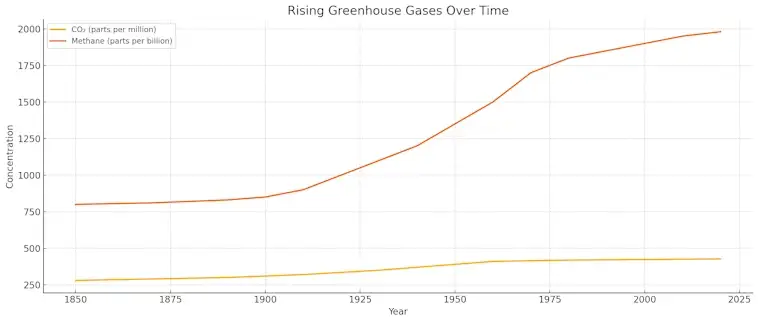
When a Good Thing Goes Too Far
The problem isn’t that greenhouse gases exist. The problem is that human activities are rapidly increasing their levels—especially over the past century. That’s making the invisible blanket thicker than it should be.
Here’s what’s driving the change:
- Burning fossil fuels (like coal, oil, and gas) for electricity, cars, and factories releases large amounts of CO₂.
- Deforestation removes trees that absorb CO₂, so more of it stays in the atmosphere.
- Industrial farming, especially livestock production, adds methane—a gas that traps even more heat than CO₂.
Together, these actions have pushed the atmosphere out of its natural balance. It’s like cranking up the heat in a greenhouse and then forgetting to open a window. The result? A warmer planet, rising seas, and more extreme weather.
Looking Ahead
Understanding the greenhouse effect is key to tackling climate change. We can’t get rid of these gases entirely—and we wouldn’t want to. But we can stop adding so much of them.
By shifting to clean energy, protecting forests, and rethinking how we produce food, we can thin the blanket back down to a safer size. It won’t be easy, but it’s doable—and absolutely worth it for the planet we call home.
How Excess Heat Warps the Climate
Earth’s climate is like a finely tuned orchestra. For thousands of years, its rhythms—wind, rain, ocean currents, and seasons—have worked together in harmony. But when extra heat gets trapped by greenhouse gases, that harmony begins to unravel. The changes don’t just happen in one place. They ripple across the globe, affecting everything from weather to wildlife to the timing of our growing seasons.
How Extra Heat Throws Systems Out of Balance
Wind Patterns Shift
- Warm air rises. As the atmosphere heats up unevenly, it changes how and where air flows.
- Jet streams—high-altitude winds that help control weather—are slowing and becoming more erratic.
- This can lead to longer droughts, stalled storms, and unexpected cold snaps.
Ocean Currents Disrupted
- Oceans absorb much of the excess heat—over 90% of it.
- Warmer water expands and rises, altering global currents that regulate climate.
- For example, the Gulf Stream is slowing down, which could make Europe colder while intensifying hurricanes in the Atlantic.
Seasons Are Shifting
- Spring arrives earlier. Winters grow shorter. This affects everything from plant growth to animal migrations.
- Crops may bloom too early or miss their pollination window.
- Animals may not find food when they expect it.
Cascading Effects of a Warmer World
The changes don’t stop with wind and water. Here are just a few chain reactions we’re already seeing:
- Stronger hurricanes: Warm oceans are like fuel for storms. Higher sea surface temperatures lead to more powerful and wetter hurricanes.
- Melting ice: Arctic ice acts like a giant mirror, reflecting sunlight. As it melts, darker water absorbs more heat, speeding up warming.
- Rising seas: Melting glaciers and expanding seawater push coastlines inland, flooding cities and reshaping ecosystems.
- Disrupted weather everywhere: Heatwaves, wildfires, floods, and storms are becoming more intense and more frequent around the world.
A World in Motion
This isn’t just about getting warmer. It’s about a planet that’s being pushed out of balance. The more heat we trap, the more unpredictable and extreme Earth’s systems become.
The good news? We understand what’s happening—and we can act on it.
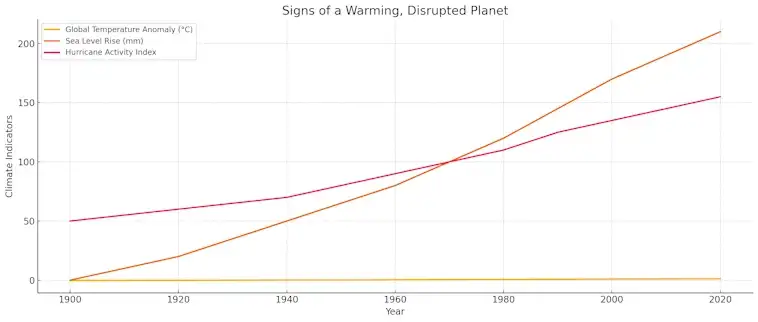
Here’s a graph that highlights three major signs of a warming, disrupted climate:
- Global temperature anomalies are rising.
- Sea levels continue to climb.
- Hurricane activity is trending upward.
Together, these trends show how the extra heat trapped by greenhouse gases is reshaping Earth’s climate systems.
Real-World Signs of a Tipping Climate
Climate change isn’t something our grandchildren will have to worry about—it’s already here. What was once mostly discussed in academic circles or future projections is now showing up in news headlines, local weather reports, and even grocery bills.
Extreme heat, wild swings in weather, and strange seasonal shifts are becoming the new normal. This isn’t just about temperature—it’s about how entire weather systems are changing in ways that directly affect our lives.
What We’re Seeing Today
Heat Domes
- A heat dome forms when a high-pressure system traps hot air over a region for days or even weeks.
- In 2021, the Pacific Northwest experienced record-shattering heat, with temperatures in places like Portland and Vancouver pushing past 115°F (46°C).
- Hundreds of heat-related deaths were reported, and infrastructure like roads and power cables buckled under the strain.
Mega-Droughts
- Parts of the U.S. Southwest, like California and Arizona, are facing their driest conditions in over 1,200 years.
- Crops are failing, water reservoirs are at record lows, and some communities are running out of water altogether.
- Similar long-term droughts are hitting regions in Africa and Australia, threatening food and water security.
Flash Floods
- Warmer air holds more moisture, making rainstorms more intense and sudden.
- In 2021 and 2022, cities like Zhengzhou, China, and parts of Germany and Belgium were hit by catastrophic floods that overwhelmed drainage systems in minutes.
- Flash floods have become one of the most unpredictable and deadly consequences of climate change.
Polar Vortex Disruptions
- The Arctic is warming faster than anywhere else on Earth. This weakens the polar vortex, a band of cold air normally trapped around the North Pole.
- When the vortex destabilizes, cold air spills south—leading to extreme winter weather in places like Texas, which saw deadly freezing temperatures and blackouts in 2021.
A Global Snapshot of a Changing Climate
To bring this home, let’s visualize how different climate impacts are spiking across categories like heatwaves, floods, and droughts.
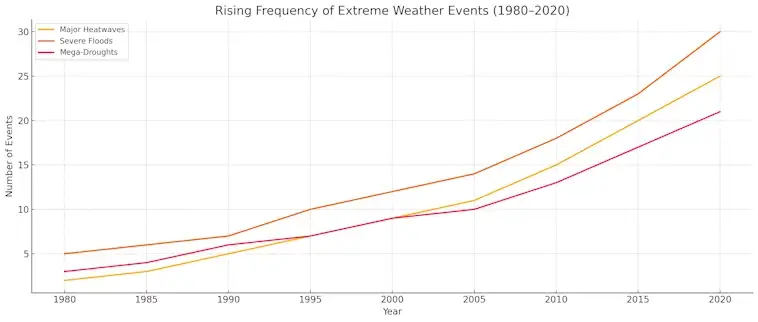
The trends are clear: these once-rare disasters are happening more often, and they’re hitting harder. Climate change isn’t just a theory—it’s shaping life right now, all around us.
Why Today’s Emissions Shape Tomorrow’s Weather
When we talk about climate change, we often think about the next storm, the next heatwave, or the next wildfire season. But the real story is unfolding much further down the line.
Unlike other pollutants—like smog or plastic waste—greenhouse gases such as carbon dioxide (CO₂) don’t just disappear when we stop emitting them. They linger in the atmosphere for hundreds, even thousands, of years. That means the CO₂ we release today will continue warming the planet well into the future.
Why CO₂ Is a Long-Term Problem
- When fossil fuels are burned, they release CO₂ into the air.
- Some of that CO₂ is absorbed by plants and oceans—but not all.
- What’s left can stay in the atmosphere for centuries, trapping heat the entire time.
- Even if we stopped all emissions today, Earth would still keep warming for a while.
This delay between cause and effect is known as climate lag.
What Is Climate Lag?
Climate lag means the full impact of today’s emissions won’t be felt for decades. The climate system responds slowly because:
- Oceans absorb heat slowly, releasing it over time.
- Ice sheets melt over centuries, not days.
- Feedback loops (like thawing permafrost) take years to accelerate.
So while the changes may seem gradual, they’re building up like pressure in a fault line. And once they reach a tipping point, they can shift entire systems—permanently.
Today’s Actions Shape Tomorrow’s World
This long timeline makes climate action even more urgent. We’re not just protecting ourselves—we’re protecting our children, and their children too.
- The more CO₂ we emit today, the more warming we lock in for the future.
- The sooner we cut emissions, the better our long-term outlook becomes.
- Every fraction of a degree matters.
Let’s Visualize It
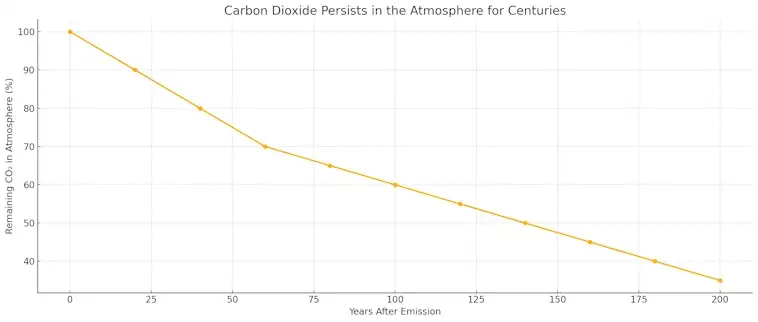
This graph shows how carbon dioxide lingers in the atmosphere for centuries after it’s emitted. Even after 200 years, a large portion remains, still warming the planet. This is the heart of climate lag—and why every action we take today matters so much for the future.
How Innovation and Action Can Cool the Planet
We know the problem—and it’s a big one. But around the world, people are stepping up with bold ideas, smart policies, and groundbreaking technologies to fight climate change.
The goal? Reduce the greenhouse gases going into the atmosphere and pull out the excess already there. This isn’t just about slowing climate change—it’s about reshaping how we live, move, build, and grow in a way that’s more sustainable for everyone.
What’s Being Done—And What’s Possible
Renewable Energy
- Solar, wind, and hydro are becoming cheaper and more widespread every year.
- Countries like Denmark and Costa Rica already get a majority of their electricity from renewables.
- New innovations like battery storage and smart grids are making renewable power more reliable.
Reforestation and Nature-Based Solutions
- Trees absorb carbon dioxide as they grow.
- Reforesting cleared land and protecting existing forests is one of the fastest ways to remove carbon from the air.
- Projects in the Amazon, Africa, and Asia are restoring millions of acres of degraded land.
Carbon Capture Technologies
- These machines remove CO₂ directly from the air or capture it from factory smokestacks.
- While still expensive and limited in scale, companies and governments are investing heavily in the technology.
- Iceland’s Climeworks plant and Canada’s Carbon Engineering are leading examples.
Smarter Urban Planning
- Cities generate about 70% of global emissions.
- Designing compact, walkable cities with good public transit reduces car dependence and energy use.
- Building retrofits, green roofs, and energy-efficient appliances are helping cut urban emissions.
Policy and People Power
Tech alone isn’t enough. Policy and cooperation are key:
- International agreements like the Paris Agreement push countries to commit to emission reductions.
- Carbon pricing—putting a price on pollution—encourages cleaner choices across industries.
- Local governments are leading too, with climate-friendly building codes, bike lanes, and tree-planting initiatives.
And never underestimate individual action:
- Choosing renewable power, eating less meat, driving less, and supporting sustainable brands all make a difference.
- Millions of small actions add up—and they send a powerful signal to businesses and policymakers.
Visualizing the Path Forward
A simple graph shows how different solutions—when combined—can significantly cut emissions over the next few decades.
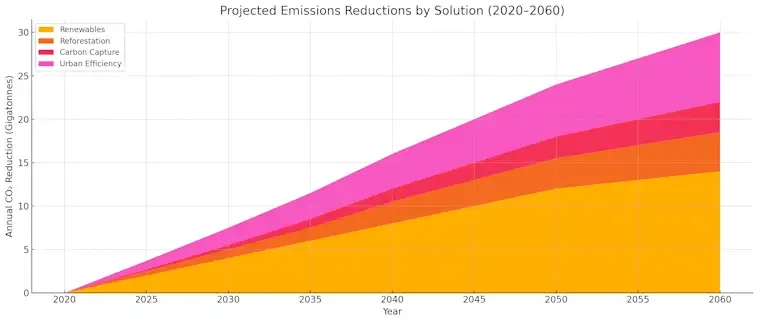
This shows how a mix of solutions—renewable energy, reforestation, carbon capture, and smarter urban design—can combine to dramatically reduce carbon emissions over time.
The takeaway? No single fix will solve climate change. But together, these strategies can help us build a cleaner, safer, and more resilient future.
Conclusion
Atmospheric heat trapping isn’t just a scientific concept—it’s the force reshaping weather patterns, seasons, and ecosystems around the globe. As greenhouse gases build up, they thicken the invisible blanket around Earth, locking in more heat and pushing natural systems beyond their limits.
This isn’t a distant issue. It’s happening now, in the form of stronger storms, longer droughts, unexpected freezes, and shifting growing seasons. And because gases like carbon dioxide remain in the atmosphere for generations, the choices made today will shape the climate for decades to come.
But there’s still time to change course. With smarter energy choices, reforestation, carbon removal technologies, and thoughtful policies, it’s possible to stabilize the climate and avoid the worst outcomes. Each step forward—by governments, companies, and individuals—helps ease the pressure on our planet’s systems.
Understanding how heat becomes trapped is just the beginning. What matters most is what we do with that knowledge.