

Reservoirs Are Disappearing—Here’s What That Means for Our Future
Across the world, reservoirs are shrinking. Some are drying up completely. These massive bodies of water—once reliable stores of freshwater—are now revealing cracked earth, abandoned boats, and urgent questions about what comes next.
It’s not just about water levels. When reservoirs vanish, the ripple effects hit cities, farms, wildlife, and entire economies. Climate change plays a big part. But so do aging infrastructure, population growth, and how we manage—or mismanage—our water.
This shift isn’t a distant problem. It’s already changing how people live, grow food, generate electricity, and prepare for the future.
Here’s what’s happening and why it matters:
- Reservoirs are losing water fast due to longer droughts, rising temperatures, and reduced snowfall.
- Hydropower is at risk, especially in areas like the western U.S., where electricity from dams powers millions of homes.
- Food production depends on them—irrigation systems often rely on steady reservoir supplies.
- Urban water security is weakening, especially in growing cities that rely on reservoirs for daily use.
- Ecosystems are unraveling, as dried-out reservoirs affect fish, birds, and plant life.
- Outdated systems make things worse, with leaky infrastructure and inefficient policies slowing progress.
There’s still time to adapt, but the window is narrowing. How we respond now will shape how much water—and stability—we have in the years ahead.
Reservoirs Are Disappearing—Here’s What That Means for Our Future
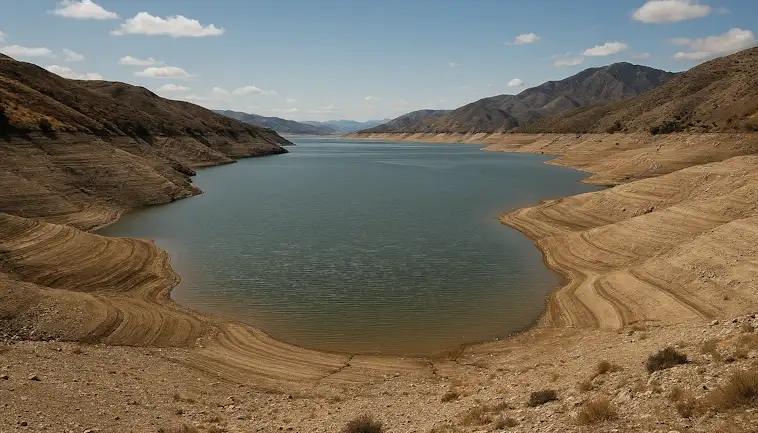
What’s Happening to Our Reservoirs?
Across the globe, reservoirs—the giant man-made lakes that store our water—are shrinking. Some are drying up completely. From Lake Mead in the U.S. to the reservoirs in parts of Africa, Asia, and South America, we’re seeing water levels drop to historic lows.
This isn’t just a seasonal fluke. It’s becoming the new normal. And it’s creating a water crisis for cities, farms, and entire ecosystems. But what’s behind this slow-motion emergency? Here’s a breakdown in plain terms:
Declining Rainfall
Rain isn’t falling like it used to.
- Many places rely on regular rainfall or snowmelt to refill their reservoirs.
- But with climate patterns shifting, rains are becoming less frequent or more unpredictable.
- Some areas are getting drier altogether. Others get short bursts of heavy rain that run off quickly instead of soaking in and refilling reservoirs.
Increasing Temperatures
Heat is drying out water faster than before.
- As global temperatures rise, more water evaporates from the surface of reservoirs.
- Hotter weather also means soils dry out faster, so when it does rain, more water is soaked up before it reaches the reservoir.
- At the same time, plants and crops need more water to stay alive, putting more demand on the shrinking supply.
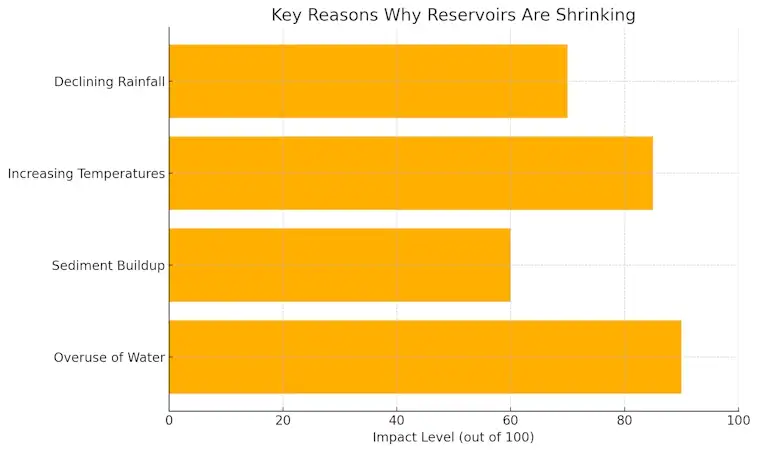
Sediment Buildup
Dirt is stealing space from water.
- Over time, rivers carry soil, sand, and debris into reservoirs.
- This sediment settles on the bottom, slowly taking up space that used to hold water.
- In some reservoirs, sediment has taken up more than half of the storage capacity.
- Once that space is gone, it’s expensive and difficult to dredge it out.
Overuse of Water
We’re using more than we’re putting back.
- Farms, factories, and cities are pulling more water from reservoirs than ever before.
- In some regions, the demand for water is growing faster than nature can replenish it.
- This overuse is especially dangerous during droughts, when every drop counts.
A Problem That’s Not Going Away
These problems feed into each other. Less rain, more heat, and growing demand create a dangerous cycle. Sediment buildup only makes the situation worse. And because most reservoirs were designed for a more stable climate, they aren’t ready for these extreme changes.
But there’s still time to act. Solutions like better water management, new farming techniques, and investment in clean-up and conservation can make a difference. The first step is understanding the problem—because this isn’t just about water in a lake. It’s about how we live, grow food, and plan for the future.
Climate Change Is Rewriting the Water Cycle
Reservoirs are supposed to be our safety nets—holding water for drinking, farming, and generating power. But in many places, they’re not doing their job like they used to. Water levels are dropping, and the reasons go beyond local overuse or dry spells. What’s really driving this crisis is the global climate.
Rising temperatures around the world are changing how water moves through the environment. Snow doesn’t fall or stick around like it used to. Rain arrives at the wrong time or in the wrong place. And heat is pulling water out of lakes and soil faster than ever.
This is how climate change is reshaping the world’s water supplies—especially the reservoirs we depend on.
More Evaporation
Hotter air = more water lost into the sky.
- As the planet warms, evaporation increases from lakes, rivers, and reservoirs.
- This means more water disappears before it can be used.
- Think of it like your bathtub slowly draining even when the faucet is turned off.
Real-world example:
In the U.S., Lake Mead—the largest reservoir in the country—is losing billions of gallons to evaporation every year. Hot, dry air pulls the water up and away before cities or farms can use it.
Less Snowpack
Snow is melting too fast—or not showing up at all.
- In colder regions, snow acts like a frozen savings account for water.
- It melts slowly through spring and summer, feeding rivers and reservoirs.
- But rising temperatures mean less snow is falling, and what does fall melts too early.
Real-world example:
The Rocky Mountains aren’t holding snow like they used to. That means the Colorado River—used by 40 million people—gets less water every year. Less snow equals less meltwater, which means shrinking reservoirs downstream like Lake Powell and Lake Mead.
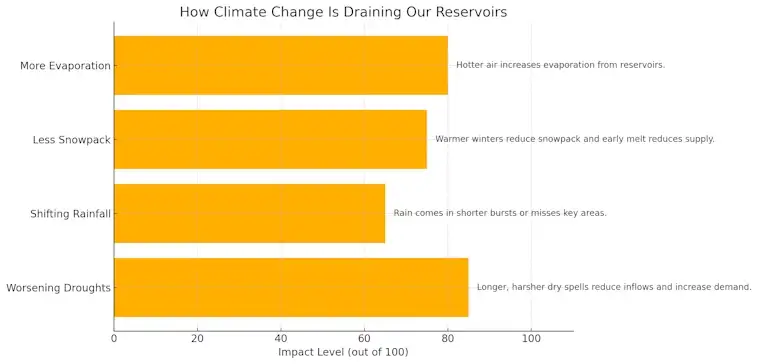
Shifting Rainfall Patterns
Rain isn’t falling where—or when—we need it.
- Some areas are seeing more intense rainstorms, but others are drying out.
- Rain might come all at once in a flood, instead of slowly over time.
- Sudden downpours don’t refill reservoirs well. A lot of that water just runs off.
Real-world example:
In parts of Australia and southern Africa, rainfall is becoming more unpredictable. Water managers can’t rely on regular patterns to keep reservoirs full, making planning and farming harder.
Worsening Droughts
Dry spells are lasting longer and hitting harder.
- Climate change is increasing the risk of long-term droughts.
- During droughts, there’s less water coming in—but the demand for water stays high.
- This drains reservoirs faster than they can recover.
Real-world example:
California and the southwestern U.S. have faced a “megadrought” over the past two decades. Reservoirs like Shasta Lake and Oroville have seen extreme lows, triggering water restrictions and hurting agriculture.
Looking Ahead
This isn’t just a weather problem—it’s a water system problem. Reservoirs were designed for a world with predictable seasons and stable snowpack. But the climate is shifting fast, and our infrastructure is struggling to keep up.
Solutions will need to be just as global as the problem. That means cutting emissions to slow climate change, but also adapting the way we store, use, and conserve water. Because this isn’t just about dry lakes—it’s about how we keep cities running, grow food, and plan for the next generation.
Communities on the Brink: Who’s Already Feeling the Pressure?
The crisis of vanishing reservoirs isn’t a distant, future scenario. It’s happening right now, in places that depend on water not just to drink, but to grow food, keep lights on, and support entire economies. From California’s crop fields to Zambia’s power grid, shrinking reservoirs are making life harder—and sometimes, impossible.
Here are just a few of the places where the effects are already being felt:
California: “Without water, the land just sleeps”
Farmers in California’s Central Valley are facing a harsh reality. Reservoirs that once fed vast irrigation networks have been drained by years of drought and overuse.
- In 2022, over 1 million acres of farmland were left unplanted due to water shortages.
- One almond grower near Fresno said, “We had to pull out 100 acres of trees. We just couldn’t keep them alive.”
- Cities like Los Angeles and San Diego are now investing in recycled water and desalination—expensive alternatives to their once-reliable reservoirs.
It’s not just about growing less food. It’s about jobs, rural economies, and the cost of groceries rising everywhere.
Middle East: “We’re planning for a future with less and less”
Countries across the Middle East—already some of the driest on Earth—are watching their reservoirs drop to dangerous levels.
- In Iraq, water levels in the Mosul and Haditha dams have fallen drastically. These reservoirs support millions of people with drinking water, irrigation, and electricity.
- Lebanon’s Qaraoun Reservoir nearly dried up in 2021, forcing water rationing in nearby towns.
- Jordan, one of the world’s most water-scarce nations, is facing growing tension over water sharing with its neighbors.
Governments are now turning to costly emergency measures—like importing water or building new desalination plants—just to keep taps running.
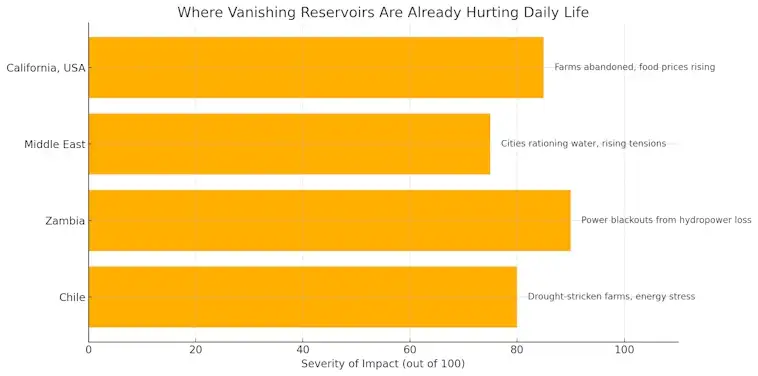
Zambia: “No water, no power”
In Zambia, where nearly 90% of electricity comes from hydropower, shrinking reservoirs are hitting the energy supply hard.
- The Kariba Reservoir, shared with Zimbabwe, has seen water levels plunge below usable levels multiple times in recent years.
- This has led to daily blackouts, sometimes lasting more than 12 hours.
- Local businesses struggle to operate, schools close early, and hospitals rely on noisy, costly generators.
One shopkeeper in Lusaka said, “Without power, there is no business. It’s like the day disappears.”
Chile: Farming and Hydropower in Jeopardy
Chile is enduring one of the worst droughts in its history—over 15 years and counting.
- Reservoirs near Santiago have dried to record lows.
- Farmers in the country’s central valleys are watching crops fail and livestock die.
- Meanwhile, the country’s hydropower system—supplying about 30% of national electricity—is straining under the pressure.
Some rural towns now rely on trucked-in water, a costly, unsustainable solution.
The Bigger Picture: Water is Life—and Livelihood
Reservoirs aren’t just big lakes behind dams. They’re the lifeblood of communities. When they dry up, it’s not just about thirst—it’s about:
- Food shortages and rising prices
- Lost income for farmers and small businesses
- Power cuts that disrupt education and healthcare
- Migration as people leave rural areas in search of better conditions
This is the human cost of climate-driven water stress. It’s already here, and it’s growing.
Why This Isn’t Just a Local Problem
When a reservoir dries up, it can seem like a local problem. Maybe a farming town goes thirsty, or a power plant has to shut down. But water doesn’t just stay local. It moves through supply chains, economies, and ecosystems. And when water disappears, those ripple effects spread—often across borders, and fast.
That’s why this crisis matters, even if you live thousands of miles from the nearest dam. Fewer full reservoirs means more disruptions to global energy, food, trade, and even climate stability.
Here’s how it all connects:
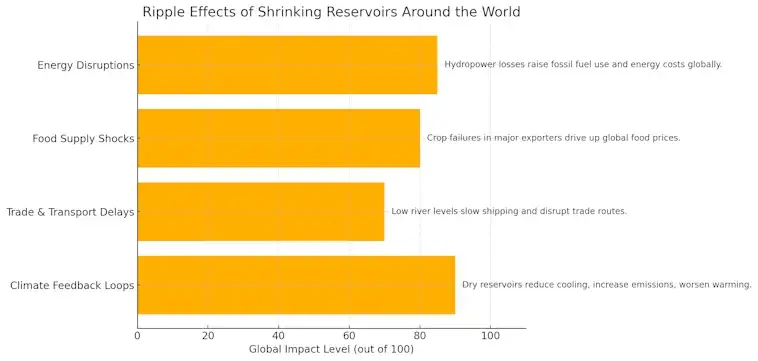
Energy Disruptions Can Travel Far
Hydropower is one of the world’s largest sources of renewable energy. When reservoirs that feed hydro plants dry up, the consequences go beyond blackouts at home.
- Zambia and Zimbabwe depend on Lake Kariba for 70–90% of their electricity. When water runs low, power outages ripple across the region.
- In China, low water in the Yangtze River in 2022 forced hydropower reductions, which shut down factories. That affected global supply chains for electronics and auto parts.
- As countries scramble to fill energy gaps, they often turn to fossil fuels—pushing up global oil and gas prices.
Bottom line: A dry reservoir in one country can lead to higher energy bills or product shortages in another.
Food Shortages and Price Shocks
Many of the world’s key food exporters depend on reliable water storage. When those reservoirs dry up, it doesn’t just hurt local farms—it hits global markets.
- California is a major source of almonds, lettuce, tomatoes, and dairy. When droughts cut irrigation water, less is grown, prices rise, and grocery costs go up worldwide.
- Chile and Argentina export large quantities of fruit and wine. Long-term droughts have already reduced crop yields and strained water resources in those regions.
- Countries like India, reliant on monsoon-fed reservoirs, sometimes halt rice or wheat exports during water shortages—tightening global food supplies.
Bottom line: A dry growing season in one country can turn into a grocery store shock thousands of miles away.
Trade Routes and Transport Get Hit
Some of the world’s busiest rivers—used to move goods—depend on healthy reservoirs upstream.
- In Europe, low water levels on the Rhine River (linked to upstream reservoirs) have slowed cargo ships, delaying delivery of goods across the continent.
- In the U.S., the Colorado River system is critical not only for water but for hydroelectric dams that support transport logistics in the West.
- In Africa and Asia, shrinking reservoirs reduce flows into rivers that are lifelines for rural trade, fishing, and transport.
Bottom line: When water runs low, it can clog trade routes and delay shipments globally.
Climate Feedback Loops
Here’s the deeper, more dangerous twist: when we lose water from reservoirs, it can actually make climate change worse.
- Dry reservoirs mean less hydropower, pushing countries back toward coal or oil.
- Shrinking bodies of water mean less cooling, allowing local temperatures to rise even faster.
- Drought-stricken regions often suffer from wildfires and deforestation, releasing more carbon into the atmosphere.
Bottom line: Water loss doesn’t just result from climate change—it feeds into it, accelerating the crisis.
We’re All in This Together
The shrinking of reservoirs isn’t just a regional issue. It’s a global signal that something in the climate-water system is breaking down. And the consequences—on energy, food, trade, and stability—touch all of us.
Even if you don’t live near a dried-up lake or rely on a river for water, you still feel the effects. That’s why solving the reservoir crisis is about more than building new dams. It’s about rethinking how we manage water, share resources, and plan for a hotter, drier future.
What We Can Still Do—And Why There’s Hope
The shrinking of reservoirs around the world is serious—but it’s not hopeless. In fact, some of the most creative, forward-thinking solutions are already underway.
From new technology to old-school conservation, people are finding smarter ways to manage water. Farmers are using less to grow more. Cities are recycling every drop. Forests are being restored to keep rivers flowing longer. And policymakers are rethinking what a modern reservoir should even look like.
These steps are real, practical, and gaining momentum. While the problem is big, our ability to adapt is even bigger.
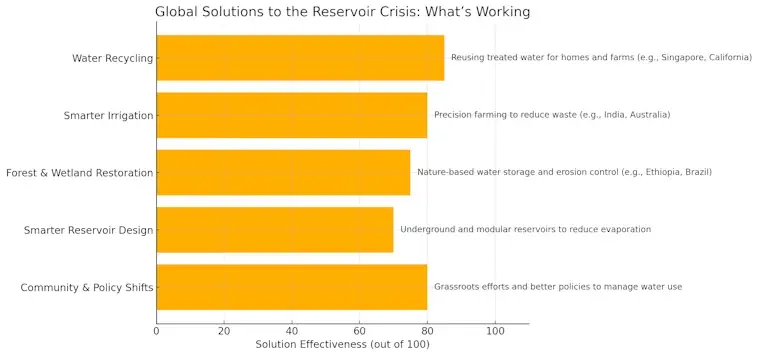
Water Recycling: Giving Every Drop a Second Life
Instead of sending used water down the drain, many cities are treating it and reusing it.
- Singapore is a global leader with its “NEWater” program, turning wastewater into ultra-clean drinking water.
- In California, plants in Orange County now recycle enough water each day for over 1 million people.
- Israel reuses nearly 90% of its wastewater, much of it for agriculture.
This kind of tech doesn’t just save water—it creates new supply in places where every drop counts.
Smarter Irrigation: More Crop, Less Water
Agriculture uses about 70% of the world’s freshwater. Smarter irrigation could change the game.
- In India, farmers are adopting drip irrigation, which delivers water directly to plant roots and can cut use by half.
- In Australia, precision sensors help farmers irrigate only when and where it’s needed.
- Some communities in Mexico are reviving traditional farming systems that naturally conserve water.
Better irrigation means crops grow even in dry years—without draining the reservoir dry.
Restoring Forests and Wetlands: Nature’s Water Managers
Healthy forests and wetlands help store water, slow erosion, and keep rivers flowing longer. Around the world, restoration is gaining ground.
- In Ethiopia, local communities are planting trees upstream to protect watersheds feeding into major reservoirs.
- China’s “Sponge Cities” use green spaces to soak up rain, replenish aquifers, and reduce runoff.
- Brazil is replanting parts of the Atlantic Forest to support the rivers that feed the São Paulo metro area.
Nature-based solutions don’t just save water—they protect biodiversity and boost resilience.
Rethinking Reservoirs: Smarter Design, Smaller Footprints
Old-style reservoirs often meant big dams and flooded valleys. Today, the thinking is shifting.
- Underground reservoirs (like aquifer recharge projects in the U.S. and India) store water out of the sun’s reach, reducing evaporation.
- Some regions are building modular or seasonal reservoirs that work with the rhythm of rain rather than fight it.
- New designs focus on minimizing sediment buildup and better integrating ecosystems.
The goal isn’t just to store more—it’s to store smarter.
Community Action and Policy Shifts
Real change often starts at the local level—and spreads up.
- In Kenya, women’s water groups are leading watershed restoration and water-sharing efforts.
- Cape Town, South Africa, avoided “Day Zero” by rallying residents to cut use by more than half.
- The EU and parts of the U.S. are beginning to price water more sustainably and invest in water-smart infrastructure.
People are stepping up. And governments are starting to follow.
The Future is Thirsty—But Not Doomed
The reservoir crisis is one of the clearest signs that our climate is changing. But it’s also a test of our ability to adapt. And the good news? We are adapting.
Whether it’s engineers building smarter systems, farmers rethinking how they water their fields, or communities restoring the natural flow of water, the momentum is real.
Solving this won’t be easy. But it is absolutely possible.
Conclusion
Reservoirs are more than just water storage—they’re lifelines. When they shrink or vanish, it affects how we eat, how we power our homes, how we live day to day. The crisis is real, but so is our ability to respond.
Across the globe, people are finding smarter, fairer, and more sustainable ways to manage water. That momentum matters. Because what we do now will shape whether future generations face water as a source of strength—or scarcity.
This moment calls for urgency, yes—but also for action rooted in hope. We still have time to adapt. We still have the tools. What’s needed is the will to treat water not as an afterthought, but as the essential, shared resource it is.